Keeping council vehicles clean is not only a basic part of fleet maintenance, but also evidence to a community that its assets are valued.
But washing mobile plant and equipment can be costly in terms of water, energy or outside contracting.
So a council has to balance the need for a clean fleet with their community’s environmental expectations.
In Victoria, the Glen Eira City Council has done just that!
In fact, their truck wash and wet waste handling facility has gone even further by also improving the efficiency of the council’s drainage maintenance operations. 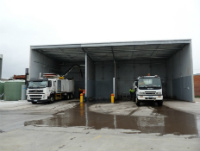
As a winner of an IPWEAvic Excellence Award last year, the facility was built at a total project cost of about $600,000 and is now providing multiple benefits to both the council and the community.
While the council has some 160 vehicles, including street sweepers, mowers and specialised drain cleaning units, it also has over 22,000 drainage pits, 535km of underground drains, and receives about 1,000 flood-issue complaints a year from its residents.
So the council decided to build a facility that would provide environmental, financial, risk management and productivity improvements in operational service, whilst catering to the needs of the community.
Apart from saving around $80,000 a year by no longer using outside services, the new facility saves on the use of potable water by harvesting roof stormwater which is fed into storage tanks with a total capacity of 101,000 litres (with an option for future expansion).
In addition, rainwater storage is catered for in two main 45,000 litre tanks and three minor storage tanks that total 11,000 litres.
In addition, the facility has created a potential source of income from external customers wishing to use the truck wash facility.
Notable features include:
-
A computer-controlled system which limits the truck wash cycle to reduce water and energy use
-
Sensors and timers to control lighting within the facility to reduce energy use.
-
Energy efficient water heaters using 75% less energy than a conventional system (the heaters absorb heat from the air and can operate between -10 and 40 degrees Celsius).
-
A series of filters to minimise the amount of pollutants discharging off-site.
According to the council, the new facility had delivered a number of social benefits. One was an improvement in worker morale due to a cleaner commercial fleet, and another was an improvement in the council’s image.
In addition, OH&S performance had improved in the workshop because fleet vehicles could be cleaned and degreased far more easily prior to maintenance activity.