Sustainable driver training can cut greenhouse gas emissions and save heaps on fuel costs. Carl Maurer from Strategix explains.
The pressure on council fleet managers to reduce operating costs and contribute to climate change initiatives in their communities is increasingly turning the spotlight on “sustainable” driving techniques.
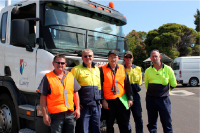
Against this backdrop, 12 council drivers who participated in an ECO driving course in Victoria last year recorded dramatic fuel savings and a significant reduction in brake and gear usage.
The drivers were from three councils in greater Melbourne that belong to the South East Councils Climate Change Alliance, namely the Cities of Frankston, Kingston and Casey.
Key outcomes from the course were:
-
A dramatic 17.6% fuel-use reduction, and therefore a corresponding reduction in greenhouse gas emissions.
-
A reduction in brake use of 55.6%
-
A reduction in gear use of 22.9%
The ECO course was typical of many such courses run by the Strategix Training Group, which offers training and assessment services throughout Australia.
“We work across a broad range of industries, but transport and fleet management is a major sector for us,” says Carl Maurer, National Business Development Manager at Strategix.
“In fact, our activity in the sector has increased significantly since we began offering the ECO Drive program, which develops the skills and knowledge required to effectively operate a vehicle in an environmentally sustainable manner.
“We recognised a few years ago that that the transport industry was creating almost 15% of Australia’s greenhouse gas emissions and we were alarmed by the forecast that these emissions would grow by 27% between 2010 and 2020.
“So we introduced the ECO Drive program and are delighted that fleet managers who use it don’t only reduce greenhouse gas emissions, but make big operational cost savings into the bargain.”
According to Maurer, the ECO Drive program incorporates an initial trial in which drivers are asked to complete a pre-determined circuit so that their driving techniques and fuel usage can be measured.
“Typically, the drivers aren’t specifically told the purpose of the initial driving assessment, so their driving behavior is pretty representative of their normal driving,” said Maurer.
This data is then used as a benchmark to compare results with after the drivers have been through the course and are asked to complete the pre-determined circuit a second time.
“During the time between the two circuits our trainers spend time with the drivers in their cabs to fully explain our 10-point sustainable driving principles,” said Maurer.