Fleet managers should always incorporate an efficient preventive maintenance and monitoring system into their tyre management procedures to ensure lower operating costs through maximum tyre life and performance.
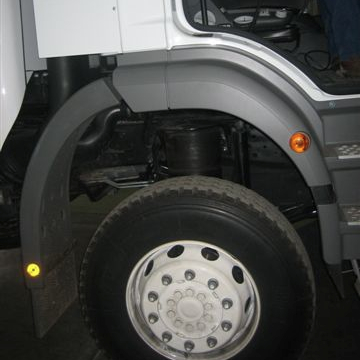
The best starting point is to select the correct tyre according to the vehicle type and operating requirements.
The tyre equipment of a wheeled vehicle should fulfil the following requirements:
• carry the weight of the vehicle and its attachments
• transmit the engine output as a tractive force to the ground
• absorb cornering forces
• allow for round unevenness and vibrations of vehicle
• contribute towards reducing the rolling resistance of the vehicle
• enable long tyre life
Major tyre manufacturers have simplified this process by separating their tyres into different groups for different applications.
Transmitting tractive force
For proper traction, especially in cross-country applications, the effect of the tyres on the ground is of particular importance. Traction depends on the driving axle load of the traction unit and the coefficient of adhesion.
The coefficient of adhesion is affected by the ground conditions and the following tyre factors:
• tyre tread
• carcass flexibility (ply rating)
• tyre construction (radial or cross-ply tyre)
• tyre footprint
• tyre diameter and width
• tyre-carrying capacity (load index)
• inflation pressure
For more information about matching the best tyre to a particular application, obtain your copy of the 2012 IPWEA Plant & Vehicle Management Manual at
www.ipwea.org.au/FleetManualv3