Campbelltown’s successful trial of ARRB’s STEP system has led to widespread adoption by councils across South Australia and beyond.
* Photos at end
Campbelltown City Council took the initiative to engage ARRB Group when staff expressed concern that as the road network aged, simultaneous road failures could place significant pressure on the council’s limited works program.
For a number of years, the City of Campbelltown has been utilising it’s PMS (Pavement Management System) as part of the IAMP (Infrastructure Asset Management Plan) to determine its road renewal program. This system utilises the surface modelling module to determine the condition and treatment based on visual assessment. A visual inspection is conducted every five years.
In 2012, the City of Campbelltown adopted the STEP system (Structural Testing Evaluation of Pavements) as an additional tool in its PMS to refine the selection of maintenance treatment options for its local road network.
In 2012, ARRB presented its Structural Testing Evaluation of Pavements (STEP) and the council decided to adopt the system as
an additional tool in its PMS to refine the selection of maintenance
treatment options for its local road network. As part of the adoption, council decided to go ahead with a trial on two on two of its residential roads.
What is STEP?
The STEP system analyses data collected from a Falling Weight Deflectometer (FWD) to find out what condition the pavement is currently in, how it is likely to be affected by heat and moisture in different seasons, and gives an estimate of the asset’s remaining life (based on known traffic volumes).
Another benefit of the STEP system is that it helps asset owners assess whether an existing road could carry extra traffic, should a diversion from another road be required.
"STEP delivers a groundbreaking capability to distinguish the strength of the road using simplified images which give clear indications of which portions of the road are strong and which portions require structural work," said ARRB Principal Research Engineer, Asset Management Jon Roberts. "The road agency or council is then able to determine where to resurface a road and where to carry out a structural pavement treatment."
The STEP system was developed on the NSW road network and prior to the trial had not been used on local roads to review treatment selection. Across Australia today, 14 local governments and two state road authorities currently use STEP.
The trial
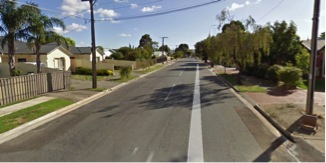
Campbelltown worked with ARRB to trial the STEP system on streets identified as part of the 2012/2013 Capital Renewal Program. The two roads, Melaleuca Drive and Clairville Road, were identified as requiring major road renewal and were assessed using the STEP system.
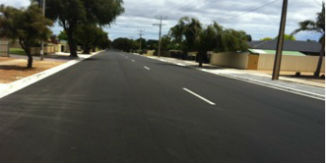
Clairville Road
Visible: Significant evidence of rutting, crocodile cracking and some disintegration.
STEP:
• Overall base in good condition
• CBR typically 70% • Isolated soft spot 40% • Remaining life: generally 50 years (except for isolated spot where only 2 years left)
What work was carried out?
Staff only used deep structural works at identified weak areas (between 26 to 126 and Chainage 225 to 375) and reshape and resurface with 50mm hotmix.
Original budget: $405,000
Actual amount spent: $292,500
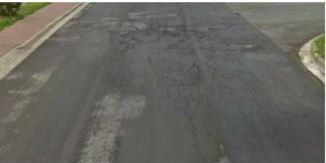
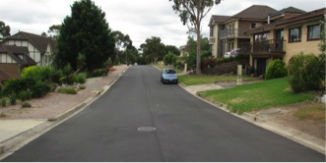
Malaleuca Drive
Visible: Evidence of crocodile cracking, rutting on the road surface.
STEP:
• Good CBR, typical 70%
• Low modulus of less than 1000 MPA for its asphalt surface
• Average remaining life for the pavement is 75 years
What work was carried out?
Originally staff had intended to remove up to 230mm of base material with 30mm of hotmix required, but following the STEP review, they changed the treatment to 50mm and relaid the hotmix.
Original budget: $197,000
Actual amount spent: $65,000
Outcome
Council made a total saving of $244,500 on its roads as a result of the STEP trial. By integrating this work into its asset management plans, Council has been able to maximise the use of its limited budgets and therefore provide better value for money to the community.
In addition, by ensuring that a more accurate works program is developed, Council has been able to reduce its risk and ensure that it is doing the right treatment at the right place at the right time. This will eventually allow staff to stretch the dollar further and improve Council’s long term asset sustainability levels.
Staff have now included STEP analysis as part of their IAMP practices and have completed the capital renewal program for the next three years in advance.
Excellence Awards 2014
Campbelltown City Council won top prize in the ‘Asset Management Projects Category’ at IPWEA SA’s annual South Australian Excellence Awards in 2014 for the project.
Campbelltown City Council General Manager of Infrastructure Services Andrian Wiguna praised the partnership with ARRB on the STEP project.
“The system has enabled the council to determine the best financial treatment of its ageing road network,” he said. “This has led to cost savings, less interruption to the impacted residents and a reduction in C02 emissions.”
"Winning the IPWEA SA award demonstrated the effective teamwork of ARRB's innovative technology with the forward-looking Campbelltown Council to produce practical cost saving solutions, using approaches which will be readily applicable for the benefit of the wider road-owning community," said Roberts.
Before and after photos
Clairville Road: Before
Clairville Road: After
Malaleuca Drive: Before
Malaleuca Drive: After
Read more from IPWEA: