* Photo gallery below*
The secrets of Sydney’s harbor bridges were revealed in a special tour organised as part of the 2014 Sydney Architecture Festival.
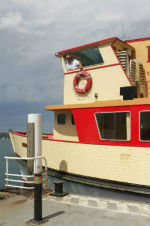
The tour took in the Sydney Harbour Bridge, Gladesville Bridge, Tarban Creek Bridge, Iron Cove Bridge, Glebe Island Bridge, ANZAC Bridge and Pyrmont Bridge.
At each stage, expert speakers presented the history and engineering behind the different bridges.
Speakers included Roads and Maritime Services Principal Manager Urban Design Gareth Collins, Director of Australian Infrastructure Consultants Bruce Judd, Engineer Hari Kishan and MCA Curator Anne Loxley.
Bridge Ahoy! was presented by Information and Cultural Exchange (ICE) in partnership with the NSW Architects Board and Roads and Maritime Service NSW, for the 2014 Sydney Architecture Festival.
PWPro braved thunderstorms and jumped on board the Bridge Ahoy! tour of Sydney’s seven harbor bridges, courtesy of ICE.
BRIDGE AHOY! THE TOUR
Gladesville Bridge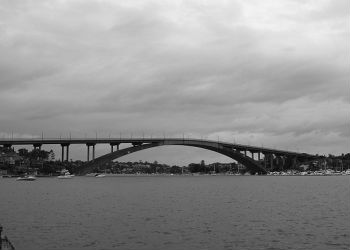
Opened: 1964
Style: Catenary bridge
The Gladesville Bridge celebrated its
50th birthday this year. Originally designed to be a steel bridge, when it went out to tender an alternative bid for a concrete design was submitted and accepted. The bridge was one of the first in the world to be designed using a computer and has since received state heritage listing and been named an International Engineering Heritage Marker.
Tarban Creek Bridge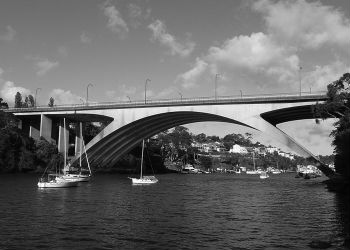
Opened: 1965
Style: Arch bridge
The Tarban bridge was built in the 1960s as part of a family of bridges that included the Gladesvilled Bridge and Victory Bridge. New piers are currently being constructed to support outriggers that will remove the tension out of the bridge and ensure its longevity.
Iron Cove Bridge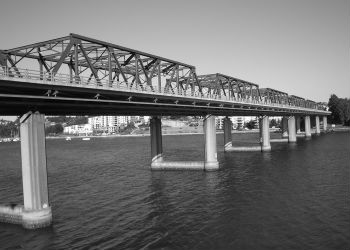
Opened: 1955 (original)
Style: Truss bridge
The Iron Cove bridge was designed in the art deco style. A new version of the bridge was opened in 2011 to the side of the old bridge, positioned to avoid Telstra cables below. An important component of the new bridge was the 1.8m wide footpath, which completes the 7km shoreline pathway known as the Bay Run.
Glebe Island Bridge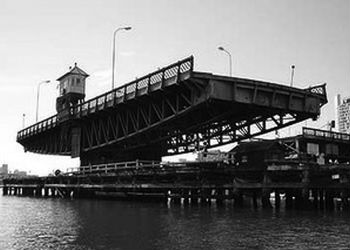
Opened: 1903
Closed: 1995
Style: Swing bridge
The Glebe Island bridge was designed by Percy Allan from the NSW Public Works Department. It was closed in 1995 when the nearby Anzac Bridge opened. The old bridge was left in the open position and has since been listed on the Australian Heritage database.
Anzac Bridge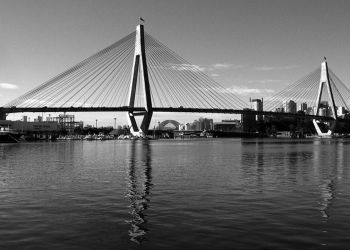
Opened: 1995
Style: 8-lane cable stayed bridge
Anzac bridge was given its name on Remembrance Day 1998. At the eastern end of the bridge flies an Australian flag and at the western end of the bridge flies the New Zealand flag. Lights from the bridge can apparently be seen by astronomers 500km away in Coonabrabran and have to be turned off during special astronomical events.
Pyrmont Bridge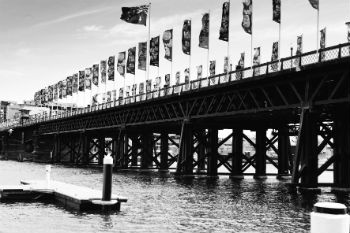
Opened: 1902
Style: Swing bridge
Pyrmont Bridge was also designed by Percy Allan. It is believed to be the first electrical swing bridge in the world and the first bridge in Australia to be designed by an Australian. The bridge was pedestrianized in 1981. The swing bridge is still in operation and still uses the original motors.
* Image courtesy of Sydney Harbour Foreshore Authority.
Sydney Harbour Bridge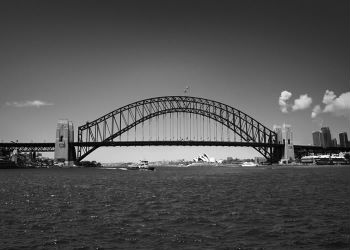
Opened: 1932
Style: Through arch bridge
Sydney Harbour Bridge was constructed during the depression and provided a source of employment for the people of NSW. A lot of construction work took place in the construction company’s factory, which was located in Milsons Point, where Luna Park stands today.
Download Bridge Aesthetics from the Roads and Maritime Services NSW here.