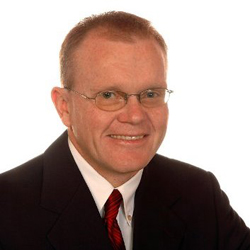
Originally hailing from New Zealand, Graeme Dunnet has more than 20 years experience working in asset management roles across the globe, from New Zealand to Malaysia and the UK. He has spent the past 13 years in Western Australia, where he is currently Manager of Australian Strategic Growth at OPUS International Consultants.
With the IPWEA biennial National Conference in Darwin just around the corner, we revisit a paper Dunnet delivered at the 2011 conference in Canberra, entitled ‘
Asset management is all about sustainability’, on how the established tools of asset management can be leveraged to tackle sustainability issues. We also cover the evolution of asset management as a discipline, and the importance of the new ISO 55000 Asset Management Standards.
Can you tell us about the message you were trying to get across in your 2011 paper, ‘Asset management is all about sustainability’?
We hear a lot about the importance of sustainability, yet we already have a practice or profession in place that, while it hasn’t got all the answers to sustainability, perhaps can provide us with some practical tools to better understand it, and have some planned actions towards achieving it.
I’m certainly not trying to say that asset management is sustainability, but I think there’s enough processes that we use in AM that could lead to sustainable outcomes.
Sustainability is about looking after things from the cradle to the grave, so if we have infrastructure assets and if we apply asset management thinking right from the start through to when we eventually dispose of it, then hopefully we’ve followed the most sustainable approach of conceptualising, designing, building, maintaining and then getting rid of that asset.
One of the things we talk about a lot in asset management is triple bottom-line accounting, or probably even quadruple bottom line, where you’re looking at the environmental impacts of what you’re doing, the economic, the social and cultural. So what I’m saying is, we’re already thinking that way in asset management, and a lot of those things directly align with what we’re trying to achieve with sustainability. Sustainability isn’t just about environmental sustainability, it isn’t just about economic sustainability or social or cultural – it’s about all of those things interrelated.
With asset management, we might have concentrated a lot in the past on the dollars, and perhaps the service levels that the assets create, but if we look a bit broader we might be able to find some neat solutions that actually tick all the boxes.
Can you provide an example?
A company in New Zealand had a big slip of material from a road that fell away. Traditionally they would have carted all that material away and dumped it at a dump site, but because they had a bit of community engagement and tried to look more at the social and environmental impacts, they actually found a local marae – a traditional Māori community meeting place – that was closer than the dump site, where they were willing to take the material, which they could then sell to other local users.
So it was a win-win situation. Less carbon emissions were produced by not having to cart the material as far to get rid of it, there was a social and a cultural impact because the local marae managed to raise some revenue and help themselves as well as the local businesses who used the material, and it actually worked out to be the cheapest option as well.
So it ticked all those boxes, but it was only because the project manager at the time was trying to think more with a sustainability hat, and ask how can I reduce my carbon emissions in dealing with this issue?
Is there a risk the growing field of sustainability could threaten to eclipse asset management as a discipline?
I think more than anything, asset management will evolve to become more than what it is now – that’s my optimistic view. Already people are getting a bit gun-shy or cynical of ‘green wash’. Everything is about sustainability and people are finding it hard to find practical tools to really understand it, whereas AM, because of where it came from and the way it has been built up, provides those tools.
If the name for asset management changes, then so be it – it might be part of the natural evolution of it. But I think the fundamental asset management practices will be there, because they are robust and they’re part of the sustainability equation.
Any other key issues in asset management that you want to touch upon?
I have to applaud the IPWEA, and Peter Way, on their involvement on the world stage in the development of the new ISO 55000 Asset Management Standards.
I’ve been involved in helping review some of what Peter Way and his NAMS Group have sent through. The thing they’ve brought to the whole process is, rather than just bringing in a standard that can be used to audit everyone and make sure they’re ticking all the right boxes, they’ve been very strong in making sure the standard has a practical use and can help demonstrate the benefits of implementing asset management.
And it's things like the standard that will also help maintain and raise the profile of asset management in people’s minds.