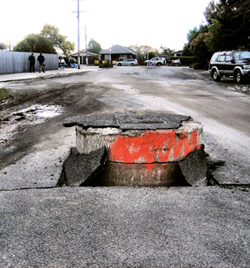
The 7.1 magnitude earthquake that struck the Canterbury region of New Zealand’s South Island in September 2010 – and the 6.3-magnitude quake that claimed 185 lives in Christchurch six months later – has forced a re-evaluation of the role of insurance in public asset risk management, according to a new report released by the New Zealand Auditor General’s office.
“In the last couple of years, several global disasters, including the Canterbury earthquakes, have changed the nature and cost of insurance cover in New Zealand, particularly in the short term,” said NZ Auditor General Lyn Provost in the report, published in June 2013.
“Public entities have had to think carefully about how they are managing their risks and how they are using insurance,” she said.
“In this context, I decided to find out more about the nature and extent of insurance cover for public assets and the extent of changes in insurance associated with those assets after 2010.”
A risky place to insure
Totalling around $12 billion, claims arising from the 2010 and 2011 Canterbury earthquakes were the highest in New Zealand’s history, dwarfing all previous insurance claims from 1968 to 2010. “Many public entities throughout New Zealand have told me that one of their most significant cost pressures since the Canterbury earthquakes has been insurance,” Provost said.
According to the report, 17% of global insurance claims in 2011 came from Australasia – related mainly to the Canterbury earthquakes. By contrast, New Zealand’s contribution to insurance premiums globally that year was about 0.2% – less than 1% for the Australasia region as a whole.
In that context, nearly 40% of the insurance policies of New Zealand’s public entities included an increase in insurance premiums of more than 20% between 2011 and 2012, the report said.
“Because of the Canterbury earthquakes, there are many uninsured assets in Canterbury,” the report found. “In some instances, the increase in insurance premiums has made the cost of obtaining insurance prohibitive. In others, the perceived risk of earthquakes has made insurance simply unobtainable.”
Alternative risk management
However, as Provost points out in the report, “having assets without insurance cover is not necessarily cause for alarm. There are other ways to manage risk.”
The report highlights three key examples of insurance approaches made by New Zealand public entities: self-insurance, collective insurance, and the use of specialist LG asset insurers. “The purpose of these examples is to show what is happening and why, not to judge validity or appropriateness,” Provost explained.
Information was gathered about how 228 New Zealand local government entities – mainly local authorities – insure their assets, which have a total carrying value of about $112 billion. The report found that about 60% of this carrying value (including land) did not have any insurance cover – influenced mainly by Auckland and Christchurch councils, which hold a significant proportion of the country’s uninsured assets.
The main reasoning behind the decision not to purchase insurance, the report found, was based on either the capacity to borrow and therefore self-insure; that the cost of insurance outweighed the risk; or the 1991 Disaster Recovery Plan, which states that New Zealand’s central government will pay up to 60% of restoration costs for water and sewerage services after a catastrophe.
Read the full report online
here. –
Gemma Black
In the picture: Storm drain pushed up through the road during the 2010 Canterbury earthquake. Credit: Martin Luff / Wikimedia