Lane Cove City Council is running a trial of printed solar cells developed by the University of Newcastle.
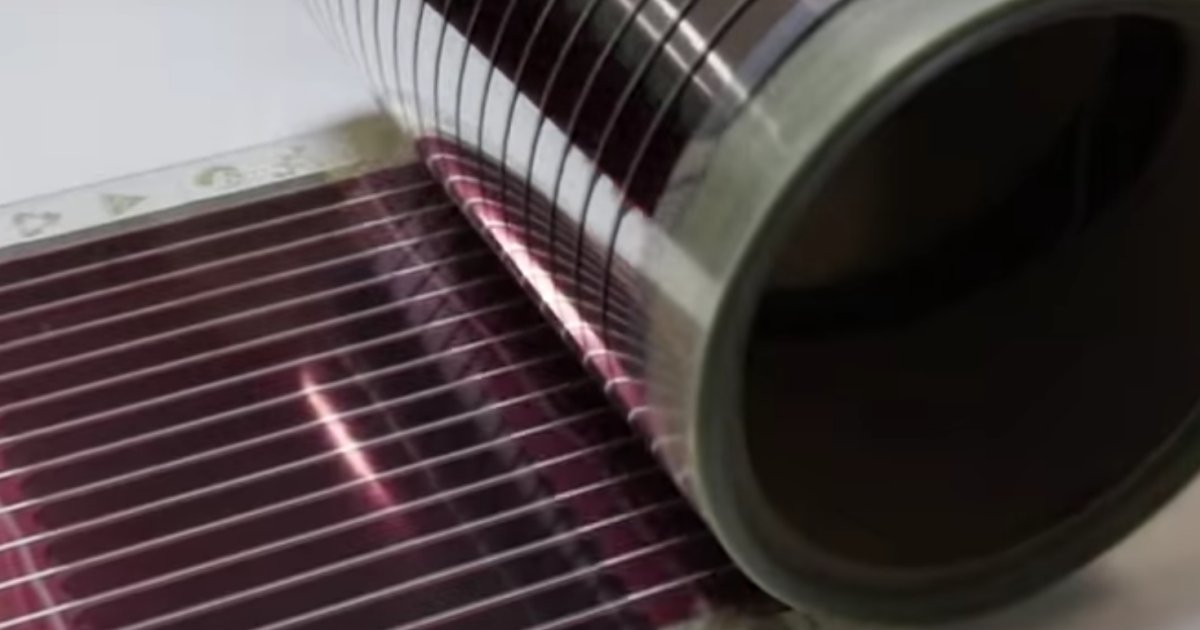
The renewable energy technology, which is ultra-lightweight, ultra-flexible, recyclable and cheap to manufacture, will power interactive public lighting in Lane Cove. The material, similar in thickness and appearance to a chip packet, is manufactured using conventional printers.
Creator of the organic printed solar material, physicist Professor Paul Dastoor from Newcastle University, says his team is excited to take their “science to the streets” in what represents significant progress toward commercial availability of the material.
“Globally, there’s been so few of these installations, we know very little about how they perform in a public setting. This installation is the next critical step in accelerating the development and commercialisation of this technology. It presents a new scenario for us to test performance and durability against a range of new challenges,” he says.
“Located within Lane Cove Council’s vibrant new urban space ‘The Canopy’, this demonstration plucks extraordinary science from behind sealed lab doors, and places it in an ordinary environment, where people will interact with it as they go about their grocery shopping, play with their children in the park, or enjoy food in one of the nearby restaurants. It’s an effortless and subtle way to spark conversation and showcase ‘what’s next’ in energy generation to thousands of people.”
Professor Dastoor says he is hopeful the public installation will prompt further discussion on the subject of energy as the Federal Government considers submissions to its technology investment roadmap.
“The government is seeking to bring down carbon emissions over the next 30 years and the community has been very engaged on this subject. Globally, there are many research groups like ours working on sustainable energy technologies and now, via the technology investment roadmap, is our opportunity to ensure we invest in and deliver clever solutions,” says Professor Dastoor.
“As an educator and a father, my greatest hope is that we may, through this public display, inspire young people interested in STEM to imagine the exciting and entirely new career possibilities that will exist for them, brought about through new industries like these. Young people inspired by this demonstration could become our first, pivotal wave of high-tech workers helping to bring printed solar to fruition – that’s an incredibly exciting idea.”
Benefits and applications
Printed solar is cheap to manufacture, at a production cost of less than $10 per square metre, and rapid to produce, with commercial scale equipment capable of producing kilometres of material a day.
“No other renewal energy technology can be manufactured as quickly. The low cost and speed at which this technology can be deployed is exciting as we need to find solutions, and quickly,” says Professor Dastoor.
With more than 99 per cent of the panels consisting of PET, the material can be recycled - a distinct advantage over traditional silicon panels.
“We’re currently investigating recycling processes for this material. Our hope is that we can separate the outer PET layers and reuse them to make new panels with minimal processing,” says Professor Dastoor.
The low cost, light weight, flexibility and durability of the material are inspiring a range of possible applications including disaster relief and recovery applications; retractable recharging systems for electric vehicles, caravans/camping and the defence industry; floating covers for dams and pools; yacht sails; smart blinds for residential and high-rise buildings; greenhouse covers and more.
Professor Dastoor says his goal is to coat as many surfaces as possible with the material. “Imagine a world where everyone has access to electricity, and where every surface can generate clean, low cost, sustainable energy from the sun. That’s a world I want to live in,” he says.
This is an edited version of an article originally published by the University of Newcastle.