Faced with a growing population forecast to exceed the limits of its sewerage treatment infrastructure within a decade, Unitywater could have simply upgraded its Sunshine Coast plants.
Instead, an innovative ‘re-configuration’ of three sewerage treatment plants (STPs) has resulted in a whole-of-life saving of $57 million and will keep tonnes of effluent from being discharged into the Maroochy River each year.
The re-configuration of the Maroochydore, Coolum and Suncoast Sewage Treatment Plants was recognised at the recent 2016 Australian Water Association Awards, where the utility picked up the national Infrastructure Project Innovation Award.
Unitywater’s Executive Manager Infrastructure Planning and Capital Delivery Simon Taylor tells
intouch that “traditional thinking” would have seen the utility create bigger versions of the existing treatment plants.
“However, our engineers thought outside the square and delivered a solution that actually closed down a plant, drilled a pipeline under the Maroochy River and built a wetland at the Coolum plant to help treat sewage,” he explains.
The Coolum STP serviced 26,000 equivalent people (EP) but was forecast to rise to 45,000 by 2026. Similarly, the Suncoast STP serviced 13,000 EP, forecast to grow to 20,000 over the same period.
As all three STPs discharged treated effluent into the Maroochy River. Taylor says any increase in volumes would also have triggered an increase in nutrients discharged to the environment.
“This not only raised water quality and environmental concerns, it also exposed Unitywater to the potential for regular breaches of its licence conditions,” he says.
Investigating options
Unitywater’s capital delivery team investigated seven options, aiming to select the solution with the lowest whole-of-life cost.
The ‘base case’ initial solution – simply upgrading both the Suncoast and Coolum STPs – was estimated to cost $81 million.
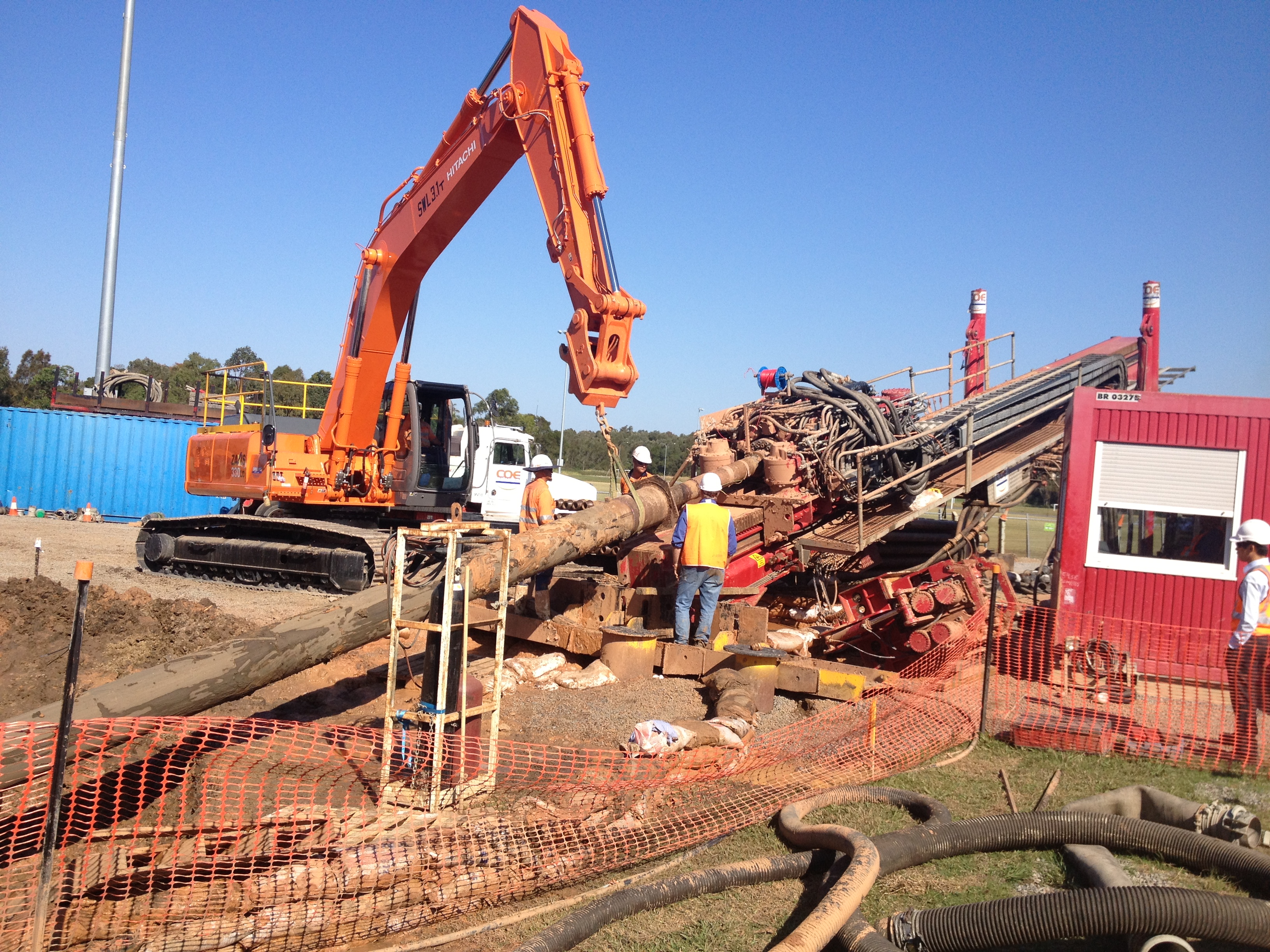
The eventual reconfiguration, completed in July 2014 at a cost of $24 million, saw the Suncoast STP decommissioned, and its sewage load diverted to the Maroochydore STP through a new pipeline, part of which was tunnelled five metres beneath the Maroochy River using horizontal directional drilling.
A trial wetland system was installed at Coolum STP to provide additional effluent treatment and Coolum STP’s inlet works were upgraded, optimising the treatment capacity of the plant. As a result of the project, nutrient loads discharged into the Maroochy River were reduced by six tonnes of nitrogen and 1.5 tonnes of phosphorous each year.
For Unitywater Network Planning Manager Michael Lukin, the decommissioning was bittersweet.
“If you are a bit of a sentimental engineer like myself, then decommissioning a sewage treatment plant that has served a community well over the years is a bit like putting down the family dog,” Lukin says.
“It’s something you have to do but it's not very pleasant. But fortunately we have a capital delivery team who aren't sentimental and they did an excellent job of getting it done on time and on budget.”
Taylor says the project was an opportunity for Unitywater to: “Explore ways to deliver infrastructure outcomes that challenge the traditional approach to engineering solutions”.
The utility called in experts in river modelling, wetlands and treatment plant processes to find what Taylor describes as “genuinely alternative” options in the early planning stage.
Unitywater also identified a future sewer main that was not yet in service and made use of it as a temporary water supply main, as part of the diversion of services during delivery of the project.
This meant there was no need to build temporary infrastructure in an environmentally sensitive area.
Taylor says water supply and sewerage authorities face ongoing pressure to minimise the cost of their services to customers.
“At the same time, they are also facing the tightening of licence standards from environmental regulators as well as higher demands on infrastructure caused by growing populations,” he says.
“This project shows the value of innovative thinking to creatively and very cost-effectively solve a problem that initially demanded a straightforward, but relatively expensive, engineering response.”
Image: The horizontal directional drilling taking place under Maroochy River. Unitywater.