The basic ingredients in a schooner of beer are well-known – now a Sydney-based microbrewery can add sunshine to the list.
Not-for-profit community solar group Pingala has secured a City of Sydney grant to launch its first project, which will see solar panels installed on the roof of Young Henrys microbrewery.
Electricity from the system will be used to power Young Henrys’ brewing processes, slashing around 127 tonnes of greenhouse gas emissions a year.
It is expected to be the first community solar project of its kind in a capital city. 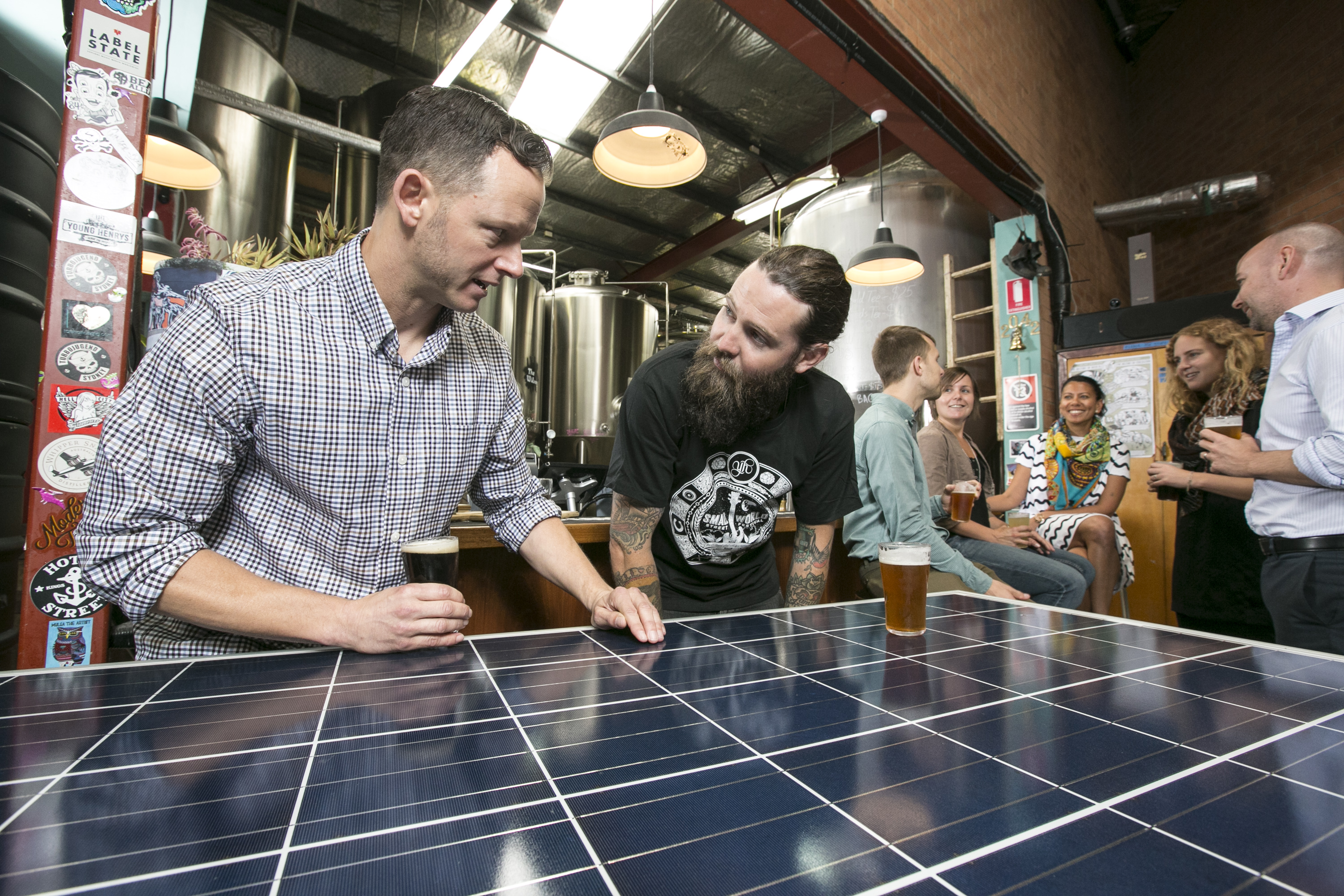
Pingala volunteer Tom Nockolds says the $40,000 City of Sydney innovation grant will allow the company to secure final legal and financial advice before the project is launched.
“We have a pretty big, bold ambition for ourselves – we want to one day become a major participant in Sydney’s energy supply,” Nockolds says.
“What we realised was one of the quickest and easiest things we could do was build community owned solar farms on the roofs of local businesses and organisations. By doing that, we’ll be solving a lot of the problems we have with the old energy systems, and bringing a whole lot of benefits of locally distributed, renewable energy into the communities that make up Sydney.”
Nockolds says the case for community solar projects is clear, particularly for businesses.
“Do you want to put solar on those rooftops, or do you want that solar installed where thousands of local people have a stake in the project, becoming vocal champions for clean energy and strong supporters of what it is that you do?”
Young Henrys will pay Pingala for the electricity produced by the solar panels, which will give Pingala a revenue source to pay back the finance of the system and additional operating costs.
Nockolds says the project will provide long-term benefits for Young Henrys, the community and the environment.
“The term of the project is going to be approximately 10 years, and at the end of the project we’ll transfer the ownership of the solar panels over to Young Henrys, so they can continue to enjoy the benefits of free energy falling from the sky for the rest of the life of those solar panels, which are under warranty for 25 years,” he says.
“It’s hugely beneficial to Young Henrys over the 25 year period.”
Nockolds says Young Henrys was chosen because the company has “sustainability in its DNA” – the Newtown microbrewery sells reusable beer “growlers” for customers to bring back and refill, and around one tonne of spent grain that would otherwise end up in landfill is donated daily to local farmers to be used as feed for chickens, sheep and cattle.
“We started speaking to them and straight from the word go we realised we were very much alike in our attitudes and core values,” Nockolds says.
“It’s been great to have an organisation like Young Henrys who fundamentally gets what we’re doing, and are willing to be patient and work with us as partners, rather than like a customer.”
In countries like Germany, which is powered by 33% renewable energy, community solar projects are widespread. Half of the country’s renewable energy is owned by individuals and companies, Nockolds explains.
“What’s crucial is you can do it in such a way that everyday people can participate in the development, ownership and operation of those projects,” he says.
Young Henrys owner Oscar McMahon says the company is proud to be the host site for Pingala.
“This project is run by great people looking to change the world but starting in their own backyard,” he says.
“It’s an amazing concept for us to be reducing our carbon footprint and producing local beer from locally owned, renewable green energy in the heart of our community.”
City of Sydney has a renewable energy master plan, which provides a blueprint for harnessing 100% of the city local government area’s electricity, heating and cooling from renewable sources by 2030.
In a statement, Lord Mayor Clover Moore said the project would help speed up the shift to renewable energy.
“This project shows it’s technically and economically feasible for Sydneysiders to get on board with community energy,” Moore says.
Nockolds says he expects that once Young Henrys’ solar panels are operating early in the new year, other projects will soon follow. “We have no doubt that once we’ve done this first project we’ll quickly do another one,” he says. “We’re already in discussion with other organisations about putting solar panels on their roofs.”
Image caption: Young Henry's owner Oscar MacMahon and Pingala's Jake Steele.