City of Hastings Mayor Lawrence Yule will headline IPWEA’s conference in Rotorua in June. The trained engineer talks to PWPro about water, transport and earthquakes.
Q. Tell me more about your background in engineering?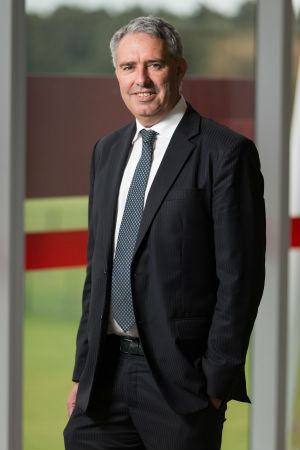
I’ve got an honours degree in agricultural engineering from Canterbury University. I’ve always had an interest in engineering and I’m a Fellow of the Institute of Professional Engineers of New Zealand.
Q. Has your engineering background helped you in public office?
Absolutely, it’s very helpful for my council role. I’ve always had an interest in engineering issues and my council work has been a huge positive. Most of our spend is in the engineering area in water and roads.
Q. Do you think it’s important for mayors to understand engineering?
I wouldn’t say that all mayors have to be engineers, but what I would say is that it is a large part – and it is a publicly required part – of local authority work. So if you’ve got a specialist skill set in that area, or a keen knowledge, that’s very helpful.
Q. Water is one of your specialist areas. what projects are you working on in this area at the moment?
We’ve got the Three Waters Project, which for the first time seeks to look at the state of the three waters [drinking water, stormwater and sewage infrastructure], the level of investment, the age profile of those investments, the asset management plans … those kind of things. It’s the first time that this has ever been done nationally. We are working with the government and treasury on the project.
The Three Waters project is valued at about $32bn. It’s a big asset for New Zealand. Now we are looking at that, breaking it down, seeking feedback from councils, the government and identifying any issues going forward.
Q. Transport is another of your specialist areas. what is your focus in this area?
We are working closely with NZ Transport Agency. We’ve just done the funding Assistance Rates (FAR) review, which has gone incredibly smoothly [FAR determines the proportion of the approved costs paid from the National Land Transport Fund].
The One Network Road Classification System is just working its way through the system [categorising roads based on the functions they perform in the national network].
We are also doing another, equally substantive piece of work around the long-term funding of local authorities and, of course, a big driver for that is the infrastructure.
Q. Can you tell me about your work in the public works space following the Christchurch earthquake in 2011?
I sit on the Local Authority Protection Program Board, which effectively covers the underground assets of Christchurch – the water, stormwater and sewage pipes. It’s been a steep learning curve to understand what earthquakes do to underground services.
The 1931 Hawkes Bay earthquake was the biggest earthquake pre-Christchurch. In 1931 they learnt about the [impact on] building structures and they changed the building code.
From Christchurch, we’ve learnt about liquefaction and underground services, and various laws will be changed because of it.
Q. You are facing some road funding challenges at the moment, tell me more
Our level of service for our roads is probably over the national average. The government is saying our level of service is too high so we’re dealing with that.
[High levels of service] are a good thing, but the government doesn’t want to invest in that level. That’s a bit of a shame when you’ve got a local community who has put its resource into [roads] and you’ve got the government saying they are not going to invest at that level any more. That’s a very interesting challenge.
Q. New Zealand is hosting IPWEA’s 2015 conference – what can delegates learn from the country?
By international standards, and certainly by Australian standards, we do have a high level of asset management. We are a small country, but we started asset management earlier than other adopters, so it is to our benefit now.
Q. What key message would you like people to take away from your keynote?
Local authorities provide good value for money in terms of the provision of infrastructure, but I’m not sure we always measure what we do as effectively as we can.
We need to understand the whole of life costs of assets and when it is appropriate to do things and when it’s not appropriate. I think that balance between investment, public affordability and goals is an important dynamic that needs to be focused on more than it is now.
It’s all very well looking ahead 10 years, but what if we look ahead 30 years? The sooner we identify the challenges, the easier and less painful it will be to fix them.
Plan your attendance at the IPWEA 2015 International Public Works Conference
Visit www.ipwea.org/NZ2015 for further information