Positive thinker
PWPro caught up with Professor Peter Newman, Director of the Curtin University Sustainability Policy (CUSP) Institute at IPWEA’s Sustainability Conference to talk sustainability in public works.
by Jill Park
What originally drew you to a career in public works?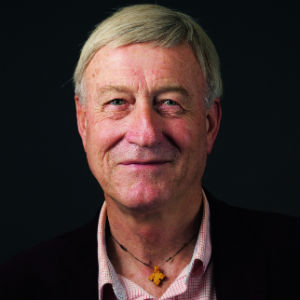
I’m a professor of sustainability, but in 1976 I was elected to the Freemantle City Council and worked closely with the engineering and planning departments over the next four years. I really learned an enormous amount about how decisions are made and how environmental issues, energy issues and social issues are incorporated into economic planning, which is sustainability.
You noted in your keynote at IPWEA’s Sustainability Conference in July that people’s reliance on cars is diminishing. How do you see this trend developing?
It’s interesting the history of that term ‘automobile dependence’ because I grew up in an Australian suburb and I thought that was the way everyone lived. When I went to Holland to study in 1972, I bought a car on the first day I got there and hardly ever used it because I was living where you could walk everywhere.
The following year I was in San Francisco when the Arab oil embargo occurred and suddenly there was no fuel and everyone was incredibly vulnerable to this change, but in Holland generally there was hardly any change because the cities were already able to function without cars.
So I started to study cities at that point and collect data on them and realised there was a very distinct difference between cities based on their transport, planning and their urban sprawl.
We came up with the data that showed the exponential relationship between transport and land use patterns for the first time. That book and those papers that came out in the eighties defining automobile dependence continue to be the basis for much planning now. People don’t want to live in a car dependent suburb if they can possibly avoid it. It’s a very big cultural change and one that has become a global phenomenon.
You have worked abroad and still travel widely. what have you learned from your time overseas?
I go to Asia increasingly, ‘A’ because it’s closer and ‘B’ they are the heart of the new economy that is emerging and they are taking it very seriously. Making green cities is their agenda so there are things to learn from them. It is extraordinary to see how quick things have changed from [China] being a bit of a laughing stock in how they build their cities to being a leader.
We can learn from anywhere because human beings are always inventing their future and cities are crucial to that. We learn from each other. I like to tell stories as well as collect data. I think stories change the world more.
You are coming to the end of five years with Infrastructure Australia. what are the biggest challenges the organisation is tackling today?
For me, the two big things are that we’re got to get away from coal and we’ve got to get away from oil. Gas is a transition fuel. It will help us.
We have got to get renewable energy into our power systems and we have got to get trains and bikes and buses into cities a lot more than we do cars.
What we found was the benefit cost ratios of doing both of these things were very attractive. The politics of doing it has always been hard. Very hard at the moment because those [opposing] groups gained political traction in the last election, but the sheer amazing strength of economics means it will ‘wear through’. You can stop the future coming for a little while, but not for long.
I’m always optimistic about these things because I’ve spent a lifetime working in infrastructure issues in government and the community and find that you generally win.
What is the first step for planners in tackling climate change?
It’s easy to have broad statements of policy saying I want to reduce carbon, but where do you start? You start where you are using the most and wasting it.
We did an audit on South Freemantle high school, which my son was going to and where I was on the P&C. We decided to be a power-neutral high school. The first thing we did when we completed the audit was shut down the boys’ urinals. We had a $40,000 a year bill for the water because the boys urinals were flushing every five minutes, 24 hours a day, right through summer when there was nobody there and it was a total waste.
We used that money we saved to pay for our carbon neutral officer and she has continued to find more and more ways to save energy and water, based on that original audit and continuing audits.
There’s low hanging fruit. When you’ve done the audit, you can then see how to do simple energy efficiency; add renewables to help replace it; and where you can’t do either, start getting offsets through planting trees. Those three things anyone can do and you can dramatically change your carbon footprint.