Torrential stormwater can wreak havoc on sensitive ecosystems if gross pollutants and sediments are not tightly controlled. Here is one innovative solution helping conserve the New South Wales World Heritage Area-listed Blue Mountains.
Maintaining clean waterways is a constant challenge for Blue Mountains City Council, located about 100km west of Sydney, where 70 per cent of its 1433 square kilometres is inscribed on the UNESCO World Heritage Area Listing.
Polluted stormwater is frequently a threat to the area’s unique flora and fauna. To counter this threat, the council uses a range of gross pollutant traps (GPTs) made by
Baramy Engineering, which is headquartered in the municipal capital of Katoomba.
Baramy Engineering was established in 1995 when Design Principal, Peter Bennett, felt he could improve upon existing GPTs used at the time by various government bodies.
A long-term resident of the Blue Mountains, Bennett was also worried about water systems feeding into Warragamba Dam and surrounding national park. If compromised, Bennett said, these waterways could carry pollutants downstream, damaging entire ecosystems.
During high-flow water events, such as storms, traditional wet-sump solutions capture waste. However, that waste soon becomes waterlogged, sinks to the bottom of the sump and starts to break down, subsequently discharging nutrients into the surrounding environment.
“Left in stormwater, organic rubbish such as paper can result in anaerobic breakdown, which depletes the water of oxygen and nitrogen, resulting in problems such as algal blooms and fish kills,” explained Bennett.
In response, Baramy Engineering has pioneered an alternative ‘dry rubbish’ solution, which works by storing captured waste in an exposed containment bay to the side, so that it's out of the water when the flow abates.
By keeping rubbish dry, excess phosphorous and nitrogen is prevented from entering the waterways. Once captured, the waste stays in the containment bay during subsequent events. Even if left for some time, it will simply compost as nature intended.
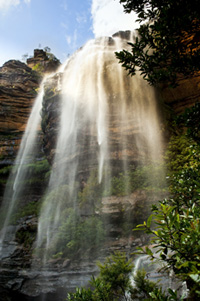
Recently, Blue Mountains City Council installed a Baramy pollutant trap to protect a critically endangered Dwarf Mountain Pine (Pherosphaera fitzgeraldii) growing out of the rock-face at Katoomba Falls (pictured). The rare plant, populations of which are found only in the Blue Mountains, was under stress due to high sediment loads and the rampant regrowth of weeds caused by excess nutrients from wet waste in the water cycle.
Apart from the environmental benefits, the trap has brought about economic and safety benefits too, reducing the need to abseil down the rock-face for regular weeding.
Emerging trends
“Increasingly, local governments are turning to a new breed of sophisticated gross pollutant traps to protect and enhance the effectiveness of bioretention basins,” said Bennett.
Representing a growing trend as part of councils' water sensitive urban design (WSUD) initiatives, bioretention basins – also called rain gardens – support indigenous flora and fauna. Their primary function, however, is to let waste seep through the basin and down into an outlet below, using the organics and the filtration media to remove fine pollutants.
Some councils have installed Baramy’s systems to protect the basins from bigger pollutants, such as coarse silt, thereby enabling the bioretention process to “polish” the water.
“By cleaning the water before it enters, our gross pollutant traps prevent the overloading of bioretention basins, so they last longer and do a more thorough job,” said Bennett.
Baramy Engineering also currently has projects under way in Malaysia, Zambia and the Philippines.
 |
Comment below to Continue the Conversation!
|