How Hume City Council inventoried more than 160,000 trees and drove a paradigm shift on its urban forest management.
In the early 2000s, Hume City Council, located 20km north-west of Melbourne, was cutting down around 3000 trees per year and planting just 400.
“With a net loss of 2600 trees per year, it did not take much imagination to deduce that this was not a sustainable urban forest system,” said Graham Dear, Open Space Coordinator at Hume City Council, in his paper at the IPWEA 2013 International Public Works Conference in Darwin on how the council turned this situation around.
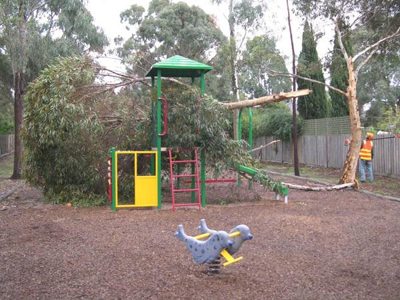
“Trees were managed reactively as individuals, planting and removal occurred without any strategic thought for the management of the urban forest,” said Dear.
Today, a paradigm shift has seen the attitude towards trees in the Hume community change from that of a liability to an important asset. Since 2004, the council has planted more than 5000 trees per year, and established a comprehensive and highly valuable inventory of its urban forest.
The Hume Street and Reserve Tree Policy was adopted in September 2004, followed by the Hume Tree management System in 2006, under which council has mapped, risk assessed and inventoried more than 160,000 trees throughout the city.
“The currency of the data is maintained by auditing and updating a quarter of the city each year, equivalent to 40,000 trees,” said Dear. “New trees are added, all trees are assessed, retired trees are noted, and new planting opportunities are accessed.”
The council was presented with a new challenge in the aftermath of the 2009 Black Saturday Bushfire Royal Commission, which changed the Electric Line Clearance Regulations and increased clear zones and clearance tolerance.
“At Hume we met the challenge by creating an annual audit program of High Risk Target Trees called the Regulated Areas Program,” Dear said. Under this program, high-risk trees under power lines, around schools or major roads, in playgrounds and sports fields, shopping precincts and near council facilities are audited annually.
“Though initially the primary aim for the Hume Tree Management Systems was to fulfil council’s risk management objects, we have found that we have been able to utilise the data in so many unexpected ways and we are still finding new benefits all the time,” Dear said.
See more papers from the 2013 IPWEA International Public Works Conference.