A multiple-award-winning upgrade project to Townsville’s wastewater purification plant has accounted for the city’s projected population and significantly reduced pollution to the Great Barrier Reef.
By Frances Sacco
The upgrade to townsville city Council’s Mt St John wastewater purification plant was delivered on time and under budget in September 2011 – despite a cyclone, two wet seasons and the fact the facility was still operational.
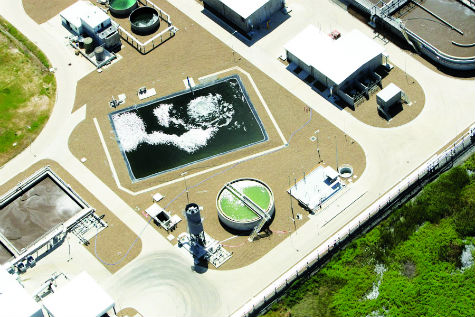
Five awards have been presented to the team behind the $189-million undertaking, in which the upgraded plant was built around the ageing plant, on the same site. Three other smaller plants were also decommissioned when the Mt St John upgrade was finished.
By centralising the treatment process, the council has been able to save in excess of $75 million and free the land from the decommissioned plants land for re-use.
Townville City Council’s then-Senior Project Manager (now Manager of Programs and Technical Support) Steve Gray oversaw the project.
“The council has been quite brave in using its own people to run the project,” he says. “There has been a lot of support from outside consultants, but they had the confidence in their own people.”
Gray credits much of the smooth running to the way the relationship between the council, design contractors AECOM and Hunter Water Australia, builders Baulderstone Queensland and the plant operators was managed.
“We did not want to go down the route of an alliance,” he says. “We got the contractors on board half way through the design phase so they fully understood the risks involved what they were tendering for and even extended the timeframe based on their advice.”
This approach also led to cost savings when contractors were able to suggest changes to the layout that would alleviate the need to build a temporary wall.
The plant operators were heavily involved throughout the process and a team from the contractors remained with the operators for a year after commissioning to ensure a smooth transition to the operators, critical support, early-defect resolution and further informal training during this handover.
“There were a lot of processes and people working together,” Gray adds. “The big ethos we had was to find solutions to problems, not blame each other.”
The fact that a cyclone and two wet seasons were not enough to derail the project’s timeline or budget is testament to how well that ethos worked. One of two wastewater treatment facilities that now service Townsville, the Mount St John upgrade was designed to handle population growth until 2026, and also includes components within the treatment plant to accommodate 2040 population forecasts.
“The old plant was built in the 70s and was overloaded. We used to get a lot of complaints,” Gray says. “We used to get bypasses during the wet season, which is not as bad as it sounds, because the water would dilute it. We also had regular breakdowns during the wet season.”
New license conditions from the Qld Department of Environment & Heritage Protection also meant reductions in the nitrogen and phosphorus in the effluent discharge were necessary.
Since the upgrade, up to 75 % less nitrogen, up to 97 %less ammonia and up to 70 per cent phosphorus are present in the discharge into the Bohle River, which flows into the Great Barrier Reef.
The decommissioning of the smaller plants means that no more effluent discharge flows into the Black and Saunders rivers.
“We had three sources of funding; the Australian Government, the State Government and local government,” Gray says. “We’re thankful for the support of the State and federal governments and a lot of that was because of the reduced impact on the reef.”