New Victorian Division President Vicki Shelton is the first female IPWEA member to be elected to such a position at either the state or national level. She explains why becoming involved in the IPWEA is her way of helping others to build their communities.
By Michael Mills
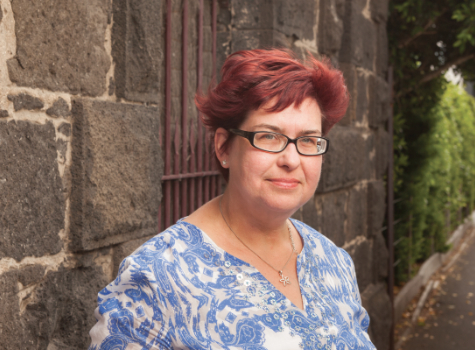
Vicki Shelton is the Coordinator Infrastructure Management at City of Greater Geelong in Victoria. She has worked in local government for more than a quarter of a century, fulfilling roles in urban design, and roads and drainage.
She was elected as President of the IPWEA Victoria Division at the state’s annual general meeting on 11 October 2012. She replaced David Sutcliffe, who had completed his one-year term.
What are the major skills and expertise you will be able to bring to the position of Victoria President?
I’ve been in local government for more than 25 years. I work in a large regional city, the City of Greater Geelong, so I have a broad view of the issues and work required in both urban and rural areas.
I was a construction engineer for the first seven years of my career at the City of Geelong Council. When all the Geelong councils were amalgamated into the City of Greater Geelong in 1993, I moved into a special projects area, looking after customer service enquiries in areas such as special rates and charges, flooding, drainage, and planning of new works.
I’ve also worked in the design office and in project management roles. Currently, I’m the Coordinator of Infrastructure Management, so I manage a team that looks after Geelong’s new urban growth development areas. It is not just managing an asset and building new ones, it’s planning for what’s to come. We’re building new suburbs and communities.
A lot of my work involves liaising with government departments, service authorities or other departments within the council. I have built a good rapport with many different people across different professions.
What are the outstanding experiences and accomplishments of your career?
Personally, the 2008 Municipal Engineering Foundation Victoria overseas study tour to the US, Denmark, Sweden and the UK was a very big highlight. I went with four other engineers to see how other municipalities around the world are building sustainable works. It was this experience that made me decide to get involved with the IPWEA.
I also coordinate our graduate engineer program, in which we provide work experience to between three and five tertiary students over their summer vacation breaks. Watching them develop is great – some of them even come back as staff, either within our organisation or other surrounding organisations. It’s good to see them become well-rounded engineers who are equipped to make a positive contribution to the community.
How big an issue is the low levels of graduates emerging to replace the older generations of engineers?
We were looking at the demographics of our staff recently and about half a dozen had been with the council for more than 20 years and all the rest had less than 10 years’ experience.
There is that gap in the middle. So we are looking to find ways to ensure those 10-year engineers continue in local government and also guarantee that newcomers have the right knowledge so they can jump into the roles.
We all put a lot of pressure on the young ones when they start. They are all quite capable and mature, but the customer service and communication expertise is something you only get through experience.
We try and mentor them. We provide them with skills training and help them learn from what other people have done. If we can provide external training then we try and do that as well.
What plans do you have to do something about this in your capacity as the Victoria Division President?
Through our events, the Victorian Board is looking to provide and support networking and training opportunities in both regional and urban areas.
Why did you decide to become more involved in the IPWEA?
It’s good to be involved in the engineering community and support others. I know where such support has led me, so I knew I could provide it as well. It’s a way to assist people to do something good for their communities, which is what we’re all doing this for.
The IPWEA has been doing some great things with online networking. Most public works engineers can’t afford whole days out of the office, so it’s great to have access to these resources from your desk. The Ask Your Mates forums and the email discussions are great; they allow the profession to collaborate and learn new things. If anything, I’d like to see this grow.
 As the first female member to be elected as a state or national President, do you think the industry could do more to attract women?
Organisations generally try to provide a work/life balance. There are some projects where you don’t have to be in the office all of the time, but others require you to be available. There is always a mix of different jobs that can be filled, but there is no job that cannot be filled in public works engineering by a woman.
What are some of the biggest lessons you’ve learnt over your career?
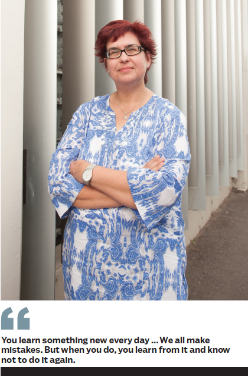
You learn something new every day, whether it is something simple on your computer or something more specific to your role. We all make mistakes. But when you do, you learn from it and know not to do it again. No one is perfect and you can always learn from others.
Getting my MBA was a big challenge because I had to complete it by correspondence.
Perhaps the biggest lesson was when I lost my job as a works engineer as a result of the Geelong amalgamation, and I didn’t get my original job back after it was completed. I was still turning up to the depot each day to supervise the outdoor staff and organise work. I would then go into the new office and find out what I was doing on that particular day.
I felt I had a duty to continue on in my work until I was appointed into another job.
In hindsight, what could you have done differently during the amalgamation?
Because I was younger and in a smaller council, I didn’t expose myself to all the opportunities to network and make myself known. This showed that you must do that and be more aware of what’s going on around you.
What do you do away from work that allows you to have a balance?
I love travelling. I’m always trying to save up time to go on overseas holidays. I’ve met great friends on overseas trips whom I’ve since gone back and visited.
I like films, so I enjoy going to events like the Melbourne International Film Festival. Also, my family and I have just built a house, so I’m busy landscaping.
How important are the experiences gained when travelling for your professional life?
You meet people from all walks of life. For instance, if you’re on an organised tour, you’ve got to learn to be tolerant and work with people. Some people might be annoying or always late, for example, but you have to work with that. You learn to accept people for their little eccentricities. Work is much the same. Everyone is different and you work to try and get the best out of people.
One trip stands out: China. We climbed the Great Wall and visited the Three Gorges Dam on the Yangtze River – it was amazing to see both a historic and a modern feat of engineering. It showed the amazing things that are possible. We also visited the small villages and saw all the people who live in very basic conditions, but are self-sufficient.
It reinforced how very lucky we are in Australia. We’ve got a lot of everything and are able to afford what we need. We also have the ability to advocate for improvements. We can be heard.
What advice would you give a young engineer?
Work hard, talk to everybody and find out what people do. Always ask questions – there are always reasons why things are done, but you must understand the reason.
Are you optimistic about the role public works can play in Australian society?
Definitely. We’re all working in areas where we can have a major impact on the community. A lot of what we do keeps the country moving.
 |
Comment below to Continue the Conversation!
|