Public Works Professional examines the most important trends influencing the design of excavators right now and in the future.
By Jill Park
Every 10 years or so, a new excavator model comes onto the market with technology that fundamentally changes the way the equipment is designed, according to key figures within the industry. If this theory is to be believed then the next big change is due in the next few years. But what is driving change in excavator design now and what will be driving it in the future?
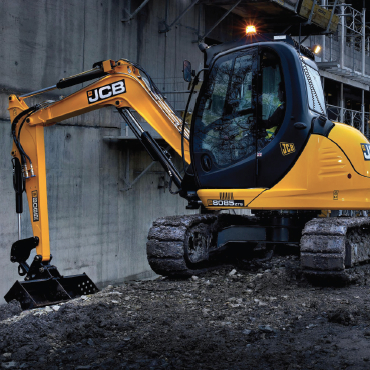
Manufacturers continue to address the mainstay issues: operator comfort and safety are key issues in ensuring the productivity of the machine operators; while machine improvements in ergonomics and diagnostics are aimed at reducing operator fatigue and improving the operator’s working environment.
Everybody is focused on increasing the intervals between scheduled services to reduce maintenance costs, reduce the impact on the environment and to reduce downtime, agrees JCB Construction Equipment Australia Product Manager Ken Butler. “The standard is 250 hours and it has now been extended to 500 hours,” he says.
“I would suggest it will extend further as component technology improves.”
Diagnostic technology is becoming an increasingly important element of excavator design, as Caterpillar Global Construction and Infrastructure Asia Pacific Marketing Director Phil Pollock explains: “These help the customer manage their fleet and ultimately lower the total cost of ownership,” he says of the technology currently on the market.
“It’s not the data itself, but the insight from that data that allows you to be proactive and manage your fleet.”
The most recent factor to impact on Australian excavator design was the introduction of ISO 12117-2: 2008 in November 2008, which regulates roll-over protective structures (ROPS) for static-loading and hydraulic excavators (as defined in ISO 6165). Although not officially regulated in Australia, most machines are designed to comply with this international standard.
“Australia is driven by the market and the market demands regulation,” says Butler. “In Australia there isn’t any government regulation, it’s been market driven,” he adds, referring to the 2008 ISO standard.
“Design demands in the next five years from a global standpoint will include conformance to the US Tier 4 standards engine-emission regulations, as well as further innovative developments in ecological sustainability and information technology,” says Amber Mahoney, National Business Manager – Construction for Komatsu.
Mahoney refers to the recent adoption of Tier 4 engine-emission regulations by the UK, US and the expected adoption by Japan in the coming year.
Despite the fact Tier 3 is not regulated in Australia, most big brand equipment sold in the market currently complies to Tier 3 diesel engine-emissions standards and has done so for some years, so the international move towards meeting Tier 4 standards could be a shock to the system for manufacturers in the region.
She predicts that technology will be focused on reducing fuel consumption and minimising environmental impact in the coming years.
Phil Pollock agrees: “Going forward, similar to the automotive industry, I think we are going to look at alternative fuels, the increasing innovation of technology through smart diagnostics and emission engines will be refined.”
And if the cycle is to be believed, those developments are only a few years away.
Improving training
Equipment manufacturers are not only focusing on improvements to the machinery. Quality operators are another big concern for the sector. Caterpillar’s Phil Pollock believes it is the responsibility of the machinery suppliers to not only provide safety and comfort for operators, but to ensure they have access to training too.
“There’s an increasing demand in the market place for quality operators” he says. “It’s the role of suppliers to build that competency in the market place.”
Many manufacturers have opened demonstration centres to help build the next generation of operators and facilitate best-practice sharing to meet regulation standards.