Smartphones and social media are providing local government and public works professionals with an opportunity for unprecedented levels of community engagement and service delivery.
By Carla Grossetti
The way we communicate has changed dramatically over the past decade.

Mobile phones, for instance, are no longer simply tools to make calls or send texts. Even checking emails is commonplace. Consumers now use their smartphones to do their banking, share photos, get directions and read magazines.
Furthermore, social media, such as Twitter, Facebook and LinkedIn, have become much more than a means to keep in touch with friends and family. They are a ubiquitous extension to the daily lives of people all around the world. For many, using social media has become part of their lifestyle and identity.
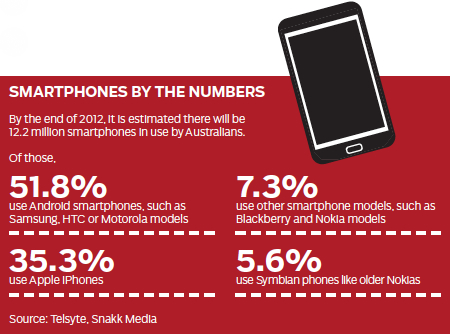
But it is the rate at which the technology has been adopted that is most amazing. The latest research suggests that more than half the Australian population is using social media and a smartphone.
In February, telecommunications research company Telsyte predicted that there would be 12.2 million smartphone users in Australia this year, up nearly 40 per cent from 8.8 million in 2011.
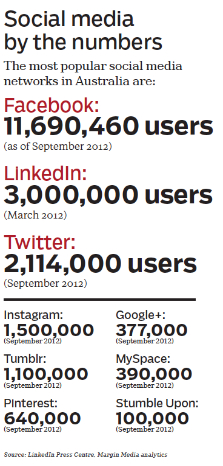
Facebook, meanwhile, has more than 11 million active users in Australia – and close to a billion users worldwide (as of July this year) – according to social media marketing firm Social Bakers. Twitter and LinkedIn are comparatively smaller, but still have around two million and three million Australian users respectively.
So, just as businesses are connecting with consumers via these new methods, there are massive opportunities for local government and public works professionals to do the same with their community.
New research from the Australian Centre of Excellence for Local Government (ACELG) reveals that councils taking a strategic approach to social media are achieving more effective outcomes in engaging with communities.
ACELG’s Program Coordinator of Innovation and Best Practice Paul Bateson initiated the research for the project, which included a national online survey of 560 councils and a series of in-depth interviews with elected members, staff and professionals working in and with local government.
Bateson says the report acknowledges that social media brings a different set of demands to traditional communication and it’s therefore crucial for councils to ensure they are appropriately resourced and ready to integrate it with their communication strategies.
He says leadership is critical to take advantage of the latest communication channels, because of potential barriers, concerns and implementation issues.
“It is critical to gain the buy-in and support of top management teams, including CEOs or general managers, to progress and adequately resource social media in a strategic and corporate way,” he says.
“Where you have enlightened leaders who understand and actively use this communication channel, it flows through the organisation and builds a culture where social media is part of a core business to engage with the community.”
The survey findings were published in the 2012 report Connecting with Communities: How Local Government is Using Social Media to Engage with Citizens, by Anne Howard and Karen Purser.
Bateson says the fact the latest technology allows councils to rapidly disseminate information means these communication channels cannot be ignored. He says guidance is often needed for better understanding of the integration of the social tools that are best suited to local circumstances.
“Social media is not a fad,” he says. “There are many potential benefits covering a wide range of local government functions and communication activities: from corporate image to event planning, issues management and emergency/crisis management.
“The cons, such as risks about negative comments or campaigns against councils, can be managed properly if staff are given the guidance to make strategic decisions.
“Unless councils respond by being proactive with social media, they risk being left behind by the community. The next big step is to use social media to increase productivity.”
 Another national survey undertaken by ACELG in 2011 showed that the value of social media was ranked highly in relation to public works information.
Chris Champion, CEO of the IPWEA, considers it important to separate social or personal networking from professional networking. The IPWEA has chosen a deliberate strategy of developing a strong professional networking platform for its website and communities of practice.
“The IPWEA’s communities allow more focused discussion on topics of direct interest to public works professionals without being bombarded with recruitment or sales pitches as are often evident on LinkedIn,” he says. “On the contrary, we have created an environment where practitioners, consultants, suppliers and contractors alike are all contributing to practical solutions on day-to-day work issues.
“The breadth of discussion never ceases to amaze me. Some people are regular contributors and many just follow the discussion and chime in when something grabs their attention.
“I often get comment that people enjoy and learn from just following the discussion. In a way, the discussion is the latest in practice and solutions never seem to be more than a few hours or a day or so away.”
Champion also notes that the internet is opening up new channels of communication and collaboration. The IPWEA’s communities have many international participants whose number is rapidly increasing. Experience has shown that problems and solutions are not restricted by state or national boundaries. The IPWEA communities are providing the vehicle for solutions in one country to be applied to a problem or issue in another country.
Bateson suggests ACELG and the IPWEA collaborate on a follow-up survey to determine the way in which public works professionals are using social media. He says better engagement with citizens opens up so many opportunities to improve services, facilitate more open and responsive government, and foster closer relationships.
“If a council applies a methodical strategic approach and resources social media adequately, then almost all potential pitfalls or risks can be avoided or overcome,” he adds.
“Looking to the future, social media can even play a key role in the shift toward citizen-centric decision-making. Public works professionals, including engineers, have the opportunity to be part of this social media revolution that will assist with their roles and responsibilities,” he says.
But many groups and councils have not waited for an invitation.
More than 30,000 Australian ratepayers are using a free smartphone app called Snap Send Solve to report problems ranging from broken glass in a playground to faulty parking meters and potholes.
The free app, created by Melbourne developers, Outware Mobile, is, according to director Danny Gorog, enabling users in electorates around the country to report incidents to council with ease.
“If you think about the traditional ways councils have always worked, the details provided by the public are notoriously inaccurate, contacting the council call centre is notoriously laborious and the entire process can be a real turn-off,” he says.
“Is the app making councils more accountable? Yes! But councils also list the app on their websites and promote it as a valid way to report issues, which suggests responding to day-to-day council issues has been made easier and it’s actually helpful when it comes to improving service.
“The app pinpoints the exact location of the problem and determines which council to send that information to, which makes for a much more efficient system.”
Gorog says the app, which can been downloaded by iPhone and Android smartphone users around Australia, appeals to community-minded citizens who notice something that needs fixing and want to report it immediately. He says public works professionals are also using the mobile GPS and camera to provide feedback to their managers on all manner of problems.
“There are thousands of issues that are being sent to councils each month,” he says. “Internally, there are also people in public works who let their managers know about issues they encounter while out and about in the field.”
Being able to determine a resident’s current council means the app communicates information that is tailored to that specific area. Outware is also working to develop systems that complement the council services’ backend systems.
Categories of perceived potential issues included on the app are: beach cleaning, feedback, general requests, hard waste, litter, noise, parking, street cleaning and trees.
But many councils have also developed their own individual smartphone apps, including Brisbane City Council, Sunshine Coast Council and Randwick City Council in Sydney.
 Randwick City Council communications manager Josh Hay says that, when used in conjunction with its internal workflow management system, the myRANDWICK app has enabled public works professionals to be more productive when out in the field.
“We have tablets installed in all of our council service trucks and if a problem is reported through the app, that can be work-flowed through the system,” says Hay.
“Imagine you have a supervisor sitting in the office at the depot who receives a notification via the app from a community member who has reported a tree down in a park. That manager has the ability to action that request to a crew on the ground and prioritise this new task.”
Three weeks after launching in July 2012, some 2000 ratepayers had downloaded the app and engaged with the council about issues that affected them. Hay says public works professionals within the council had also used the app to inform and engage local residents.
“This is an effective medium for public works professionals to communicate about the potential impact of upcoming works and target those residents who will be affected,” he says.
“We can tweak the information about, say, a footpath or road upgrade and make it relevant for a resident in a particular area.”
Users will soon be able to take a photo of council-related problems – such as a lawn that needs mowing or a fallen tree branch or bin that is overflowing – and send that information in with a tagged GPS location.
“In the past, a resident would have had to contact the council call centre about, say, a pothole on the street they live in and, if they were unclear about the location of the problem, it could lead to delays fixing it,” Hay adds.
“Now, the information being provided to council is more accurate and the soon-to-be-enhanced geo-tagging location advice will further improve our ability to serve the community.”
Randwick has also developed internal strategies to handle serious or dangerous issues that might be posted on Facebook or Twitter and not noticed by staff until the next working day. Social media sites are now closely monitored to ensure the communication lines with council are both open and functional.
Problems reported through social media are dealt with in a variety of ways. Should the person provide enough information to allow the council to take action, it will allocate that request just as if it had been a phonecall or an email. Should a user not provide specific information, they will be contacted and encouraged to provide the call centre with more detail.
Randwick Mayor Scott Nash says the council is committed to giving residents options about how they receive information and how they interact with council.
“myRANDWICK means you can keep up-to-date with what DAs your neighbours are lodging, check when your next free street clean-up is, check how your recycling rates are going, and learn about footpath upgrades in your street,” he says.
Communicating to concerned residents during times of crisis is a great example of how to embrace opportunities afforded by the latest technology. When it comes to information sharing, Brisbane City Council has been commended for its use of social media to communicate with concerned residents about the January 2011 floods.
In fact, the Council won a number of national awards in recognition of the way it embraced the various media to provide detailed information to the community.
A council spokesperson says tapping into social media had been a very positive experience. “Engaging with the public in real time has allowed the council to respond to general enquiries from community members and share information about events, issues and crisis communications,” according to the spokesperson.
“Council was very active in its use of Facebook and Twitter and YouTube during the floods to share important sandbagging information with the public.”
The spokesperson agrees that the key feature of the implementation of social media during the crisis was that council doled out considerate, warm responses in a friendly and conversational tone.
The experience also demonstrated that it is important to be transparent on social media channels because it builds trust and authenticity within the community. It is important not to over-moderate and only delete comments if they are in breach of guidelines.
“Council hasn’t experienced many ‘trolls’ on its social media channels to date,” the spokesperson says. “In fact, the community often moderates on behalf of council, generally because they enjoy the space and like to keep it troll-free. There are community guidelines on council’s Facebook page, which users are alerted to if they are ruining the page for other visitors.”
Brisbane City Council says there are opportunities for engineers and public works professionals to make use of the latest technology. Every department in the council uses the social media channels for a variety of reasons.
“Predominantly, social media is used for information sharing and gathering, from which council can obtain from the public true sentiment and situational awareness about a particular topic,” the spokesperson says.
“Council often monitors specific key areas or issues in order to provide analysis and feedback to help shape communications and projects, based on the public response.
“Social media has become an integral communication channel for not only council’s public work professionals, but the entire organisation itself.”
As well as communicating vital information in times of crisis, councils around the country also use social media to deliver everything from reminders about bin night to daily beach condition reports.
Lord Mayor of Adelaide City Council Stephen Yarwood agrees it’s crucial that local governments use the latest technology to connect with the community.
“I do all my own Tweets and Facebook updates and it’s a great tool for me to communicate with residents and the general public about topical issues,” he says.
Using social media during a crisis
Brisbane City Council used social media with great success during the 2011 floods to connect, communicate and collaborate with local residents and the wider public.
Here are some tips on best practice for social media, dependent on the channel, the organisation and the expectations set internally and externally. As a general rule, best practice involves:
• responding to comments and enquiries promptly
• adopting an informal yet professional tone
• being transparent when divulging information
• showing empathy and genuine interest in customers
• having a strong social media policy or procedure that guides staff on usage
• sharing interesting content to drive engagement
 |
Comment below to Continue the Conversation!
|