IPWEA National Board members Ged Brennan and Michael Kahler have been heavily involved in Queensland flood recovery projects. They explain how the public works sector has responded to one of Australia’s worst natural disasters.
By Michael Mills
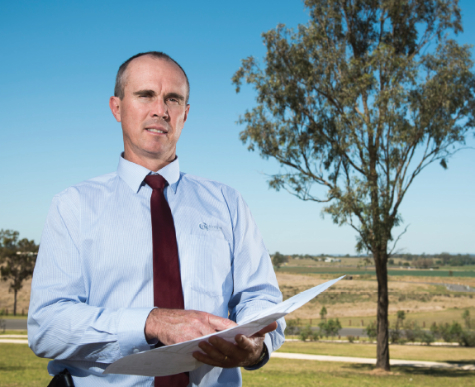
Ged Brennan is the Managing Director of GenEng Solutions and is a member of the IPWEA National Board. He is also the Vice President and Treasurer of the IPWEA Queensland Board. He worked closely with the Lockyer Valley Regional Council on the Strengthening Grantham Project.
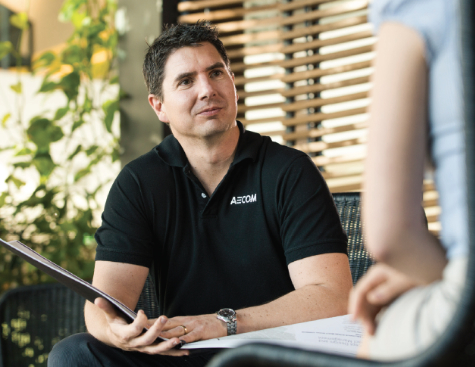
Michael Kahler is an Associate Director at AECOM and is the Vice President of the IPWEA National Board and the President of the IPWEA Queensland Board.
Ged Brennan
How important has community engagement been to the success of the Grantham recovery project?
The Grantham community has been heavily involved in the process. The actual project was to reconstruct a residential development on higher ground. But what has made it unique is that it involved a land swap. This was a voluntary process for the impacted families. They could move their home off their original lot, they could have a relocatable house – there was no governance or restrictions placed on them. How they financed their house was totally voluntary. The different families have worked at different paces, due to the various circumstances they found themselves under.
The council was very active in establishing a policy and administering a ballot process. There were four different sizes of land allotments and the landowners could voluntarily enter the ballot and swap their land. We had to provide a mix of housing sizes to match the allotment sizes.
What was your role in the project?
I was the project manager of the onsite construction from July to December 2011. I was in charge of delivering 90 lots in that time and making sure the first of the houses were complete and it was possible for families to relocate into the new development before the anniversary of the floods.
We had the first family in before Christmas. There’s around a dozen families living in there and around another 25-30 houses under construction. Because some families are under significant duress, particularly emotionally and financially, it will take some time in some cases for them to finish their preparations and arrangements to get on site.
I had some specific objectives: first, an absolutely rigid time frame for the delivery of the first stage; second, a focus on the landowners and the need to meet any requirements that they had; and third, maximise the use of local resources, suppliers and local contractors. The combination of those three were not always complementary.
Quite often, local contractors tended to be smaller, so we had to coordinate large numbers of contractors. Sometimes the sophistication of their equipment or their processes probably made the delivery more challenging – we sometimes had to overcome certain problems they created. For example, the local quarry suppliers didn’t have the ability to create moisture into road pavement, which meant we had to establish a pug mill onsite in order to place the pavement at the speed we needed to.
What were the main challenges you had to overcome to deliver the project?
The construction of the houses concurrently with the construction of civil works was a significant challenge. A great amount of work had to be carried out to ensure it could be done safely.
We probably had 15 separate work crews involved in the process, five of which were council work crews. It wasn’t something they were regularly involved in – although they had a good skill level. We also had to incorporate other specialist contractors who were installing reservoirs, NBN networks, electricity wiring or curbing channels. All these different activities were running at the same time. Meanwhile, we also had to ensure the site was as accessible as possible for the landowners. We provided them with a guide to get them onto the site when they needed to.
What work was undertaken to ensure the area is more resilient to flooding?
The lots have been constructed many metres above the observed flood height from 2011. The site is uphill from the original part of the township and there were houses there that might have been tens of metres higher than the flood level. This development is further up the hill again. It’s well and truly clear of any concern.
Has this project highlighted the importance of collaboration and cooperation in the industry?
It has shown what’s possible. Really all that’s required from all concerned is a problem-solving approach. If everyone has a positive objective, things can happen really quickly, effectively and without taking shortcuts. I worked very closely with the Lockyer Valley Regional Council, essentially inside the organisation, as their project manager. I was certainly treated as their representative.
The council really has to be commended. I had really good support from the executives and the councillors. They showed great leadership.
Michael Kahler
What are public works professionals doing on a day-to-day basis for the Queensland recovery program?
The main flood recovery works are the reconstruction of roads, drainage and bridge assets across the state. The flood events during 2010/11 and March 2012 have caused around $9.2 billion worth of damage across the state and local government road network. Under the National Disaster Relief and Recovery Arrangements (NDRRA), the Australian and State Government are providing funding to councils to reinstate essential public assets. Each council is focussed on reinstating flood damaged assets to their pre-flood event standard, and where practicable within the NDRRA guidelines mitigating the risk of future flood damage by improving resilience. Works are in full swing in an attempt to reduce the risk of further flood damage from the 2012/13 wet season.
What have been the biggest milestones and achievements?
Since January 2011, there has been about $4 billion worth of completed restoration works, so we’re close to the halfway point. That includes work by Queensland Transport and Main Roads as well as local government. Some of the larger local government programs have been completed. For example, Ipswich was one of the hardest hit areas and its road and drainage restoration program is now finished. The reconstruction of the city’s assets has been a good news story.
How long will it be before the recovery work is complete?
It will be largely dependent on whether we get another significant rainfall event over the coming storm season, which is typically November to March. A lot of the regional centres were still working on damage from the 2010/11 event when they were impacted again in March 2012. If we don’t have another significant event, we probably have around 12-18 months of works left before the bulk of the works across the state are done.
There are a small number of Councils that have only recently begun the physical reconstruction works. There have been some constraints due to the shortage of engineering and technical expertise. The resources boom in Queensland has drawn a lot of experienced engineering staff and construction staff to the mining sector. Furthermore, the second event in March 2012 made it difficult for councils to maintain momentum on the flood restoration task.
What difficulties has the sector faced on a regular basis?
The unavailability of quality contractors has been an issue. There is a significant amount of works happening across the state at the same time. So there is a considerable demand for contractors, engineers and project managers. That has put price pressure on some of the works and the costs have escalated over the past 18 months. There have also been challenges in sourcing materials such as gravel and quarry products.
What needs to happen to ensure the finishing stages run smoothly?
One of the issues of concern in Queensland is the potential dissolving of the Queensland Reconstruction Authority (QldRA). QldRA was set up by an Act of Parliament following the 2011 floods to administer and manage the funding through the NDRRA program. It’s been mooted by new State Government that, by February 2013, the authority will cease to exist. This would mean that a lot of expertise would be lost. We will be advocating for the Authority to survive or, at least, for an alternative approving authority that is adequately resourced with sufficiently experienced people.
What has the recovery program revealed about the Queensland public works sector?
It has shown the ability of the sector to pull together in difficult times and deliver the flood restoration program while performing their normal works and services for the community. The magnitude of the floods in many areas had never been experienced before. We’ve been working with communities who’ve been devastated – there has been loss of life in some communities and severe social and economic impacts. Engaging with communities and councils to prioritise work has been crucial to getting them back on their feet.
There are examples where great innovation has been applied to reuse materials to minimise the impact on the environment and reduce costs. There has been a lot of knowledge shared between councils through IPWEAQ to ensure the same issues don’t arise in different places.
Are you confident this will make southeast Queensland more resilient to floods?
The bulk of the flood restoration work has been on a like-for-like replacement basis where the assets are reinstated to the pre-event service standard. There have been some opportunities for increased flood resilience, however overall the asset network resilience will not have markedly changed. This is largely due to the constraints associated with NDRRA funding. The only way to really achieve increased resilience is with an innovative design that can provide improved resilience at the same cost as a like-for-like replacement, or where councils contribute their own funds for the upgrade.
It comes down to affordability. We are achieving the best possible outcome with the available funding. The funding needed to improve flood immunity across the state would be financially unsustainable and practically unachievable. We're talking about a flood that was, in some areas, equivalent to a one-in-a-1000-year event. It would be impractical to design infrastructure to withstand that level of flood intensity.
 |
Comment below to Continue the Conversation!
|