Detailed, ongoing planning has been the key to keeping the Hills M2 Motorway upgrade in Sydney’s northwest on schedule while keeping traffic disruption to a minimum.
By Frances Sacco
The $550 million Hills M2 Motorway upgrade is the largest road project in Sydney since the Lane Cove Tunnel was built around four years ago. However, unlike that project, this upgrade is being carried out while 100,000 motorists use the road each day.
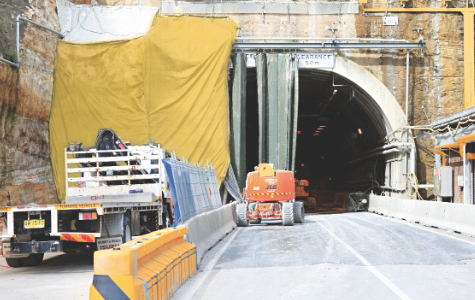
Balancing the need for speedy construction against the need to minimise disruptions has required extensive planning with multiple stakeholders.
Head of the Hills M2 Motorway Craig Greene said hundreds of people have been involved in the planning of this balancing act since the project started in January 2011.
“On a project such as this you can’t just plan from day one to day 100,” he says.
“The planning needs to be intensive and interactive.”
Work on the upgrade has to be organised on an ongoing basis, with daily, weekly and monthly planning meetings held in order to make sure traffic flow is as smooth as possible.
 Different types of work have to be scheduled carefully to allow the motorway to open fully for peak hour and minimise the impact on the surrounding community, some of whom live only metres from the motorway and associated worksites.
Contractors are able to close off more lanes during the evening, so most noisy work must take place during the early evening, such as drilling or rock hammering in the tunnel.
Hills M2 Spokesman Peter Colacino says the transition between day and night work takes place at around 8pm.
“The time depends on the volume of traffic,” he says. “We are conscious to limit delays for our customers so have to wait until it drops down to a suitable level.”
After a toolbox meeting to outline the night’s work, attenuator vehicles, which are specially designed to absorb the impact of a crash, lead the rollout of roadwork zones, reducing the motorway to a single lane in each direction using thousands of traffic cones.
As work takes place in the motorway’s existing traffic lanes, contra-flows are used at night to direct traffic around the lanes being worked on.
Larger engineering works, such as the demolition of the Beecroft Road bus ramp, bridge abutment demolition, and pavement stitch-pours are often scheduled for long weekends, Christmas or Easter to avoid workday traffic as much as possible.
“For example, planning for the October long weekend started in May or June,” Greene says.
“We needed to try to work out what needed doing and how we were going to do it.”
The safety of motorists and workers is at the centre of the planning process of the Hills M2 expansion, as is preventing and quickly easing any congestion that eventuates.
Colacino says the number of incident response vehicles has been significantly increased during the upgrade works. Usually there are two light vehicles dedicated to helping motorists with things like changing a tyre or filling up with petrol.
“That’s gone up to four light vehicles and two tow trucks for larger incidents,” he says. “We also have two traffic crews – one at either end of the tunnel, so if there is a breakdown, they can be there within minutes.”
Planning for the unexpected is also vital to the project. Events like a football grand final or a back burn in nearby bushland can have a major impact on traffic flows. “It’s worth the investment to get it right,” Greene adds. “If we don’t put an effort in, the results will be substandard.”
 |
Comment below to Continue the Conversation!
|