With no overarching legislation on the use of mobility scooters, some councils are taking matters into their own hands to create a safer environment.
By Jo-Anne Hui
Almost every week, Parkes Council Road Safety and Injury Prevention Officer Melanie Suitor receives at least one phone call from someone complaining about a mobility scooter driver in the Parkes, Forbes and Lachlan area of NSW.
People have been concerned about someone travelling down the highway on a scooter or driving on the wrong side of the road and holding up traffic,” says Suitor. “We’ve also had complaints from shop owners about scooter drivers parking their vehicles in front of their shops.”
As the ageing population in Australia increases, so do the problems surrounding mobility scooters. However, there is no national approach to this issue. Queensland is the only state with any specific legislation aimed at improving the safe use of mobility scooters, requiring all users to register their vehicles with the Department of Transport and Main Roads. The equivalent authorities in the other states all confirmed to Public Works Professional that they had no plans to emulate the legislation.
So, it’s up to councils to open up a discussion with the community and stakeholders about mobility scooters and their place on the roads. Here are three ways you can help the roads in your area become safer for everyone.
Communicate with the community
To get a holistic view when creating a safer environment for mobility scooter users and the general community, enter discussions with other stakeholders.
Last year, Suitor helped run a Mobility Scooter Safety Forum in her council area, which featured mobility scooter users, engineers, town planners, healthcare workers, the RTA (now the RMS) and the police.
Together, they discussed mobility scooter issues from all perspectives and developed a list of recommendations to offer the State and Federal Governments.
Other major outcomes included the development of a comprehensive education kit for councils to inform the wider community about roads and regulations for mobility scooters, as well as a practitioner’s guide for local government to provide guidelines on how to design roads for mobility scooters in the area.
Safer roads, safer scooters
What better way to fully understand the challenges of mobility scooter users, than to actually get in a vehicle yourself and attempt to navigate the city?
Two years ago, the Parkes Access Council Committee held an Access Awareness Day, where committee staff were required to get in a mobility scooter and have first-hand experience of what it’s like to have a disability or an access issue.
“You got to have a real feel of what it’s like to be in a scooter and manoeuvre around town,” says Suitor. “You have to work out how to cross streets and how to get into shops without ramps. So it was good for the committee engineers and planners to get that feel first hand of what those guys on scooters are facing.”
From those experiences, the committee was able to make changes to the layout of the city to encourage safer use of roads for everyone. These included:
- Widened pedestrian refuges: typical pedestrian refuges are not wide enough to fit a mobility scooter when crossing the street or a roundabout.
- Parking areas: wide parking bays are required by mobility scooters near shopping centres, to avoid them being left around car parks or on the street and potentially obstructing others on the road.
- Improved pram ramps: these are designed to help scooter users ride up and down kerbs when crossing the street.
Educate the community
Councils are in the best position to talk to the community at a grassroots level and educate the ageing population on how to safely use mobility scooters. Unfortunately, there is no testing required to drive a mobility scooter, putting many users in danger when on the road.
For the past eight years, Shellharbour road safety officer Jenny Davies has been running mobility scooter workshops to promote safety and awareness in the community.
“People turn up to these workshops and tell you they got a scooter because they failed their driving test,” she says. “So the [RMS] says they can’t drive, but there’s no system in place to stop them from getting on a scooter or to test them that they’re safe to drive that vehicle on the road. They’re even more vulnerable on a scooter in some cases than they are in a car.”
At these workshops, Davies talks about how to safely use and maintain a motor scooter, the police discuss road rules and an occupational therapist explains how users can correctly use their vehicles and take care of their bodies. A local scooter retailer also attends the workshop to explain the different scooters available and how to choose a suitable vehicle to match the user’s needs.
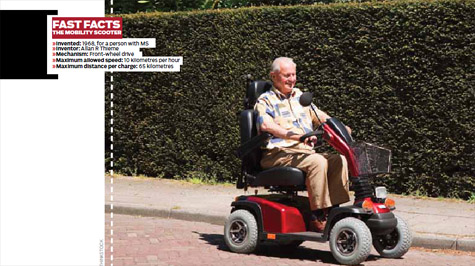
Suitor holds similar workshops in her area, which also involve testing the speeds of attendees in their mobility scooters. Mobility scooter users actually fall under the definition of pedestrian, so according to legislation, they should not be going faster than 10 kilometres an hour.
“We speed test them to make sure they’re under 10 kilometres to show them how fast it actually is,” explains Suitor. “The scooters are actually manufactured to go faster than that and there’s no speedo attached, so users could be going faster than 10 kilometres without realising.”
Both Suitor and Davies hand out information packs to attendees that include fact sheets from road safety officers and a checklist on how to buy a scooter.
 |
Comment below to Continue the Conversation!
|