Cook Shire Council Fleet and Workshop Manager Scott Johnson talks IPWEA through what it’s like to be a fleet manager in the harsh and remote conditions of Cape York in far northern Queensland.
Q. I understand your shire is 106,188.4 square kilometres. How do you meet the challenge of working in such a large area?
 A.
A. Due to the size, and the seasonal aspect of the work within our shire, a vast majority of the work is carried out by contract crews throughout the Cape. Cook Shire supply supervision to the road works on our roads as well as utilising any equipment we have, where required.
There are Communities based throughout the Cape which Cook Shire maintain: Rossville, Ayton, Lakeland, Laura, Coen, and Portland Roads. There is fleet equipment in all of these locations which require servicing.
Most employees travelling north will take a satellite phone or have a HF radio for contact as there is minimal mobile coverage. When there is a breakdown the communications is normally poor.
It can take several phone calls and many failed attempts to try and find out the actual situation and what is required before dispatching a fitter. When a fitter goes out for a breakdown he may be gone from the workshop for a few days, depending where and what it is.
The best way to approach a remote breakdown is to persevere and try and get as much information before the fitter is dispatched, ensuring they have as much information as possible.
It can be a long way to come back for a bolt!
Most of the equipment workshop manuals are on a tablet so anything arising in the field can be looked up in the appropriate manual, as well as calling through any parts that need to be ordered etc., saving down time.
The fitters sleep in a swag and cook for themselves if they are in the field or if they are in a town, accommodation can sometimes be found.
Q. The harsh conditions of the Cape make it perfect for the testing of machinery. Can you tell me more about this?
A. Cook Shire has quite often tested various products for different companies. Workshop staff have been interviewed by different vehicle manufacturers with regards to vehicle suitability for road use and repairs that have been carried out.
Due to its extreme conditions - a very wet, wet season and a dusty, dry season - it has proven to be a good place to test various vehicle components.
When we have a failure on a new vehicle (which we normally have), in most cases we will work with the manufacturer to overcome the problem.
Q. You are four hours away from Cooktown, and dealership support. How do you cope without having a dealer nearby?
 A.
A. Dealership support is one of the most important things when purchasing a vehicle. Support is weighted quite heavily when purchasing fleet. We also demand remote service and warranty authorisation. Our workshop is an approved Toyota Workshop (for our work only).
All of our current heavy equipment suppliers will send us a part to rectify problems and minimise down time.
Vehicle transport from Cooktown is expensive due to limited back loads. When purchasing light vehicles, the new vehicle is driven up from Cairns and we send back a vehicle for disposal, which is then transported via truck to Townsville Auctions. The Supplier gets a vehicle to drive back, and we get free delivery to Cairns.
Any insurance repairs are carried out in Cairns, the movement of vehicles is planned to coincide with vehicle replacement or trips to Cairns by Cook Shire Staff.
Vehicle transport from Cooktown is expensive due to limited back loads.
Q. You are also working in rural Australia with the elements and wildlife to contend with. Have you had any close encounters?
A. Every year we have at least two vehicle collisions with livestock. Living in Cape York has it’s share of excitement.
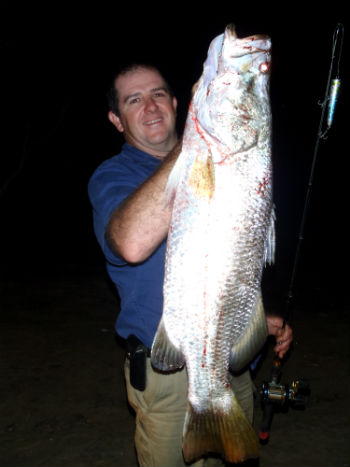
Being a keen fisherman there have been many times after work or in lunch breaks when there has been some top notch fishing.
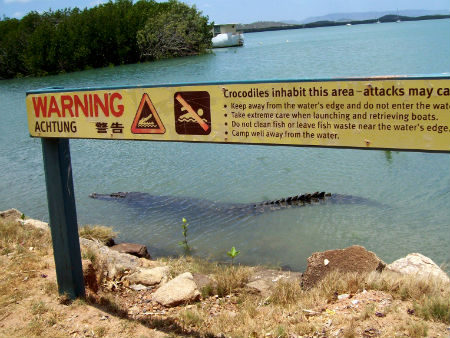
Croc and snake sightings and encounters are just normal things that happen up here. It can be quite an adventure travelling through Cape York at the start and the end of the season. You can travel for hours and not see another vehicle or person.
The roads can be in all sorts of conditions from underwater to unpassable bog holes.
Q. Like many councils, your fleet budget has been cut recently. How have you had to be smarter with your budget?
A. Due to budget cuts this financial year, which has seen a significant drop in fleet expenditure, we have been extending vehicle change out time, especially in our light fleet. A reduction in fleet numbers due to redundancies has [also] taken a load of fleet.
More than 80 per cent of all our road works carried out within Cook Shire is flood damage.
The biggest problem facing remote councils is not being able to charge our plant and equipment out to NDRRA and QRA works. It has taken the financial effectiveness away from remote Local Government fleet.
What does your fleet department at Cook Shire Council look like today?
A. Recently, Cook Shire has undergone some significant changes in our operations and operational structure due to changes with NDRRA (Natural Disaster Relief and Recovery Arrangements) and QRA (Queensland Reconstruction Authority) funding arrangements.
We have recently lost 38 Staff members throughout the Engineering Department due to voluntary and forced redundancies. One Diesel Fitter has been lost from the Workshop. The fleet is being reduced to align with the current staffing levels.
Currently the Fleet/Workshop division have employed two Diesel fitters, one Boilermaker and myself as a Workshop/Fleet Manager.
Our Heavy Plant Fleet currently consists of:
1 x Grader
1 x Loader
3 x Backhoe’s
1 x Steel Drum Roller
2 x Multi Tyre Rollers
Various skid steers and mini excavators
17 x Tucks from MR to HR
Our Light Fleet consists of:
57 x Light vehicles
Quad Bikes
Spray Units
Backup Generators throughout the Shire
Small plant of all descriptions.
The Workshop staff at Cook Shire Council work on every bit of machinery. They carry out diagnostics on all equipment within our capabilities, as well as all mechanical and auto electrical work on everything from heavy earthmoving equipment, down to small plant.
Suppliers of equipment we use, supply any relevant technical assistance required to maintain and service to OEM specifications.