“Born and bred in the bush”, James Paynter, Manager of Operations at Longreach Regional Council in Central West Queensland, has more than 20 years experience working with plant and fleet. He recently took part in an IPWEA Fleet Management Training course, which he says was a hugely valuable experience.
What’s your background and how did you come to be working in your current role?
I was basically born and bred in the bush. I worked as an earthmover in my early career, and ended up going into the Department of Transport and Main Roads in 1995. I stayed with them for about five years, before moving into local government, in Winton and progressed through the ranks from there.
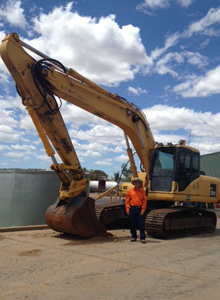
When I went to Diamantina Shire, we had a big focus on our plant and plant utilisation, due largely to the fact that it’s one of the few avenues where a local authority can – to loosely use the term – make money.
We had a low rate base and we had a lot of recoverable works, so we had benchmarks against other shires and all of that, and we were able to improve our efficiencies while at the same time trying to make money with our plant.
I joined Longreach Regional Council as Manager of Operations in December 2013. As Manager of Operations I manage fleet and plant and organise our work in the field, our future works programs, costing and all that sort of thing as well.
You participated in IPWEA Fleet Management training recently. What did the training involve and in what ways was the experience valuable?
I have learnt a lot about plant and fleet management over the years and thought I was half handy at it, but I went into the course with an open mind. I thought it’d be good to learn new things and it also confirmed a lot of the things I have learned previously. In fact, it is also probably the most relevant course I’ve ever done to do with plant.
The training gives you a set format to use when analysing plant, whether that be usage, replacement, why it isn’t performing, and so on. A lot of the time we all go off on our own tangent trying to figure out the optimum time to replace an item of plant – we spend hours trying to work that out, but this course actually tells you. There’s a format there that you can just look at to find the answer, which has been put together by people who have put a lot of effort into the industry. It saves a lot of work.
What other involvement do you have with the IPWEA?
I’ve had a number of training sessions organised by the IPWEA Queensland Division. I’ve been a member since about 2003, when Kevin Kerr from George Bourne and Associates introduced us to the association. He’s like a mentor for a lot of us in western Queensland. He retired a few years ago now, but Kev was instrumental in getting us into IPWEA Queensland and keeping us involved.
In your opinion, what are some of the biggest challenges facing fleet managers at the moment?
The continuity of work is a big challange. The years fluctuate in terms of available budgets, and that comes back to external funding from state and federal government. It’s pretty important that we have their support. Our only form of raising internal revenue is rates, and that’s pretty limited, especially out here in the western shires.
It can also sometimes be a hard sell when times are tough, so there’s pressure to hang on to an item of plant because it’d be easier not to replace it that year. But when you look at it from a business perspective, that item of plant is one of the only things that actually makes money – you’re getting a return on investment, whereas a lot of the other things we have to do as a local authority, like swimming pools and football fields and everything else that we must have, just costs money.
Having things like the IPWEA Fleet Management tools really helps formalise and sell our argument when it’s time to sell an item of plant, even in a tough year.
Another key fleet management challenge is plant utilisation. When I worked at Southern Downs, we used to every fortnight analyse the plant. Operators can get protective or even defensive when we analyse plant usage, thinking we’re questioning whether or not they are working. More times than not, the issue isn’t that the person isn’t working – that’s very rare. What happens is that we can flush out the issues by analysing usage. We can say, why didn’t that item of plant work last week? Well, the operator was away. So the issue there is that we don’t have a relief operator, a succession plan, so you put things in place to resolve the issue for next time, so we can begin to improve plant utilisation across the fleet.
Find out more about the IPWEA's Fleet Management Training.