After years of dealing with rust corrosion on its fleet of water tankers, Toowoomba Regional Council has made the decision to upgrade the vehicles with fibreglass tank materials.
The tanks on the fleet’s older trucks were made from steel, which suffered from severe corrosion – partly as a result of the salty surface water and bore water common in much of the Toowoomba area. The damage was lowering the capacity of the tanks by up to a tonne.
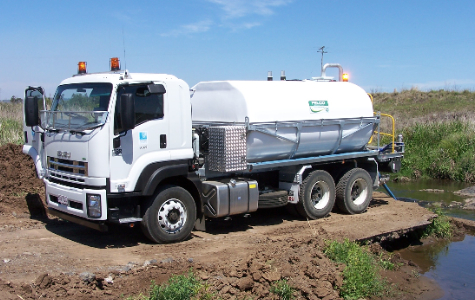
Neil Lawson, the Fleet Manager at Toowoomba, says the council was looking for new vehicles that could transport as much water as legally possible, for a variety of applications – primarily road watering tasks.
“Fibreglass is the preferred material for water tanks, so we teamed up with Felco Manufacturing, who specialise in delivering these products,” he says.
“There was always a lot of rust with the old tanks, so these new tankers will have much more longevity. Furthermore, because fibreglass can be easily repaired, the tanks can be refurbished and refitted to new trucks if anything happens to the vehicles themselves.”
Lawson worked closely with Felco to ensure that the design of the tankers was exactly customised to the council’s needs. Toowoomba placed an initial order of six trucks, which have been operational for a number of months.
The trucks also have significant stainless steel components to ensure rust does not affect the rest of the vehicle.
“We’d be looking to use these trucks for about 10 years, so the overall appearance would suffer after that amount of time if we didn’t use stainless steel,” Lawson says. “It certainly helps with resale and disposal if the appearance of the vehicle is much better.”
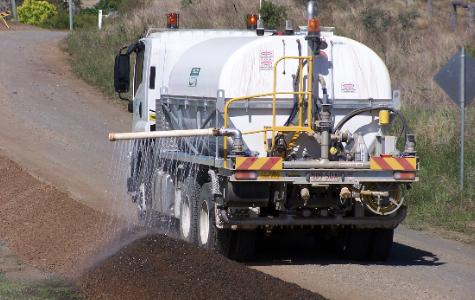
Council also decided to use other features of the vehicles, including hydraulically driven pumps and top-of-the-line nozzles and valves.
“Previously, we used a trusty, old petrol fire fighter pump,” Lawson says. “When you have an additional engine on a vehicle to power pumps and other equipment, you have much more service costs.
“So, while the initial costs are higher, the costs over the life of the vehicle are much better with a hydraulic pump.
“Water moisture control is very important in the road construction process, so we need quite sophisticated controls and nozzles for volumes and pressure.
“We’ve also made some provisions in the design so they can be used for other applications when needed, such as assisting the Queensland Fire and Rescue Service when needed. Essentially we’ve equipped specialised valves and couplings onto the manifolds so we can transfer water to a fire appliance.”
Council has also fitted other components, such as reversing cameras because rear visibility is severely limited by the tank permanently mounted on the truck.
Lawson says the council and the operators alike have positively received the new vehicles.