More than half of the world’s population lives in cities and this figure looks set to soar.

The United Nations predicts that two out of every three people are likely to reside in urban centres by 2050, posing significant challenges for vital infrastructure – from transport to waste management and energy supplies. Some cities, however, are getting smart by harnessing technology today to make them more liveable tomorrow.
The term ‘smart city’ generally describes an urban centre that uses technology and data to improve a city’s operations. This might be on a large scale, such as reducing crime rates and traffic congestion, or at a smaller municipal level, like streamlining rubbish collection and developing more efficient street lighting. Data from Juniper Research, for example, estimates that by 2019, cities will save approximately US$17 billion a year in energy bills alone by installing smart streetlights and devices like parking and garbage sensors.
Cities are getting smarter in different ways. Barcelona, for example, is one of the most wired locations in the world. The 500km of fibre-optic cable within the city serves as a pillar for integrated systems, such as in-ground sensors that help regulate public park irrigation to address the city’s water shortage and car park sensors that inform drivers, via a phone app, which spots are vacant. A report from Philips Lighting and SmartCitiesWorld, which ranks Barcelona as one of the world’s smartest cities, notes that its smart initiatives have delivered significant benefits, including the creation 47,000 new jobs as a result of implementing Internet of Things systems, as well as saving millions of Euros on water.
London has developed smart ways of addressing public transport challenges with a contactless payment system that speeds up the movement of millions of passengers across one of the busiest transit systems in the world. The city is also getting smarter at smaller municipal levels. The London Borough of Newham, for example, is working with Accenture to use artificial intelligence to address the illegal dumping of rubbish on the streets, known as ‘fly-tipping’, which was estimated to cost the borough’s residents more than £3 million last year to remove.
“We’ve created an algorithm that lays over the top of CCTV data feeds to identify fly-tipping events,” explains Jen Hawes-Hewitt, Global Cities Consulting Lead at Accenture and member of the Smart London Board, which is helping to develop the Smart London Plan. “The cleaning team can then be rerouted to clear it up quickly because people tend to make a huge pile-on when someone else dumps something. This is a smart way that you can use existing technology, overlay artificial intelligence (AI) over the top and integrate new ways of working within the council.”
Meanwhile, Detroit recently became home to the ‘world’s smartest intersection’, which comprises a system of sensors, 360-degree cameras, connected traffic signals and remote monitoring capabilities that can respond in real time. Detroit partnered with Canadian technology start-up Miovision to develop and deploy the technology at five intersections along a busy corridor in the heart of the city.
Lynda Chau, Chief Marketing Officer at Miovision, says the technology has resulted in a 30% improvement in Detroit’s traffic flow.
“Prior to this technology, the city would have to wait until a citizen reported an infrastructure failure, such as traffic lights, and it was a safety hazard. Now they have real time data and can respond quickly. The other great thing is that our technology can give the city metrics, so they can now measure things like safety.”
Progress closer to home
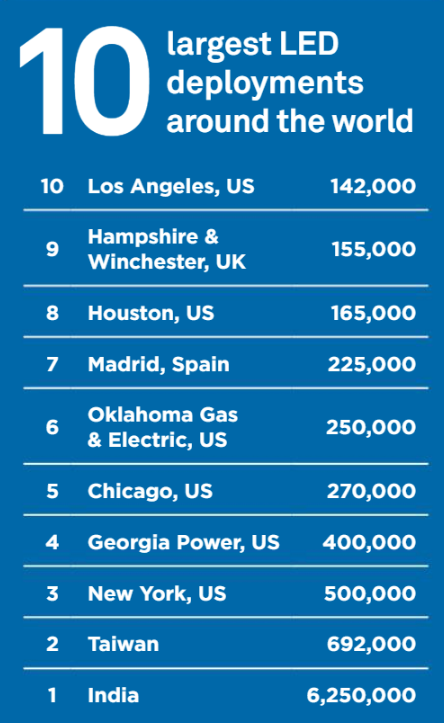
Cities in Australia and New Zealand are getting smarter, too. Streetlights in Adelaide’s city centre have been fitted with smart technology to help achieve its goal of becoming the world’s first carbon neutral city. They will monitor energy consumption and also have light harvesting functions. The Sunshine Coast has also been testing smart technologies, such as water-saving irrigation systems connected to weather forecasts, in its ‘Living Lab’.
“They have tested things and are now building a new CBD based on what they’ve learned from the Living Lab,” explains Adam Beck, Executive Director of Smart Cities Council Australia and New Zealand, a division of the global organisation that promotes use of digital technology and intelligent design for cities. “The Sunshine Coast’s Smart City program has got all the fundamentals and it’s driven by economic development and sustainability.”
In Wellington, the city council is planning to install the world’s largest network of earthquake-measuring devices, called accelerometers, in 400 of the city’s buildings. The accelerometers will provide immediate information on the extent of shaking that a building has endured during an earthquake.
“During the Kaikoura quake [of 2016], we saw all this technology working together to supply information about the city to the ministers so they could make decisions,” says Sean Audain, Innovation Officer at Wellington City Council.
“It’s very simple things like open-data portals and apps for citizens that help their daily lives be better.”
“Using things like sensor networks, storytelling technology and measurement technology, we could create action incredibly quickly. This meant that the city got back on its feet within the week as opposed to the months it would’ve taken if we had taken a different approach.”
Challenges and solutions
Despite the clear benefits of smart city initiatives, some places struggle to get programs off the ground. The Philips Lighting and SmartCitiesWorld report, which includes a survey of 150 key influencers on city planning from around the world, shows that 10% of respondents do not have the capacity to develop a smart city program and that the key obstacles include budget limitations (23%) and lack of supporting infrastructure (19%). Meanwhile, more than half of all respondents revealed that effective leadership was the key factor to making a smart city program successful.
“The spectacular failures we’ve seen are because there’s a lack of context,” Beck says. “It’s when leaders say, ‘We don’t really know what problem we’re trying to solve, but hey, these 30,000 widgets are very sexy, let’s install them’. Technology has to respond to key priorities.
“The reason some of the European countries have been so successful is that they have approached it as an environmental enhancement strategy – water quality, air quality, congestion,” adds Beck.
“They lead with urban and environmental issues and use technology to help solve these problems that everyone is experiencing every day. They have done very well at making it meaningful for their cities and their people. They also haven’t made it too complicated. It’s very simple things like open-data portals and apps for citizens that help their daily lives be better.”
The power of data
While there are many challenges associated with building smart cities, those with open data policies are proving the most successful.
Market intelligence organisation International Data Corp estimates there are currently 20 billion ‘things’ that are wired and communicating on the internet, and that by 2020 this number will grow to 30 billion connected devices. It predicts that by this time, data from embedded systems will account for 10% of the digital world.
Chau believes open data is critical to supporting innovation. “Most cities agree open data is important but the way they make it happen varies,” she says. “Some might just provide data as a PDF on a computer screen, but it’s the real-time, machine-readable data that really drives innovation.”
Cities such as London were early adopters of open data. The London Datastore, for example, is a free and open data-sharing portal with more than 700 datasets, including health data, crime figures, employment statistics and carbon emissions indicators, that can help people understand the city and develop solutions to its problems. Since its launch in 2010, the Datastore has led to the creation of more than 200 apps, such as the Citymapper travel app, which has now been exported to other cities around the world.
“The creation of the London Datastore started with a bigger conversation in London about what people were happy to share on a completely public basis,” Hawes-Hewitt says.
This story is an excerpt from the July/August edition of inspire magazine story 'Get Smart'. Read the full story and more here.
Following the outstanding success of the first Australian Street Lighting and Smart Controls Conference held in Brisbane in 2017, IPWEA and SLP (NZ) are proud to invite you to participate in the 4th International Street Lighting + Smart Controls Conference, to be held at the world-class International Convention Centre, Sydney, 2-4 April 2019.