How will asset management shape the way we live and work in the future? Should we welcome the Fourth Industrial Revolution, or fear the social inequality it could create?
As KPMG's lead partner for asset management and engineering, Bernard Lauinger is no stranger to these difficult discussions. He'll be tackling the question 'What will define a good community in 2030?' at IPWEA's Asset Management Congress, which will be held 14-15 August in Canberra.
intouch got a sneak preview of Lauinger's thoughts on these important topics ahead of the Congress.
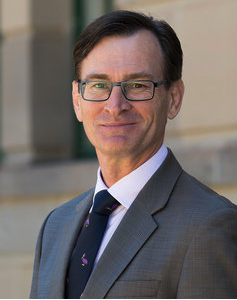 intouch: What are some of the greatest barriers to achieving ‘good’ communities in 2030?Lauinger:
 A growing and ageing population, exponential advances in technology and the effects of climate change are just some of the forces that Australian governments and industry must consider when planning new infrastructure. How we live, work, connect with each other and sustain our scarce resources in the future will be radically different to today. However, traditional approaches to infrastructure planning are deeply ingrained and often influenced by short-term political cycles.
intouch: How will communities benefit from the 4th Industrial Revolution?Lauinger: It’s easy to paint a rosy picture of the future. As robotics and AI start to take on manual, repetitive and mundane tasks, people will be free to enjoy more leisure time without sacrificing productivity or quality of life. Smarter cities will lead to happier, healthier and safer populations. Automated and electric vehicles will eliminate congestion and pollution. Access to better information will create more cohesive societies. However, there is an equally good chance that technology will actually increase the gap between the rich and the poor, remove jobs and create disparity between urban and regional centres. Unfortunately, there are no easy answers. In fact, as governments and private companies vie for every competitive advantage and technological edge, the potential for the gap to widen is only growing.
intouch: How will asset management help create vibrant, sustainable future communities? What might those communities look like? Lauinger: We need to rethink our approach to ensure we deliver infrastructure fit for an unpredictable future. How might we squeeze more from existing assets? It’s no surprise to see that improved demand management and capacity enhancement are on top of the agenda. The reality is that much of our existing infrastructure — our roads, our transit networks, our electricity generation and our airports, to name but a few — are designed to meet peak demand. Rather than build entirely new capacity to meet ever-higher peaks, governments at all levels are now thinking about ways to smooth out the peaks. Staggered work days, time-of-day billing, pricing incentives and regulatory measures are all on the table for consideration.
intouch: Why will your presentation be unmissable?
Lauinger: I won’t do all the talking; delegates will see a demonstration of a model that Infrastructure Victoria is using to see how travel behaviour might change in response to changes such as new transport projects or policies.
Bernard Lauinger is a keynote speaker at the Asset Management Congress, which will be held 14-15 August, Canberra. Register now. See other Congress speakers here.
About Bernard Lauinger
Bernie Lauinger is KPMG’s lead Partner for delivering asset management services within Australia across a range of industries. He provides a different perspective, with experience gained in operational environments over many years working in the military, industry and management consulting. He is passionate about ensuring assets make a real difference to our communities and that investment is wisely managed and delivered.