When we get a paper-cut, our bodies get to work repairing the damage. What if our infrastructure had the same ability to self-heal?
Researchers from the University of Birmingham have posed this question, and think they may have found the key: fungi.
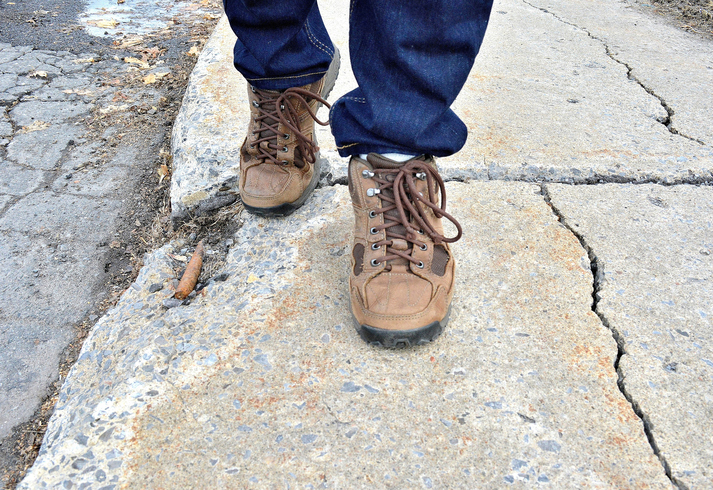
Since 2013, Assistant Professor of Mechanicial Engineering Congrui Jin has been working on a way to allow harmful cracks to heal themselves without human intervention.
“Cracks are very common due to various chemical and physical phenomena that occur during everyday use. Concrete shrinks as it dries, which can cause cracks. It can crack when there’s movement underneath or thanks to freeze/thaw cycles over the course of the seasons. Simply putting too much weight on it can cause fractures. Even worse, the steel bars embedded in concrete as reinforcement can corrode over time,” Jin writes for
The Conversation.“Very tiny cracks can be quite harmful because they provide an easy route in for liquids and gasses – and the harmful substances they might contain.
“For instance, micro-cracks can allow water and oxygen to infiltrate and then corrode the steel, leading to structural failure. Even a slender breach just the width of a hair can allow enough water in to undermine the concrete’s integrity.”
Jin says the human body’s ability to self-heal inspired her research.
“A person takes in nutrients which the body uses to produce new substitutes to heal damaged tissues. In the same way, can we provide necessary products to concrete to fill in cracks when damage happens?”
A particular fungus called Trichoderma reesei could be the answer. Jin and her colleagues propose adding fungal spores and nutrients to concrete mixes when building a concrete structure.
“When the inevitable cracking occurs and water finds its way in, the dormant fungal spores will germinate,” Jin says.
 Congrui Jin
She explains that as the fungal spores grow, they should work as a catalyst within the calcium-rich conditions of the concrete to promote the creation of calcium carbonate crystals, which can fill the cracks.
“When the cracks are completely caulked and no more water can enter, the fungi will again form spores. If cracks form again and environmental conditions become favourable, the spores could wake up and repeat the process,” she says.
Jin says that while the T.reesei fungi has been found to be eco-friendly and non-pathogenic, the researches will still need to conduct a thorough assessment to investigate any possible immediate and long-term effects on the environment and human health.
She says there is still a long way to go until fungi is knitting our cities together.
“We still don’t fully understand this very young but promising biological repair technique. Concrete is a harsh environment for the fungus: it has very high pH values, relatively small pore sizes, a severe moisture deficit, high temperatures in summer and low temperatures in winter, limited nutrient availability and possible exposure to ultraviolet rays from sunlight. All of these factors dramatically influence the fungi’s metabolic activities and make them vulnerable to death," Jin says.