This article was first published in the Nov/Dec edition of inspire magazine.
Emeritus membership is the most prestigious award that can be bestowed on an IPWEA member.
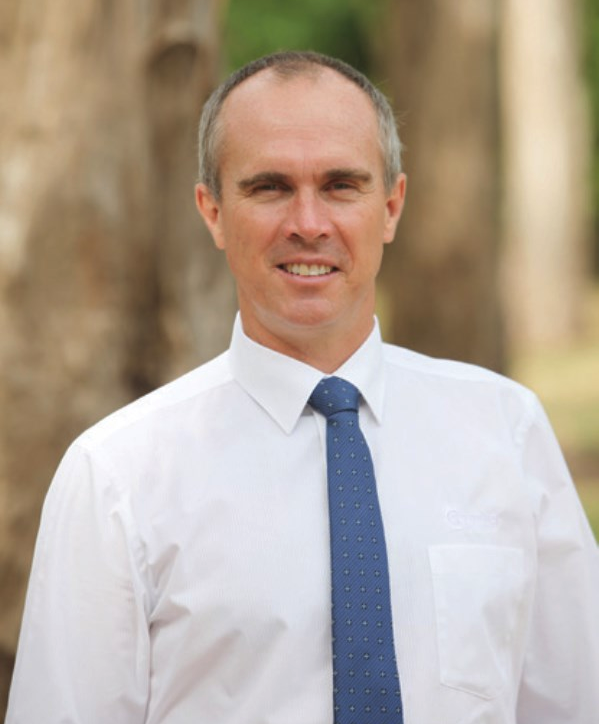
inspire magazine spoke to recent recipient Ged Brennan, former IPWEA Qld President and Managing Director of GenEng Solutions, about his passion for mentoring and his work on the Rebuilding of Grantham project.
inspire: First of all, Ged, congratulations on receiving Emeritus membership in recognition of the massive contribution you’ve made to the industry. Could you tell us about how you started out in public works?
 Brennan: Initially, I sought an opportunity as a cadet engineer with the state water authority at the time I commenced university. I was fortunate to receive a cadetship and it was the beginning of a career involving all aspects of civil infrastructure, through roles in state and local government authorities and in the private sector supporting the same public works sector. When I was studying I had thought it would be great to work locally with a council organisation.
inspire: What do you think has sustained your passion for the industry?
Brennan: I think that a general interest in all aspects of our industry has been the main motivator for me. I find myself still keen to understand how things work, what new innovation can be applied to the benefit of the community and how we can improve on what we do as public works professionals. As I have moved towards being one of the more ‘mature’ members of the public works industry I have developed an interest in the development of skills in young professionals, and have gained a lot of satisfaction from the establishment of professional development programs for new graduates as part of attraction and retention strategies for public works engineering.
inspire: Have you had mentors that have guided you during your career?
Brennan: Of course, I’m sure we all do! There have been one or two standout examples. Very early in my career a great leader, Tom Fenwick, then the Commissioner of the Water Resources Commission in Queensland was a great inspiration in many ways – including his willingness to offer support and mentoring to his junior managers at a time when no one had heard of the term ‘mentor’. There is great work being done in mentoring now, particularly due to recognition of its importance. In my view, it is important that all professionals seek others to engage with and recognise that the benefits flow both ways. It should often be difficult to know who the mentee is in the relationship! I am sure that I could be accused of dedicating too much of my time to this aspect of my work.
inspire: What were some of your proudest achievements during your time as IPWEA Qld President?
Brennan: I had many fulfilling experiences as Qld President including my position as a Board member on the Australasian Board and our collective achievements there, publication of the Lower Order Road Design Guide and advocacy to the Federal Government concerning the natural disaster relief and recovery arrangements. Perhaps the most rewarding achievement was the increase in Queensland membership during my time on the Division Board, at a time when many membership-based organisations have been struggling to maintain their membership.
inspire: Why did you become a member of IPWEA, and why should other professionals become members?
Brennan: I joined the association in 1991 when I was seeking to become active in an association that represented public works professionals. I quickly realised that IPWEA, through Australasia, its Divisions and especially its Branches in Queensland, was able to offer all the benefits of an active peak professional body but at the same time provide benefits at a local level. For members in both the public and private sector, the association establishes strong personal networks between individuals and has continued to be highly effective in its training and advocacy roles in both metropolitan and regional areas.
When working in a small local government, I was able to connect with others in similar roles sharing information and solutions to common problems. In large organisations I have benefitted from standards, training and industry advocacy while in the private sector I benefit from all those things and maintain contact with clients right across the industry.
inspire: Can you tell us a little bit about the Rebuilding of Grantham project? How did it impact you both personally and professionally, and are there any lessons you learned from it?
Brennan: The opportunity to assist the community of the Lockyer Valley as part of the recovery effort at Grantham was certainly a career highlight and one which was generously awarded with the IPWEA/EA National Public Works Medal in 2013. The outcome achieved by everyone involved was outstanding but given the loss of life in the town during the 2011 flood it was most certainly needed. My role was to take the council’s design and deliver a new, flood free development for displaced residents and concurrently support the construction and relocation of new homes to the site. The project was completed with the first residents in the new homes within a matter of months and before the first anniversary of the natural disaster. The project was not only recognised for the coordinated delivery, but more importantly for the human side of the response. Direct support of affected families was provided with special events on the site even while the hectic construction activities continued. About 3500 visitors came to the site during the four-month construction period while Grantham remained the subject of national media and government attention. The ‘take home’ is that in the delivery of public works it is the people that matter. I guess it should not take a tragedy of this nature to remind us of this.
inspire: Is there anything you would like to see change within the public works industry?
Brennan: Yes, definitely. Like many other industries, I think we have lost the core philosophy as professionals responsible for public funds, making it secondary to organisational calls for risk averse or ‘gold plated’ approach to our daily work. For us to fill our role in public works engineering, we must assess risk and provide the balance that our engineering profession provides the skills to achieve. We need to embrace new technologies and not be afraid to do so, since the needs of the community will continue to change as time passes. The rapid development of renewable energy and associated challenges and autonomous vehicle development (and components of that technology that are already being put into practical use) are examples that need to be embraced by our profession. We need to respond in both our work and advocacy to all levels of government, and others where required, to allow benefits to flow to the community when the application of proven technology allows. A focus that aims to eliminate all risk, rather than assess and manage it, is not in the community’s interest in my opinion.
inspire: If you could tell the community one thing about public works engineering, what would it be?
Brennan: Raising the profile of our industry is something that as individual public works professionals as well as IPWEA members as an association should continuously support. We have the opportunity of highlighting our successes in our local communities and through opportunities such as excellence awards. Printed and social media are great opportunities to highlight our achievements and to celebrate them and our efforts in doing this are mostly very well received since mostly the focus is on negative things. The community can be oblivious to the work we do and we should not dismay when the full story is not reported, even when it is by our own organisations or elected leaders. Like other challenges, lets raise the profile of what we do and portray our achievement in the positive light that we do ourselves – if the community is to know about the good things we do we need to tell them.
This article was first published in the Nov/Dec edition of inspire magazine. For more great stories, view the magazine here.