Australia has a staggering 574,660 km of gravel roads, comprising more than 60% of the nation’s road length. The majority of these unsealed roads are the responsibility of their local council, which can be a tall ask considering many rural and regional councils cover huge areas and have only a small population to try to meet the costs to maintain it.
This is especially true when something goes wrong, as was the case for Victoria’s Central Goldfields shire council, which has approximately 1300 km of roads and a population of only around 12,500 people. In 2011-12, major flooding events washed away around 700km of local unsealed roads, requiring about 22.5 years’ worth of gravel to repair. This was followed by another event in September/October of last year which required another four years’ worth of gravel to repair.

The council has two gravel pit locations containing natural material suitable for roads – the first material, in Dunolly, is slightly marginal, while the material in the second location, Daisy Hill, is considerably more marginal. In the hope of safeguarding for the future, the council has invested funds into a trial to see whether modifying the marginal properties will produce a viable road product.
Engineer manager of the project, Malcolm Styles, will be discussing the trial in his paper Unsealed Roads – Make Marginal Materials Matter, to be presented at the
IPWEA International Public Works Conference, held at the Perth Exhibition and Conference Centre from August 20-23.
“The Australian Road and Research Board (ARRB) and Austroads have done a lot of great research on these gravel roads and provided science on ways to improve the materials to make them viable,’ he says, explaining he is using their ‘Unsealed Roads Manual’ as his guide while conducting the trial.
In the 2.7km trial, explains Styles, there will be nine different sections 300m in length – four for the Daisy Hill material and five for the Dunolly material. Each section will test a different methodology of treating the material over a two-year period.
“We’re using everything from foam bitumen to cement to polymers and the addition of clay and crushed rock,” says Styles.
One of the more interesting treatments is one that involves treating the material with enzymes, which Styles says came about from observations of ants.
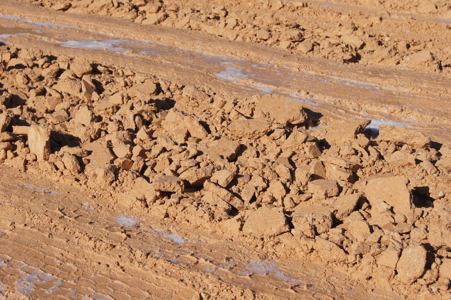
“Ants out in the desert build ant hills and we noticed they withstood tropical storms and dusty conditions and stood up very well, so chemists wondered what is it they're producing and whether it could be aped in chemistry – and it can be, so we've got two sections that we're trialling with the enzyme.”
Likewise, the trialling of crushed rock came after Malcolm visited the Daisy Hill site to collect samples and saw an operator adding crushed rock, telling Styles he’d found it helped the material “go down a lot better and last a lot longer”.
“A lot of the work done by ARRB and Austroads was done by interviewing practitioners and operators, who've worked with the materials most of their working lives and just had an instinct on how to improve materials they were using.”
Styles says the trial has already yielded some early results that he describes as ‘surprising’. To find out more about this essential project, don’t miss his presentation at the IPWEA conference.
Register now for the IPWEA International Public Works Conference.
Images:
1. Possum Gully Road Trial Section 3 – final shaping and rolling
2. Possum Gully Road Trial Section 3 – the enzyme ready to be mixed in