Researchers say smart controlled street lighting is the answer to minimising the environmental impacts of artificial light at night.
Speaking at IPWEA’s 3rd International Street Lighting + Smart Controls Conference in Brisbane last month, Dr Kellie Pendoley from Pendoley Environmental discussed how artificial lighting can affect human and ecological health.
In a presentation voted by delegates as one of the conference’s top five, Dr Pendoley explained that light pollution – an excess of artificial light at night – is increasing by 6% per year. Developing research implicates light pollution in human health impacts and biological disruption in a wide range of flora and fauna.
Smart controls – which allow street lights to be remotely dimmed or completely switched off at certain times – are emerging as a critical part of minimising the potential biological and human health impacts of artificial light at night.
As the world moves toward LED street lights – offering massive energy and maintenance savings, increased public safety and better road safety outcomes – these smart controls are both made possible, and indeed necessary.
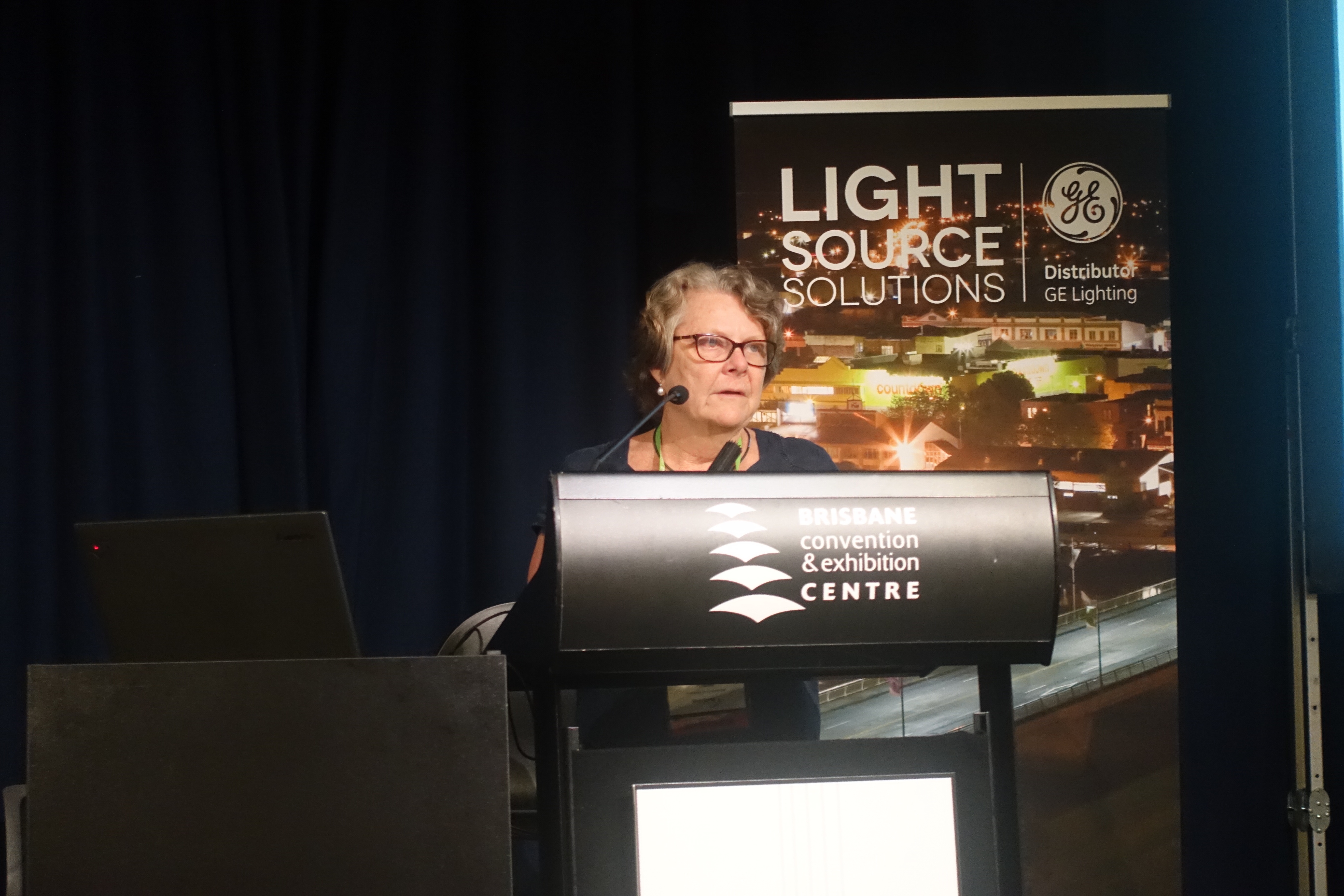
“We recognise LEDs are here to stay; they’re great, there are lots of benefits, they’re good things to have. But what we have to do is manage them properly,” Dr Pendoley said.
“I see smart lighting as really critical.”
The blue light LEDs cast has been shown to suppress the secretion of melatonin, a hormone that is produced at night and prepares the body for sleep.
Research that has been emerging since 1990 implicates disruption of melatonin cycles from exposure to artificial light at night in sleeplessness, breast and prostate cancers, obesity, diabetes, heart disease and depression in some people.
However, any type of artificial light at night can be damaging for animal populations.
Dr Pendoley gave the example of shearwater colonies on Phillip Island. She cited a study that investigated the number of dead and grounded birds between 1999 and 2013, with researchers testing if birds were attracted to lights by turning the lights off on a section of the road. The study found turning the road lights off decreased the number of grounded birds, both dead and alive.
She also discussed how artificial lights can affect sea turtles by impairing their ability to navigate.
“Smart lighting controls such as dimming and/or turning lights off, together with physical shielding of lights, should be considered in the vicinity of marine turtle nesting sites,” she explained.
“Turn them off, target them, shield them, use these smart controls that we’ve been talking about.”
Conference delegates who attended at
technical tour to the Sunshine Coast learned this is the approach that smart lighting contracting specialist Citelum Australia has taken on the Coast, fitting warm white 3000K LEDs with dimming capabilities near turtle nesting grounds in Kawana.
The highly successful 3rd International Street Lighting + Smart Controls conference brought 250 delegates and 30 exhibitors together with world-leading international experts. The conference aligned with IPWEA’s Street Lighting and Smart Controls (SLSC) Programme, designed to measurably increase the number of LED and smart controlled street light conversions.