Project managers usually try their best to stop things ‘going to the dogs’. But in the case of wastewater contamination, bringing in man’s best friend could be a smart move.
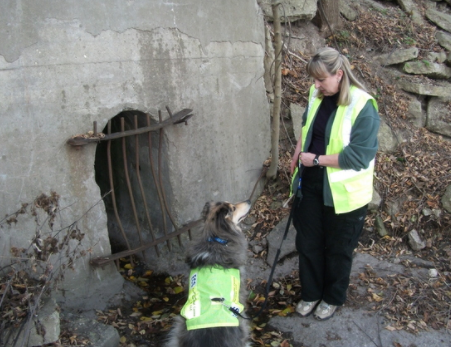
In the US, local governments, environmental agencies and consultants are using dogs as a quick and economical way to pinpoint the source of wastewater leaks.
Environmental Canine Services’ Karen Reynolds – who established the business seven years ago with her environmental scientist husband – has six working dogs, all of whose keen noses are trained to hunt down sources of human waste, and signal their handler when they detect sewerage.
WSUD reports that the company tracked wastewater in Berrian Country earlier this year.
Peg Kohring, a Director of environmental not-for-profit The Conservation Fund, says five of the county’s beaches had reoccurring issues with human waste in the water.
“So we’re tracing back the drains trying to find where either there’s a failing septic system or maybe there’s a storm water drain and a sewer crossing,” Kohring told WSUD.
“I’ve walked those creeks many times looking, didn’t see anything and then this dog just came and nailed it – found that pipe under all these leaves. So it’s faster, it’s much cheaper than water sampling. We can go right to the source of the problem.”
Jill Murray, Water Resources Specialist at the City of Santa Barbara, led a research project into the use of the dogs.
“We’ve been working for several years trying to find the sources of pollution in our creeks, what kind of pollution we have, where the pollution is coming from, which of course leads us into the stormwater drains,” Murray says in this video.
“We had high levels of indicator bacteria, which leads to beach warnings being put in place.”
Cutting-edge DNA testing technology, although effective, is also expensive, and the results take time.
“What we’re finding changers in space and time, and it takes us two weeks to get our results back. We’ve narrowed down the area, but we can’t find the exact point source,” Murray says.
“The lightbulb went off for us that if we had real-time results, we could really hone in on this problem a lot more easily.”
Murray’s findings show canine scent tracking is a tool that should be expanded for use by researchers and stormwater managers.
“The dogs are alerting at the places our DNA results have shown we have some human waste going into the storm drain, and they have not alerted at the places where we have high indicator bacteria levels of bacteria, but no signs of human waste” she says.
Reynolds told WSUD regular water testing is still important, but that the dogs can point scientists in the right direction.
“Using traditional methods we would have had to grab a sample from both, send it to the lab, it would take about 24 hours to get E.coli results back. Then you’d have to come back out and start tracing it upstream that way. Now we just do it all in matter of minutes,” Reynolds says.