Norway, the land of a 1190 fjords, wants to build the world’s first underwater floating tunnel to slash travel time along its western coast.
The
Norwegian Public Roads Administration (NPRA) has proposed the radical infrastructure project as a $25 billion part of a series of solutions for the Route E39 coastal highway.
Although the county’s signature geological features are undoubtedly stunning, the deep fjords that pepper the landscape also create headaches for motorists. Thanks to the seven ferry crossings needed, travelling the 1000km between the southern port of Kristiansand to Trondheim in the north takes 21 hours in the car, at an average of 48km per hour according to Wired.
Installing permanent, submerged floating bridges could cut that travel time to 10.5 hours.
Plans so far are tentative, and a number of other options, such as a floating bridge, or the world’s longest suspension bridge are being considered.
However, the underwater floating tunnel could very well be the strongest option.
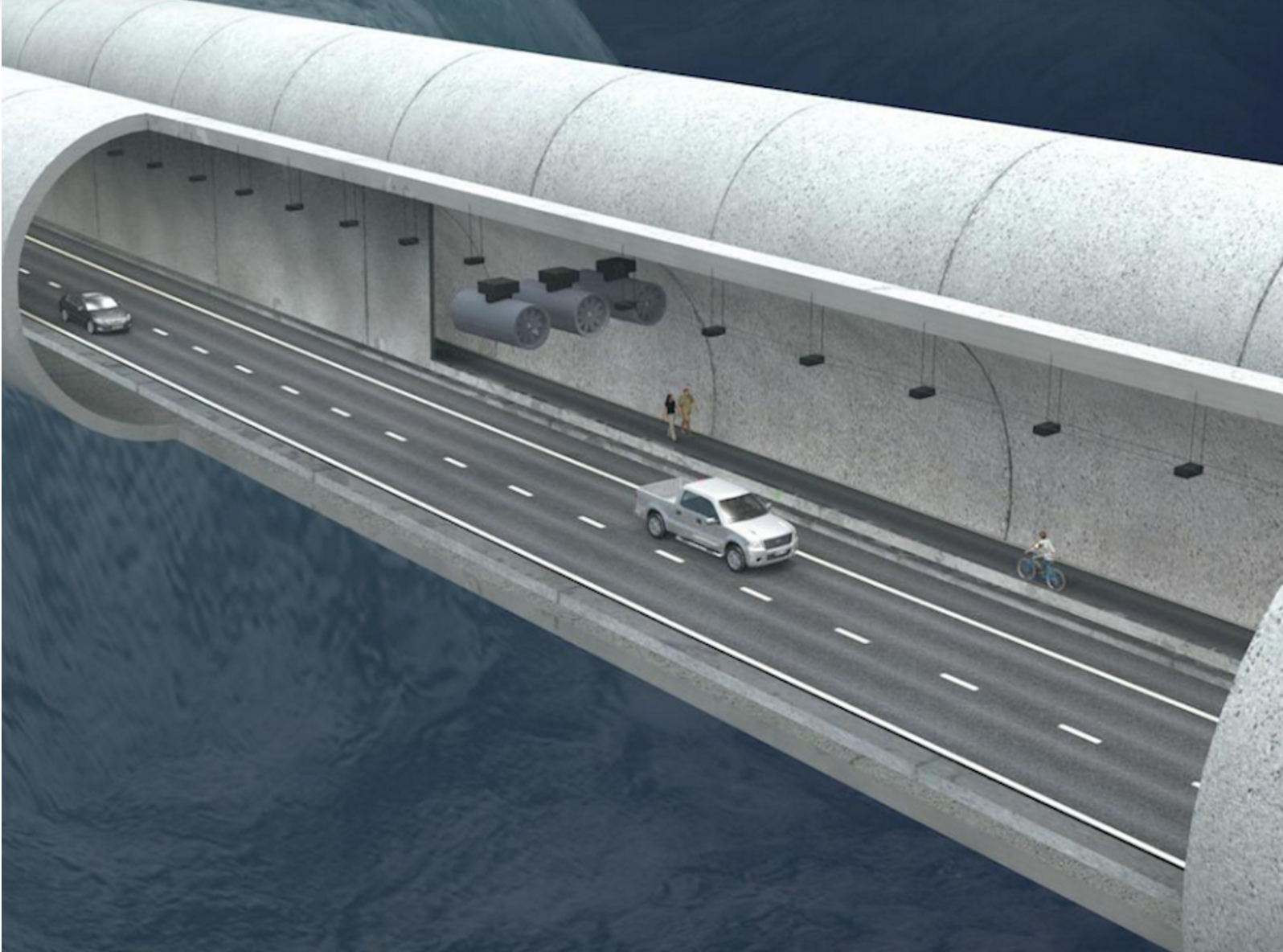
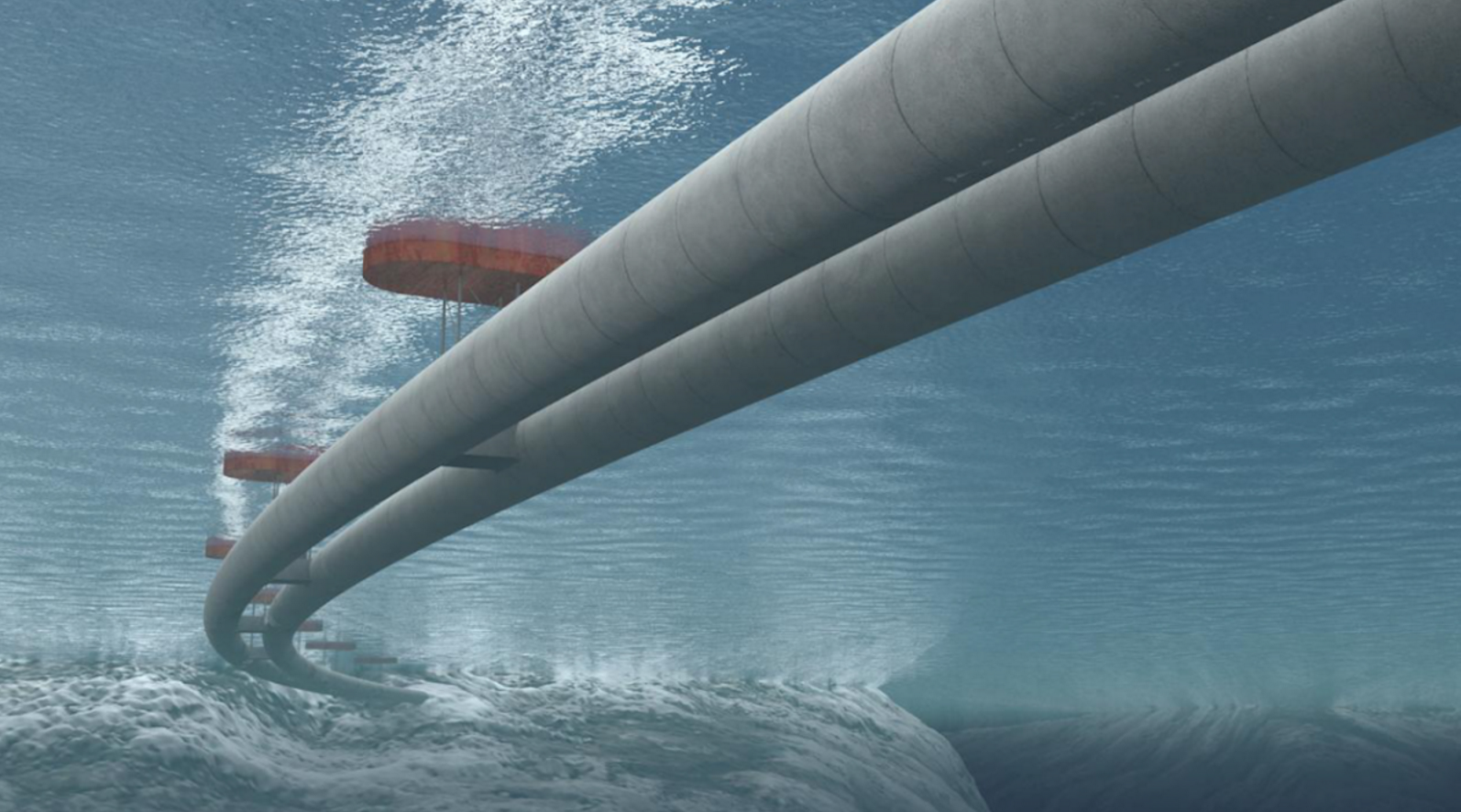
According to NPRA plans, the 3.7km wide Sognefjord may be the perfect candidate for this first-of-its kind crossing. The structure would be made up of two curved 1.2km-long concrete tubes – one for each direction – hanging 20 to 30m below the surface.
The tunnels would enter the bedrock beneath the fjord on each side and the submerged tubes would be steadied by being attached to pontoons on the surface of the sea, with big enough gaps for ferries to safely pass through. The structure might also be bolted to the bedrock below, for extra stability.
In a feasibility report, contractors wrote that an arched submerged floating tunnel was a safe and sound concept.
“The design process has demonstrated the feasibility of the SFT, for Sognefjorden in particular, and for similar fjord crossings in general. The structure is designed to withstand all functional and environmental loads with ample margins. Motions set up by wind, waves and currents are moderate and will not cause driving discomfort or traffic disruption. A high level risk analysis concluded the structure to have an adequate robustness to withstand all relevant accidental and unforeseen actions.
The study estimated construction time would be between seven and nine years.
Arianna Minoretti, a senior engineer with the NPRA, told Wired the design will be far more protected from the elements than alternative infrastructure, with big benefits for locals.
“Having this connection means that people there do not have to wait for a helicopter to go to the hospital,” Minoretti says.