As anyone in local government knows, swimming pools take a lot of work to keep in tip top condition.
But it’s doubtful that many have seen a pool transformation quite as dramatic as the one that has plagued the Rio Olympics.
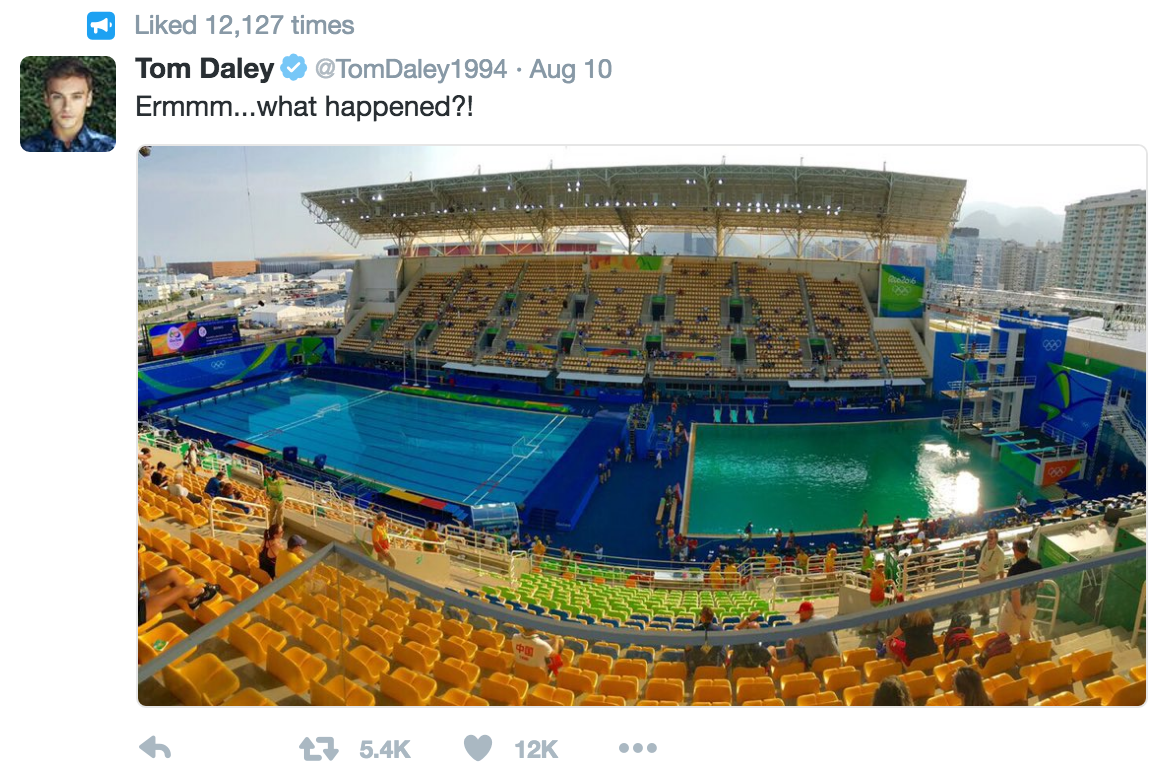
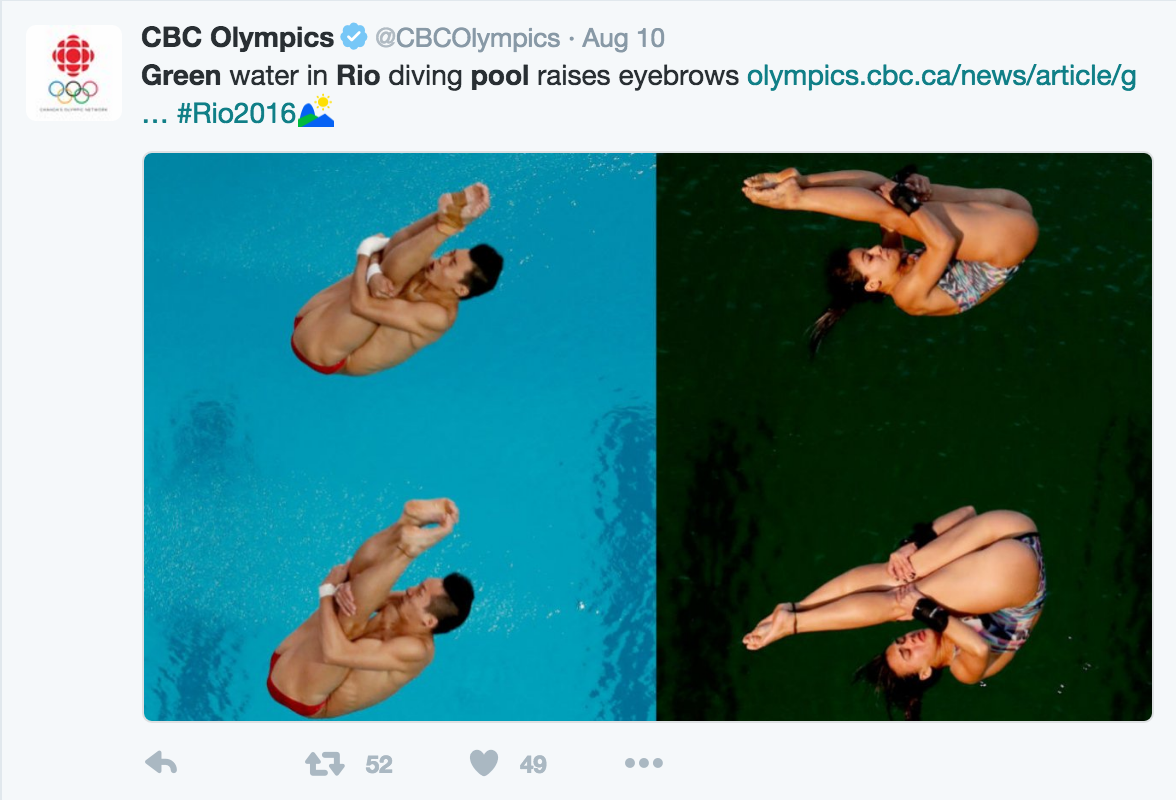
First the diving pool and then the adjacent water polo pool at the Maria Lenk Aquatics Centre in Rio turned a swampy green, alarming competitors and millions of television viewers around the world, and sparking discussion on social media as to the cause of the discolouration.
The water was its usual azure for the men's events on Monday, August 8, but when it came time for the women's synchronised 10-meter, it was a different story.
"I've never dived in anything like it," Britain's Tonia Couch told the New York Times.
The adjoining pool initially remained its normal, blue colour, making the murky pool all the more noticeable. British diver Tom Daley posted a photo showing the pools side-by-side and wrote, "Ermmm … what happened?!
In a statement, the international swimming federation (FINA) said:
"The reason for the unusual water colour observed during the Rio 2016 diving competitions is that the water tanks ran out of some of the chemicals used in the water treatment process."
"As a result the pH level of the water was outside the usual range, causing the discolouration."
FINA and Brazilian experts have checked the water quality and both decided it was safe for competitors.
Rio organising committee spokesman Mario Andrada said "a sudden decrease in the alkanity of the diving pool" caused the blue-to-green change, according to ABC news.
"We probably failed to note that with more athletes the water could be affected. The water polo pool and synchronised swimming pool is also being affected in the same way," he told reporters.
"We have treated both pools during the night and the alkalinity levels have already improved.
"We expect the colour to be back to blue very shortly. We understand a series of factors have affected the colour and alkalinity of the water."