They say love hurts, but what they don't mention is that it can also create a hazard for public infrastructure.
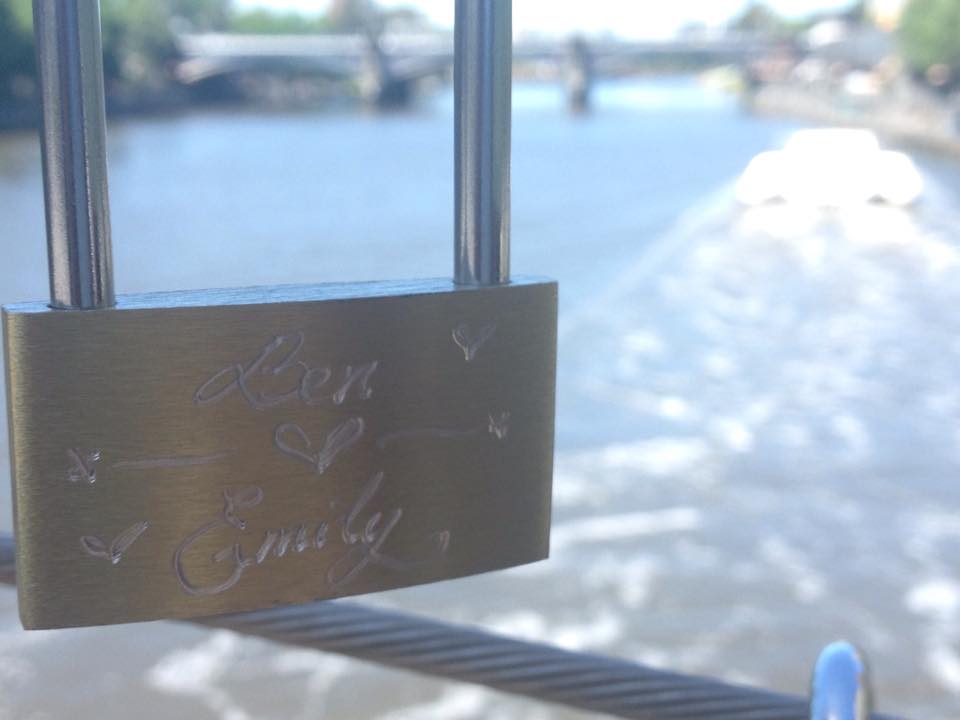
Devoted couples eager to make lasting romantic gestures have taken to attaching padlocks engraved with each other’s initials to public bridges. The practice found infamy in Paris, but has long been observed around the world including in Venice, New York and throughout Asia.
In Paris, tens of thousands of ‘love locks’ were attached to the iconic Pont des Arts footbridge, largely by tourists. The keys were tossed into the River Seine, symbolising the couples’ unbreakable bond.
However, cities around the world are quickly falling out of love with the social phenomenon.
In 2014, tourists were quickly moved off the Pont des Arts when a section of the footbridge collapsed under the weight of the locks covering the 155m long bridge.
In June 2015, council workers began removing the whopping 45 tonnes of love locks encrusting the bridge, which were then thrown away.
The wire mesh panels on which the love-locks were attached were replaced with perspex, making it impossible for future lovers to attach their locks.
The City of Melbourne, also plagued by the love lock fad, has taken a different, and slightly less brutal approach.
In 2015, Mayor of Melbourne Robert Doyle announced the council would remove 20,000 love locks smothering the cable railings along the Southgate footbridge.
Instead of tossing out the love locks or unceremoniously sawing them off as was seen in Chicago, the locks were collected and have been repurposed into artworks.
It’s an approach the City of Adelaide is considering. A recent Adelaide City Council report recommended removing the 1000 or so love locks that have appeared on the University of Adelaide footbridge.
Councillor Alex Antic commissioned the report in February, which found although the weight of the locks would become damaging in the future as more inevitably appeared, the most immediate danger was the possibility of pedestrians and cyclists snagging themselves on the locks.
It also recommended the locks be removed after a three-month amnesty period, allowing lovers to relocate them.
Addressing the council, Mr Antic said cities all over the world had fallen out of love with the fad.
“We are not being grinches, we are following a worldwide trend (to remove them) let’s choose history over sentiment… the world has fallen out of love with this trend,” he said.
“It’s not an immediate problem…it’s more a question that if the trend continues then the weight will become an issue in due course, it’s no different to the dangers of cigarette smoking – you think it’s okay now but in 10 years you’ll end up with a serious problem.”
At the Infrastructure and Public Space Committee, council members voted to install $30,000 public artwork near the bridge, to provide an alternate location for the locks.
Some cities are even going so far as to ban love locks, The Guardian reports. Venice has introduced a 3000 euro fine for the romantic gesture, after a multitude of locks were removed from the Rialto Bridge.
A campaign called Unlock Your Love produced leaflets stating: “Your love doesn’t need chains. Venice doesn’t need your garbage.”
Leaving a love lock in Berlin is also punishable by a fine, after rust damage was noted on two of its bridges.