Australia’s eastern coast has recently been lashed with devastating storms, causing widespread coastal erosion and flooding in some areas.
In Tasmania, flooding has claimed lives and caused millions of dollars in damage to public infrastructure and homes. The ABC reports that in the state’s north and north-west, 35 bridges – including three railway bridges – have been damaged, and at least 48 sections of road are in need of repair.
The Kimberley Rail Bridge near Railton will need weeks of repairs after floodwaters caused parts of it to collapse.
In NSW, beachfront houses at Collaroy were damaged by waves of up to eight metres.
Coastal engineer Angus Gordon, who is employed by the Northern Beaches Council, told the ABC that geobags or giant sandbags were being used as the short-term solution to temporarily hold the escarpment from deteriorating further.
Alternative ground remediation methods
James O’Grady, Head of Civil Infrastructure at ground engineering specialist Mainmark, says councils and engineers should think outside the box when it comes to emergency storm repair methods.
“Large washouts have created serious ground problems, including coastal erosion, flooding and sinkholes,” he says. “Innovative ground engineering techniques can help to stabilise ground issues quickly and economically, to facilitate faster and safer access for emergency repair crews in this critical period.”
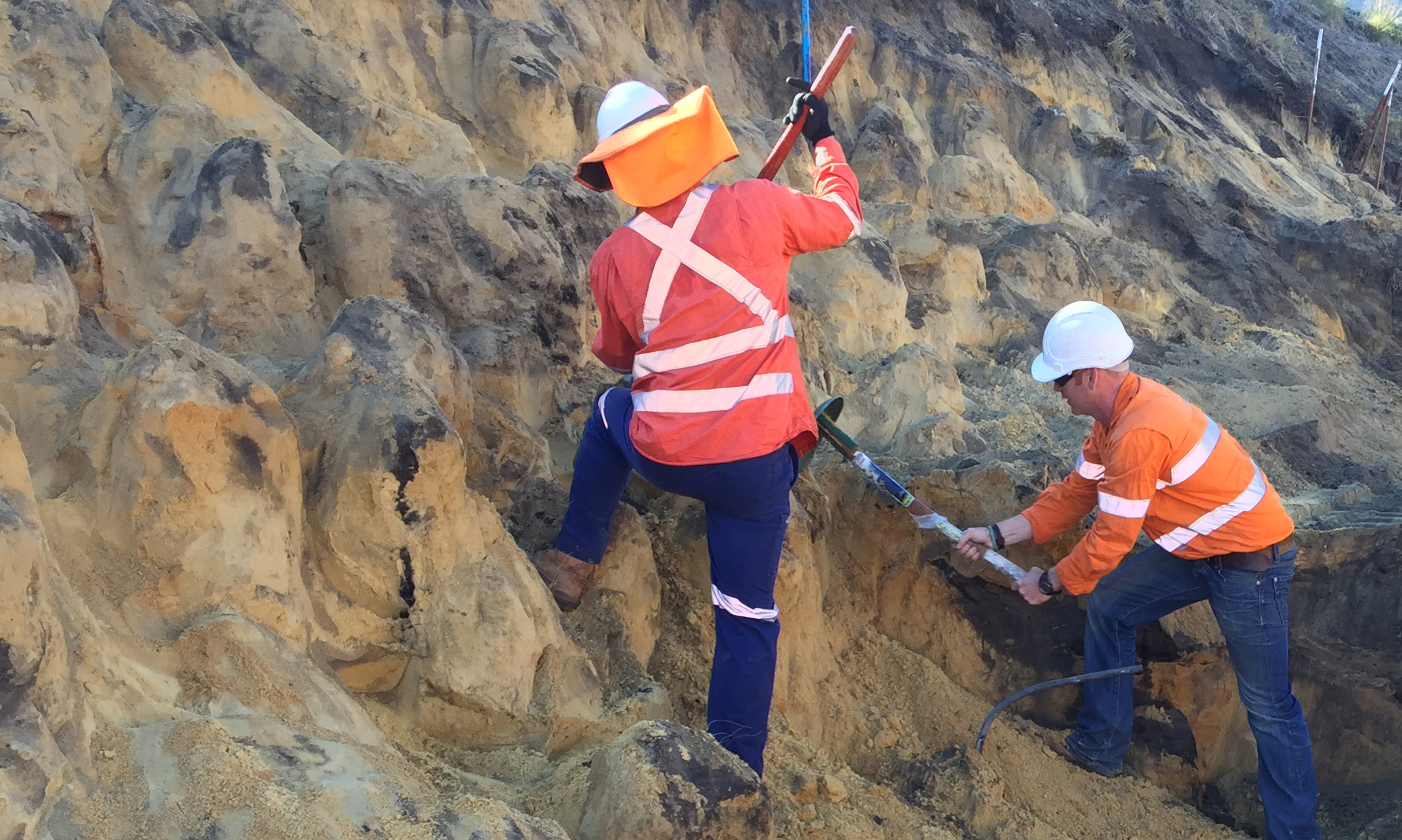 Remediation options like permeation grouting, void filling and resin injections are often overlooked, O’Grady says.
“However, they are proven methods for strengthening or stabilising the ground quickly and cost-effectively, because no large equipment or excavation is required,” explained O’Grady.
For stabilising slopes, O’Grady recommends permeation grouting, a low-pressure injection system. “Coastal erosion has left buildings literally hanging, undermined by steeper gradients which threaten safe access for repair crews," he says.
“Permeation grouting injects specifically engineered grouts and inert chemical solutions into the ground. These combine with the porous or sandy soils to reduce permeability and create a cement-soil matrix that stabilises the ground. Depending on the site, this can be completed in a matter of days. When compared to more traditional methods, such as deep foundation repair that typically requires excavation, it is a cost-effective solution.”
Sink holes are also posing a threat to safety and can impede the repair of public infrastructure after the storms.
“Higher levels of water infiltration have caused soils to move, creating cavities in the ground,” O’Grady says. “This creates a higher risk of sink holes if surface ground collapses into the voids.
“A multi-stage approach can quickly repair sinkholes. Existing holes can be stabilised using permeation grouting.”
O’Grady says voids and washouts can then be filled with Terefil, a lightweight and environmentally inert cementitious filler, to strengthen the ground.
Once emergency repairs are completed, O’Grady anticipates significant work in re-stabilising and re-levelling infrastructure.
“Heavy rains will have caused soils to become oversaturated and subside, weakening them to the point they’re unable to support buildings and public infrastructure,” he explains.
“Early intervention in ground subsidence is always recommended, and innovative resin injection technologies provide fast, clean and cost-effective solutions.”
Image: Workers undertaking permeation grouting.