Prime Minister Malcolm Turnbull has unveiled his government's plan for liveable, economically vibrant future cities at a recent Cities Summit.
Among other initiatives, the Smart Cities Plan features the establishment of an infrastructure financing unit to work closely with the private sector on innovative financing solutions, and the commitment of $50 million to accelerate planning and development works on major infrastructure projects to develop business cases and investment options.
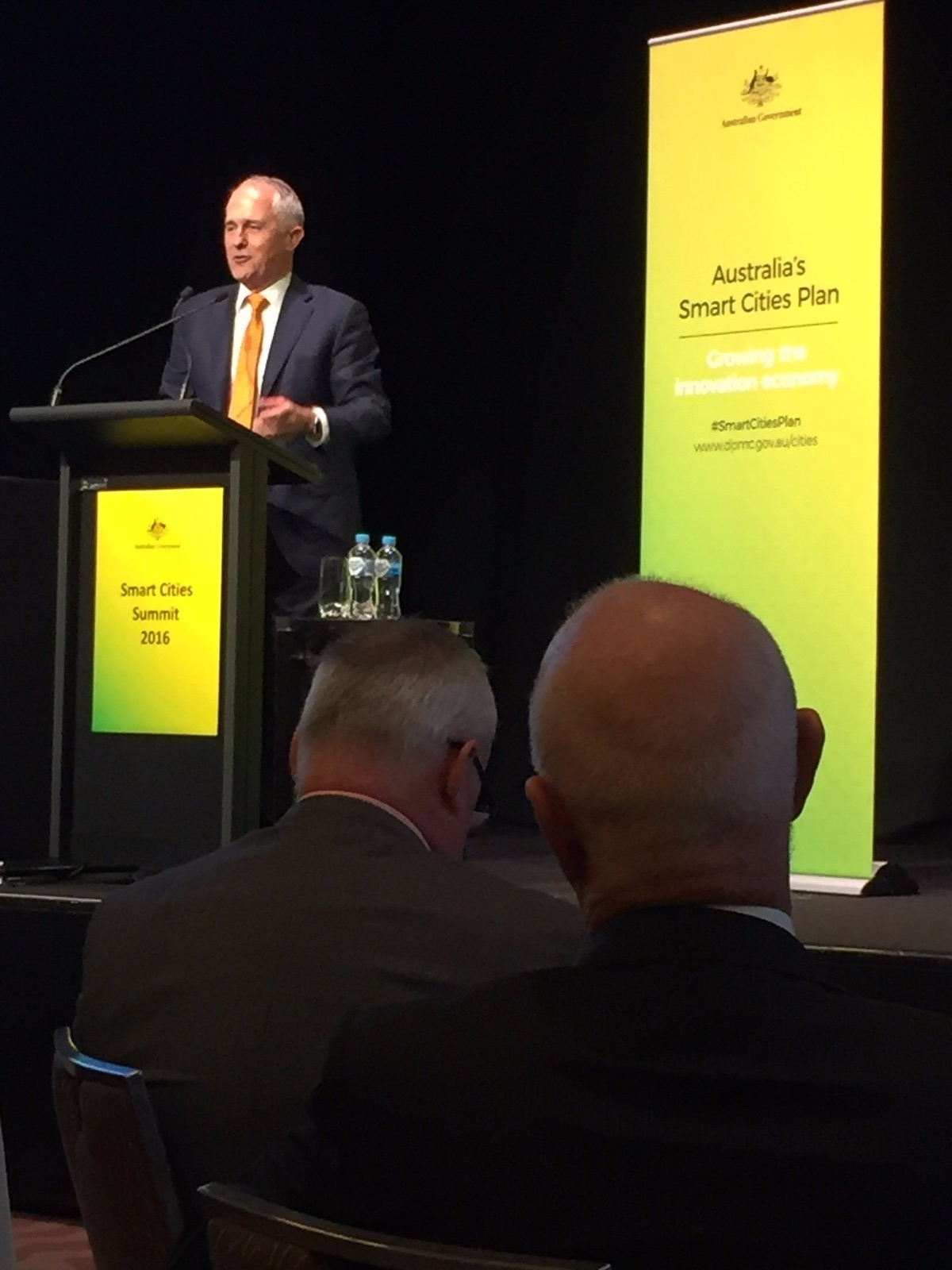
One hundred of Australia's top thought leaders joined the Prime Minister for attended the Plan's launch at an invitation-only event last Friday. IPWEA Australasia President, Ross Goyne, and CEO, Robert Fuller, were there to advocate on behalf of the public works infrastructure and the street lighting and smart controls industry.
The question is, was the launch of the Smart Cities Plan worth attending, or just another talkfest?
Fuller believes it was undoubtably a worthwhile discussion. “The Prime Minister spoke knowledgeably and passionately about what future Australian cities should look like,” he says. “He discussed why cities compete globally, not nationally, to attract intellectual capital.
“He outlined how our current generation has witnessed more structural change in technology and lifestyle than any generation before; how millennials will be seeking a return to inner city life where they engage with vibrant and interactive cities as a meeting place for people, and where communities have their expectations of service delivery met through world class integrated planning, building deign and recreational facilities.
“All this within a 30-minute commute to your place of work, your place of community and your place of entertainment.”
Ministers Greg Hunt, Angus Taylor and Paul Fletcher each chaired workshops respectively covering: liveable cities, designing city deals, and innovative financing and value capture.
Fuller assures that the forum also featured some robust debate.
“Be reassured: The Government heard first hand and bluntly of the issues, frustrations, ideas and aspirations of these industry and community leaders,” he explains. “They not only heard – they listened and engaged in meaningful discussions.”
There were several common themes that emerged after the intensive workshops:
1. The absolute need for the quadripartite alignment and active partnerships between: Commonwealth, State and Local Governments plus the community.
2. The need to set project objectives and then chase them to completion including design details being undertaken early in the process where transport, community and business is integrated
3. The time to act is now
4. Establish innovative funding, planning and built exemplar sites to test the veracity of new models
5. Greater certainty to provide long term planning (looking ahead 30,50 and 100 years) incorporating economic, environmental, social integration
6. More open spaces and urban forests to facilitate community amenity (Singapore was cited as a model city, where their urban canopy has enriched a massively expanded population).
Your are encouraged to download the
Smart Cities Plan document, which is available for public comment.