Solar panels and electric vehicles are both widely-available sustainable technologies. But one New Zealand council has taken the step of combining the two.
In early 2013, Northland Regional Council (NRC) had a 20kW solar photovoltaic array installed at its Whangarei office. NRC Rivers and Natural Hazards Manager Joseph Camuso says the $52,000 solar PV array provided 10% of the building’s energy needs, and saved the council $6,163 on its power bills in the first 12 months. The array would take about 10 years to pay for itself. “We initially installed the solar array with the intention of only using solar to reduce our electricity bill,” Camuso says.
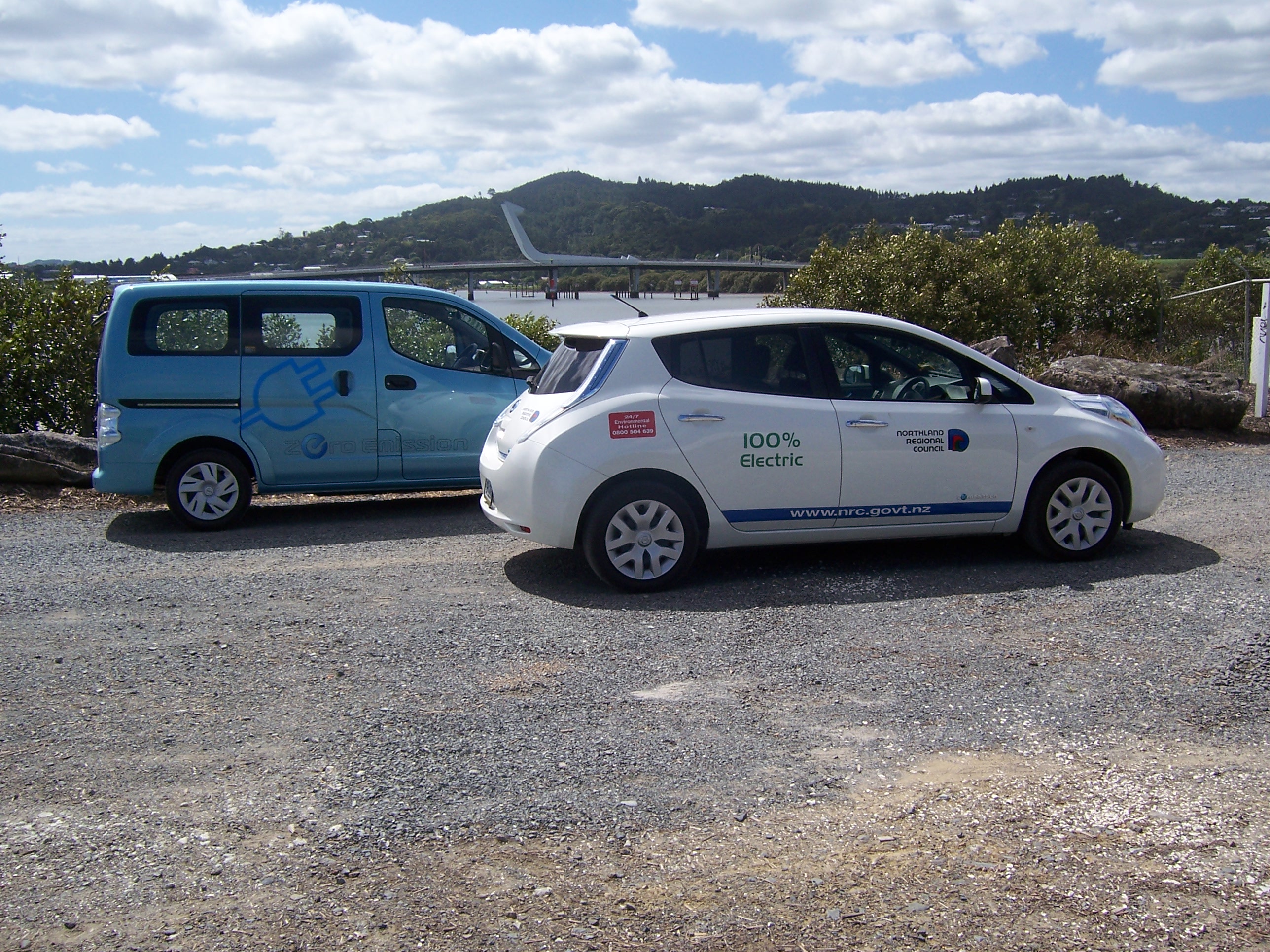
“However, later that year the dropping price of electric vehicles (EVs) caught my eye and – a bit by accident – we made the connection.” The council purchased three 100% electric cars – two near-new Nissan LEAFs imported from Japan for $22,000 each, and a new Mitsubishi iMiEV. Both manufacturers saw their EV resale prices slashed due to poor-uptake, with Nissan dropping the RRP cost of the LEAF by AU$15,000, from $51,500 at its release in 2012, to $36,000 by early 2013.
“I am an engineer so I like to check the numbers: Things like the efficiency of our petrol cars, versus diesel cars and the efficiency of our solar panels,” Camuso says. “So, naturally, when we got our first electric car I was curious how much energy it used.”
Camuso installed a check meter at the charger, to measure how much electricity was required to charge the vehicles. The numbers were so good, Camuso initially thought he had made a mistake in his calculations. However, a peer review confirmed the figures. “I quickly made the connection that the average solar produced from our roof would drive our EVs about 600km per day,” Camuso says.
Camuso worked out that if NRC swaps its petrol and diesel vehicles with NRC solar produced electricity charging EVs, the solar array will pay for itself in 1.8 years – the council’s electricity bill stays the same, but its fuel bill is reduced by $30,000 per year.
“If you displace petrol kilometers with electric kilometers, then you are leveraging the efficiency of the electric motor with three moving parts, which is about 90% efficient, versus a petrol motor with hundreds of moving parts and an engine efficiency of about 25%,” Camuso says.
Electric savings
However, even without taking the solar PVs into account, Camuso believes the benefits of the EVs mean other councils should consider adding them to their fleet.
Camuso explains the price of petrol in New Zealand is not nearly as competitive as electricity, more than half of which is produced by hydro. In December 2013, New Zealand petrol prices were about $2.15 per litre. By contrast electricity costs about $0.25 per kWh during the day and $0.17 per kWh at night.
“We found our cars were averaging about 6.5km per kWh, so now it was an easy calculation to compare a petrol car vs. an electric car,” Camuso explains. “We found electric cars have about one-fifth of the running cost of petrol cars. For example, a petrol Camry averages 8.5L per 100km, which equals NZ$18.25 dollars per 100km. An electric car operates at NZ$3.40 per 100km. So for every 1000km we would save about $1500 or $15,000 over the typical $100,000km that the council cycles our cars.”
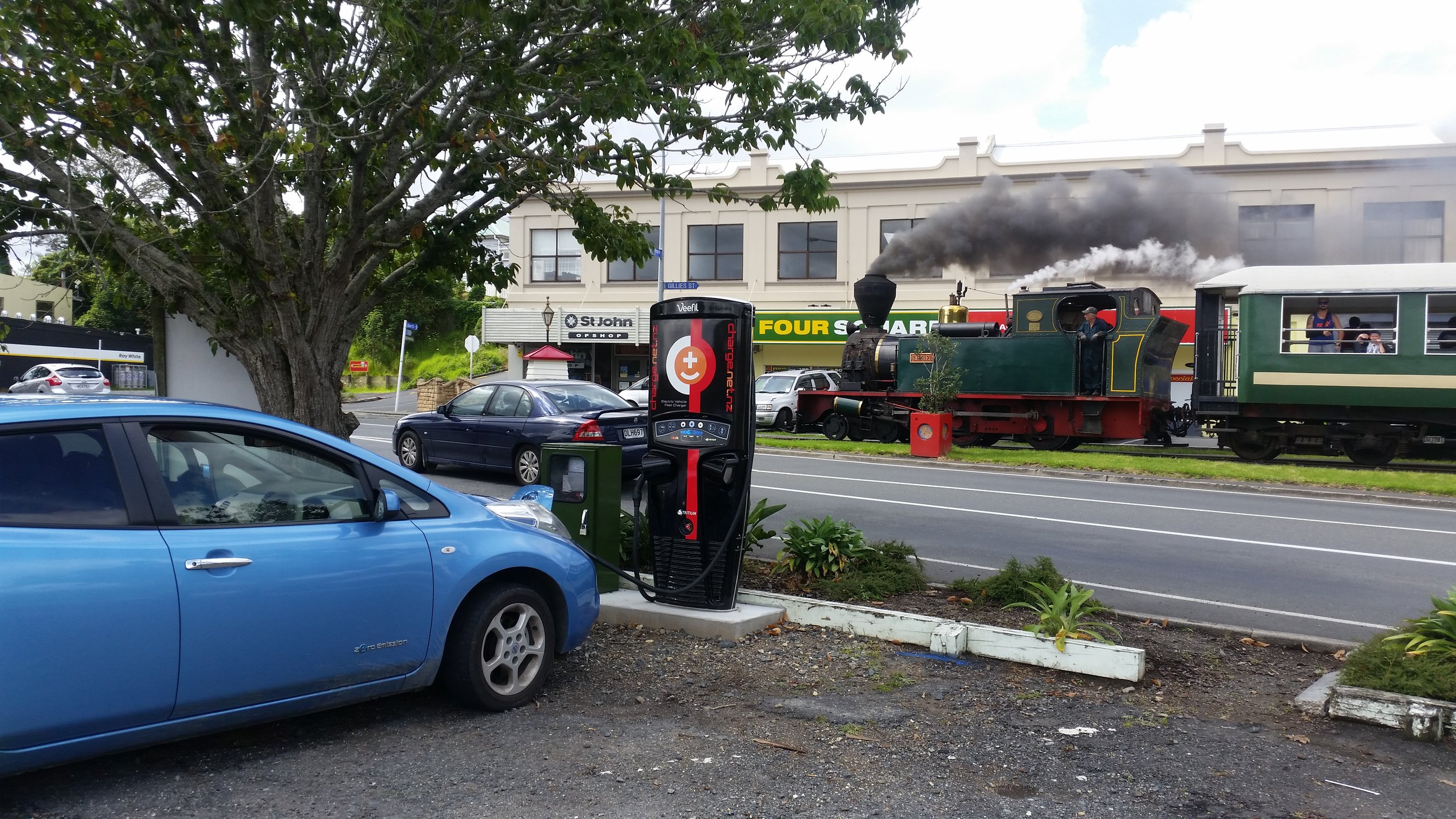
All of the council’s offices – the Whangarei base and three satellite offices – are set up with charging that is as simple as a 15 amp, three pin plug, which costs about $30 and takes 15 minutes to install. Charging from the 15 amp plug at 3.5kW will take four-and-a-half hours from a completely dead battery. Fast charging from a 50kW Australian made Tritium fast charger will take 20 minutes to 80%. Private company Charge.net.nz has installed four fast chargers in Northland, with a plan roll-out of 80 nationwide. Charging from the fast charger costs about $7.50 per 100 km.
Acceptance of the EVs among council staff has been somewhat tentative. About 10% of the staff are “EV champions”, who use them whenever possible, Camuso says. About 30% use the EVs sometimes, and the rest do not use them at all. Currently, the three EVs are averaging 120km per day between them. With a range of about 120km, the cars are not necessarily suitable for long trips – or trips that require staff to go offroad.
Still, Camuso says their economy makes EVs worth considering for other councils.
“Do an analysis of what your typical runs are,” he suggests. “Every trip our guys take is logged. We know 56% of our trips are less than 100km. We have a lot of trips that are just around town. We do have offices that are 80km away, and there's charging along the way.”
So far, Camuso says the vehicles have also required minimal maintenance at their scheduled 30,000km service. “They were really searching for things to do. There will be wear and tear, but of course there’s none of your typical oil and oil filter changes,” he says.
A day in the life
During a typical day for NRC coastal staff, someone using an EV will pick one up from the Whangarei office, which has been fully charged overnight at 17 cents per kWh or $2.61 per 100km.
They might then drive the 80km to Opua and plug the EV into the 15 amp wall socket while spending two hours collecting water samples. They then unplug and drive back to Whangarei, plug in and take the samples to the lab. After lunch, they will drive 80km to Dargaville, plug into the 15 amp wall socket, on the water for sampling and return to Whangarei, where it will charge up overnight.
“Over the course of the day they have clocked up over 250km, costing NRC less than $10,” Camuso says. “If they had driven our petrol Camry they would have cost the council about $45 in fuel.”