By Chris Sheedy
The construction industry has long been plagued by the time and effort it takes to communicate effectively on a major project. Finally, solutions are beginning to emerge.
As Robin Vogrincic helped to manage over 150 contracts across a large portion of the state of Queensland during the Transport Network Reconstruction Program (TNRP), his real-time, helicopter view of the progress of the various jobs sometimes felt like a game of Sim City. 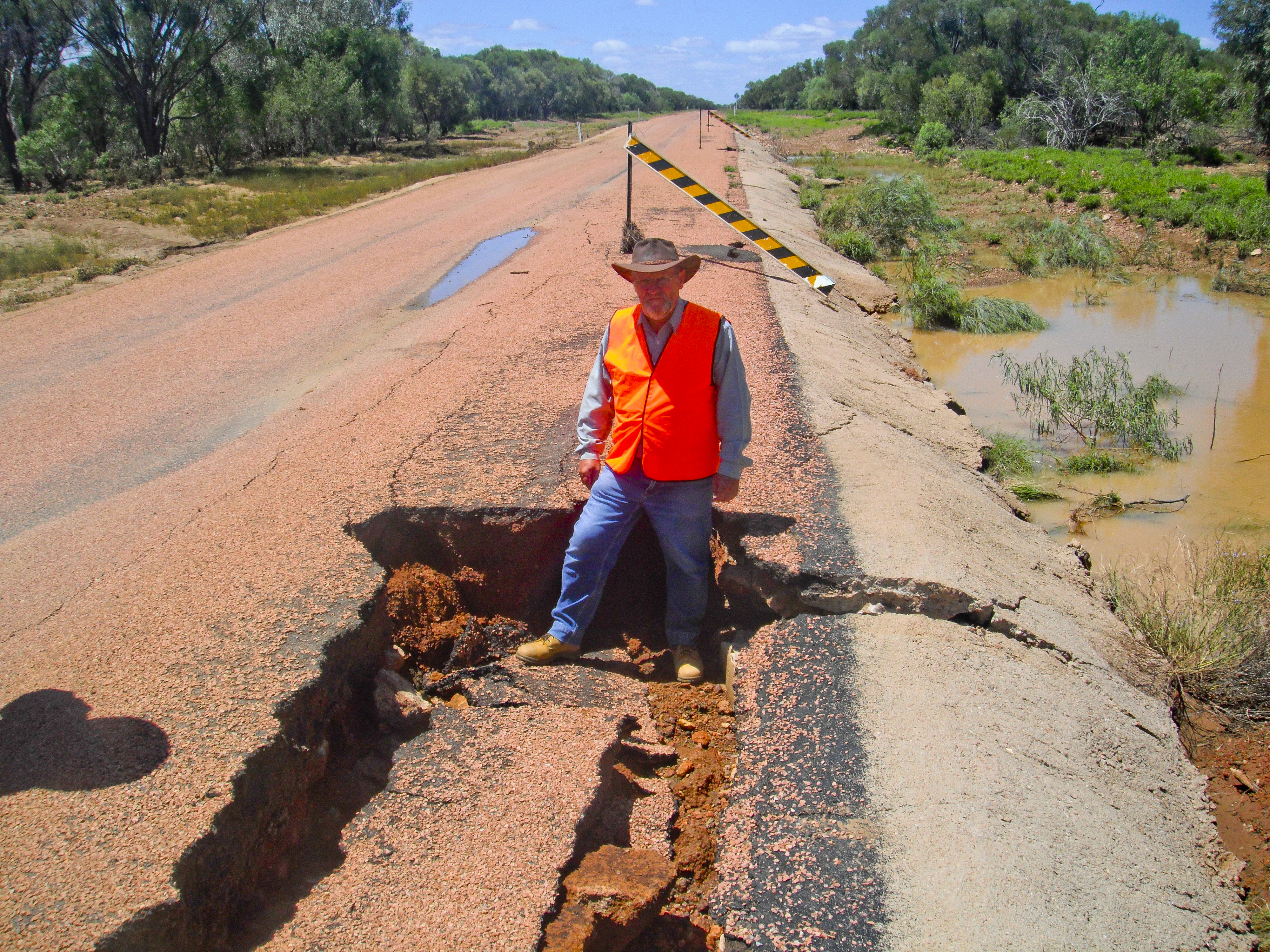
“From my perspective I could actually see the value being delivered to the community in real time,” says the Principal Engineer at Jacobs. On behalf of his client, the Queensland Department of Transport and Main Roads, Vogrincic had to keep his finger on the pulse as numerous teams of contractors fanned out across the state to make repairs after the 2010/2011 floods.
“I was not involved at a microscopic level, but I could see the infrastructure being delivered and I knew the benefits it would provide for the people,” he noted.
Despite the primacy of communication and performance in the construction industry, a story of clear vision and flawless transfer of facts is rare. KPMG’s 2015 Global Construction Survey found that at least one project worth US$10 million or more failed or underperformed in 2014 for over 60% of organisations.
And the PwC Productivity Scorecard 2013 said the Australian construction industry is a serial productivity under-performer, noting that an improvement of just one per cent would benefit the national economy by $1.2 billion. So what was the secret of the TNRP project?
Obviously, the success of the project came down to several factors. But one of those was a software solution that takes many of the annoyances and inefficiencies out of the contract management process.
It is called UniPhi and was developed by a project management professional who was endlessly frustrated in his job by the time and effort wasted in the attempted communication process.
“When there are people at different levels of a project that involves multiple organisations and multiple leaders and multiple contractors, they find it very difficult to transfer knowledge and to properly understand what is going on with that project,” says Mark Heath, Managing Director of UniPhi.
 “It leads to significant productivity and effectiveness issues on construction programs. That is why we often witness train wrecks with these projects.”
Studies on the topic of communication on construction projects, Heath says, show that anywhere from 10% to 30% of staff time is wasted in attempts at communication.
“This is not just a project manager but it is the architect and the engineer and everybody working on the project,” he says. “They are all wasting time trying to find information and trying to have their reports distributed in a way that does not lead to Chinese whispers.”
The system, which transparently stores all necessary communication, project data, program-wide metrics, workflow, contracts and regulatory tools together in the one piece of software, all accessible from anywhere as it is stored in the cloud, made a measurable difference to the management processes employed by Vogrincic and the Jacobs team. He says it allowed him to completely standardise his client’s contract and administration processes across all worksites, no matter how disparate or remote they were.
More importantly, he was able to log in at any time and from any place to check progress and performance, as well as conduct an audit to ensure processes were being adhered to. And for this to happen, no meeting was necessary. The transparency of the system took away such a need.
“A great challenge in this industry is the fact that even experienced people have different levels and types of experience,” Vogrincic says. “When they are based at remote sites there is always the temptation to develop bespoke information management systems based on Excel spreadsheets, for instance, which makes program-wide reporting very difficult. Having a tool that is web-based facilitates consistency and allows desktop audits from anywhere, in real time.”
“I could sit down in Brisbane and find out what the various teams had done that day, whether they were complying with the requirements of our commission, what the standard of their administration was, whether they were entering all of the requisite data and what standards their reports were. Then, if required, I could follow it up with a phone call.”
The use of advanced software and cloud technology to solve the problem of endless update meetings, clipboards containing hard-copy reports in triplicate, Excel spreadsheets on laptops in remote locations and other inefficiencies, makes sense in an age of digital technology.
It saves manpower and money - the UniPhi software was reported to have saved $5 million on Jacobs’ TNRP management project. Even more importantly, such a service helps to minimise risk.
“We did a fair bit of analysis around the TNRP program,” Heath says. “We discovered that everything was done with greater rigour than ever, meaning everything was also done more effectively and transparently. There wasn't that much time saved in the end, but because everybody followed specific processes, the chances of blowouts and massive variations did not occur. And the program won an internal award - it was well recognised as being a very effective project.”
Image1: Technical Officer Graeme Shipley surveys the flood damage.
Image 2: Mark Heath.