An upcoming Austroads study will investigate ways to reduce traffic accidents on urban arterial roads, based on new research which has found a significant proportion of serious and fatal accidents occur in these zones.
The Austroads research report
Road Fatalities and Serious Injuries in Australia and New Zealand 2001-10 analysed data from all police-reported crashes in Australia and New Zealand from 2001 to 2010.
Although rural roads are widely-acknowledged as high-risk zones, the study – undertaken by road safety consultancy ARRB – found that in Australia, the highest number of fatalities and serious injuries occurred on 60 or 70 km/h roads, with 62% of fatal and serious crashes occurring in urban environments.
While this differed from the New Zealand data, which confirmed rural roads continue to be a high-risk part of the road network (accounting for 55% of fatalities and serious injuries in New Zealand), the report’s authors highlighted urban arterials as an area requiring further investigation.
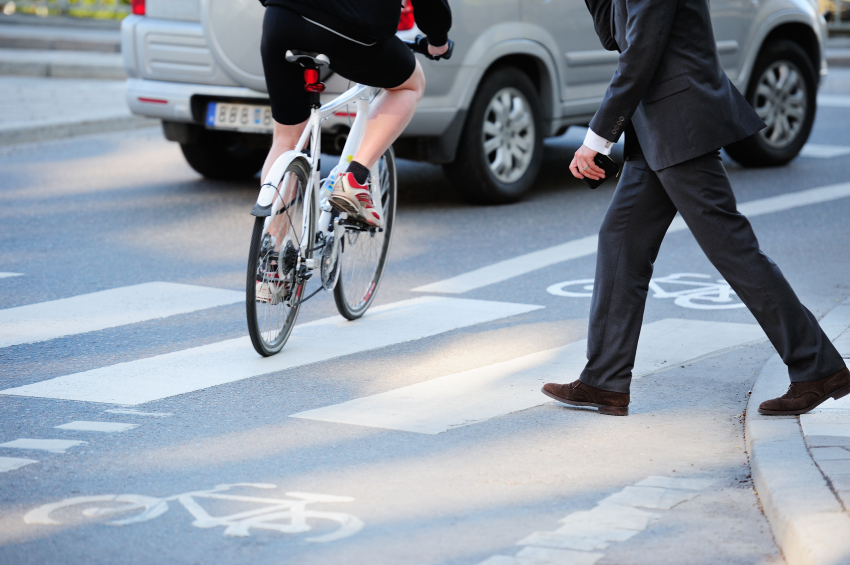
ARRB Principal Research Scientist Safe Systems Blair Turner says that urban arterials typically place a “vulnerable” mix of lower-mass road users, such as pedestrians, cyclists and motorcyclists, in close proximity to higher-mass vehicles such as cars, buses and trucks.
“It’s that mixed bunch use of the roads that leads to some problems,” Turner explains.
Greater vehicle density in those areas also contributes to the data.
Where are your high-risk urban arterial sites?
Austroads is seeking site nominations from state and local-government road agencies to be involved in a project which will investigate the use of safe system infrastructure on four different mixed-use urban arterials.
The sites must have a demonstrated safety problem and are expected to be between 200 m to 2 km in length with a 60 to 80 km/h speed environment. Routes may include strip shopping centres, roads with a mix of users such as pedestrians, cyclists, public transport, cars, delivery vehicles, emergency vehicles, and higher volume roads with pedestrian and cyclist activity.
Turner, who will oversee the upcoming project, explains that the study results will provide information and guidance to road agencies.
“This will be the first project we’ve joined together safety and these broader mobility issues,” he says.
“Safety has always been an important issue in transport, but we are revisiting this now and taking a more fundamental look at how safety can be embedded in terms of our planning at the outset, but also in these environments where we have an existing network that may have evolved and changed over time.”
There are a range of options available to road agencies with high-risk areas, Turner says.
“We have had a bit of a look at these projects internationally and there’s a lot of good examples from Europe,” he says. “A lot of it’s about some speed reduction at those critical points. I want to make clear, we’re not talking about the speeds of all urban arterials here, but perhaps at critical points where there might be a crossing for pedestrians, there might be higher-speed raised platforms used.
Separating various road users is also important, but raises questions about how best to allocate space, Turner says.
“This is a real issue – how do you actually do that, how do you allocate space out in competing priorities? One of the major issues we’ll tackle here is how to prioritise how to use the road user space.”
The study will also look at the potential impact of any measures on traffic.
“A bad outcome would be if you put something in place on this arterial roads and suddenly the car spill onto residential streets,” Turner says. “You want to maintain the flow of vehicles but improve safety at the same time. That’s quite a tricky thing to do and a big part of this project.”
The project will be a “desktop analysis”, and will not include the preliminary or detailed design or construction of the identified solutions.
“We will work with the road agency to assess the problem. We’ve got a team of experts that will help with the task, and then we’ll work with them to identify some possible solutions to improve safety. The next stage along from that is to estimate, based on a proposed design, what would the safety benefits will likely be.”
“At the end of the project we’ll have a range of treatment options and we’ll know the estimated benefits from those treatment options. We’ll publish a report with these four case studies documented, and synthesise the results and come up with some solutions that people might look at using in future.”
Sites with existing traffic models will be looked on favourably, Turner says.
“Ideally we will find locations that have existing traffic models and we would use that as a basis to understand the impacts on traffic through these changes that might be made.”
Turner hopes the project will help highlight the fact that urban arterials are an important part of the road network that need to be addressed, which could help direct funding toward safety projects.
“In terms of funding agencies, if there is an existing problem there or a potential high-risk, it will allow them to put in that funding application there to address the problem,” Turner says. “Some of these solutions will be higher cost, but we also hope to identify solutions that are more reasonably-priced, particularly for local government which often struggle to get funding to make these kind of improvements.”
Expressions of interest must be submitted by 11 March. Initial results are expected to be released in November.
If you are interested in participating in this project, or would like further information, please contact Project Manager Blair Turner on 03 9881 1661, or email: info@arrb.com.au.