The Australian Government has endorsed the introduction of emission standards for new, non-road spark ignition engines and equipment as part of the National Clean Air Agreement.
The National Clean Air Agreement focuses on actions to reduce air pollution and improve air quality through cooperative action between industry and government at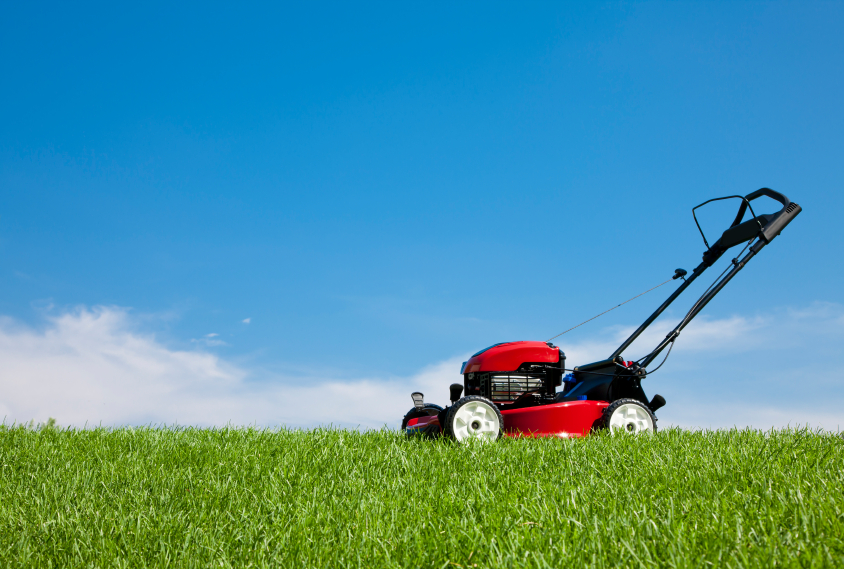 national, state and local levels. The Agreement incorporates a range of existing, new and complementary measures to improve Australia’s air quality.
The key actions under the National Clean Air Agreement are:
- The introduction of emission standards for new non-road spark ignition engines and equipment (NRSIEE), covering petrol-powered garden equipment and outboard motors
- Reducing air pollution from wood heaters, including the adoption of new emission and efficiency standards for new wood heaters
- Strengthened ambient air quality reporting standards for particle pollution (PM or Particulate Matter)
NRSIEE includes garden equipment and marine outboard motors. These engines are significant contributors to air pollution as they don’t have the same emission standards and controls as road engines. They emit much higher rates of air pollutants which add to ground level ozone formation.
Ministers made an in-principle agreement at their July 2015 meeting to introduce emissions standards for NRSIEE. They also agreed to establish a Working Group of Experts that included representatives from industry, government and the community to advise on how best to implement emission standards for Australia.
The Australian Government aims to have new Commonwealth legislation introduced in 2016, subject to the Parliamentary schedule. Regulations would then be made specifying the detailed requirements. Fuel system evaporative standards may be delayed to commence a year after exhaust standards, to allow Australian tank manufacturers to develop the technology already employed in the US.
The Outdoor Power Equipment Association (OPEA) had four representatives on the Working Group, who provided advice on implementing the standards, with the aim of introducing legislation into Federal Parliament in early to mid-2016. The OPEA have been lobbying and working towards emission standards for the past 12 years to provide a long-term vision for the outdoor power equipment industry.
With the introduction of new standards Australia will come into line with existing international standards, particularly those in the US, who currently lead the world in emissions standards for NRSIEE.
The new emissions standards will apply to newly manufactured or imported NRSIEE, including the fuel systems (tanks, fuel-lines, caps and carbon canisters. The OPE categories that will initially be covered are spark ignition engines rated below 19 kilowatts (25 hp) used in household and commercial operations and marine spark ignition engines.
What does it cover?
OPE equipment covered by the standards are:
- Lawnmowers;
- Ride-on mowers;
- Mulchers;
- Brush/line cutters;
- Generators/pumps;
- Chain saws; and
- Small handheld equipment that may be stationary, pushed or pulled.
The new standards will not apply to engines and equipment that have already been purchased, or are in stock with a specialist dealer or other sales outlet at the time of implementation.
The passage of the legislation through Parliament and phase-in periods will impact the start date for the standards. All representatives of the Working Group agreed that the introduction of standards should progress to the next steps as soon as possible.
The new standards will generally cover:
- The prohibition of the import, manufacture, and first supply of new engines or equipment that do not meet the Standards.
- A certification process for new domestic and imported NRSIEE products, noting that many
- NRSIEE products already meet the proposed Standards as they meet US EPA equivalent standards.
- An averaging and banking mechanism is being considered that will allow a family of engines to be imported that meets the Standards—on average.
Two vs four-stroke engines
OPEA’s Rob Baker says there has been numerous rumours circulating, particularly regarding the future of two-stroke engines.
Emission Compliant two-stroke engines will continue to be imported and sold within Australia. The new emission standards are based on compliance with exhaust emission levels; and this is relevant to both two and four stroke engine designs. Two-stroke engines will not be banned; two-stroke products already owned by consumers will continue to be serviced. It is important to note that the new standards will not impact the use of existing products owned by consumers; they will continue to be serviced and can continue to be operated for the life of the product.
“This is not about two-stroke versus four-stroke; it is about the technology,” Baker says. “There are many compliant two-stroke products on the market already today, manufacturers who have invested in developing technology to provide a better outcome for the consumer and the environment. Four-strokes may become the most common engine technology for ground supported applications in the future, but compliant two-strokes will still dominate the handheld product category.”
The phase-in of the standards will allow for: existing dealer stock, a set period for pre-placed forward orders to flow through and for manufacturers to modify equipment to meet the new regulations.
Baker recommends that manufacturers, retailers and importers start planning to meet the US EPA standards, to guarantee product compliance when the standards commence.
For further information visit the OPEA website or the Department of Environment website.