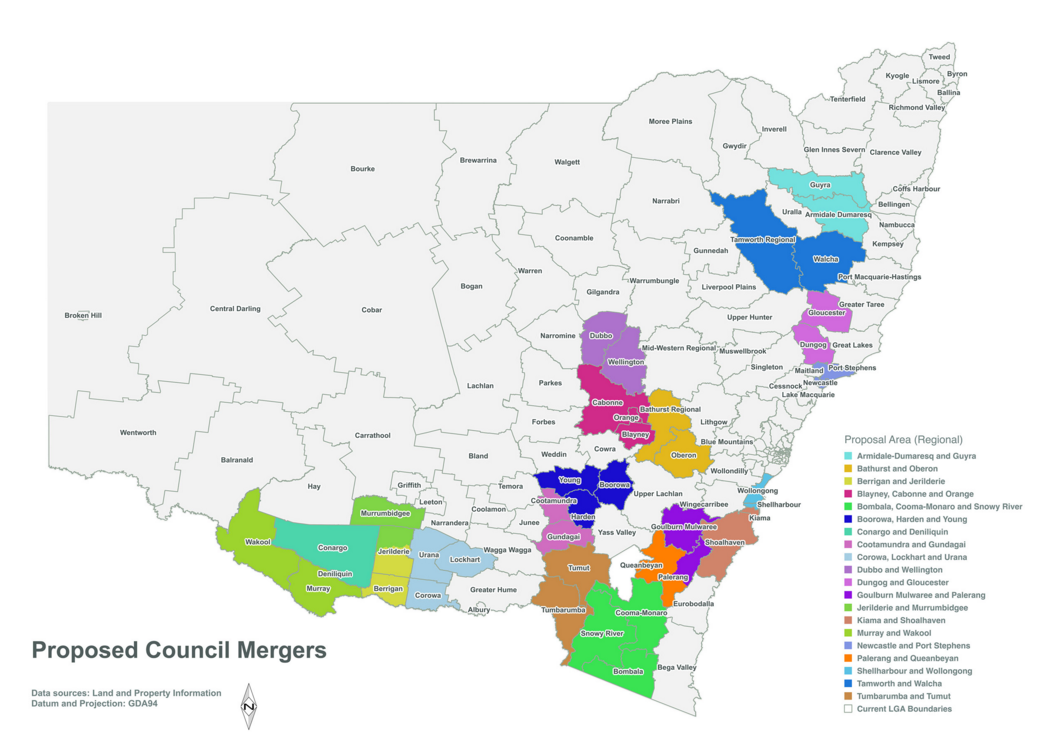
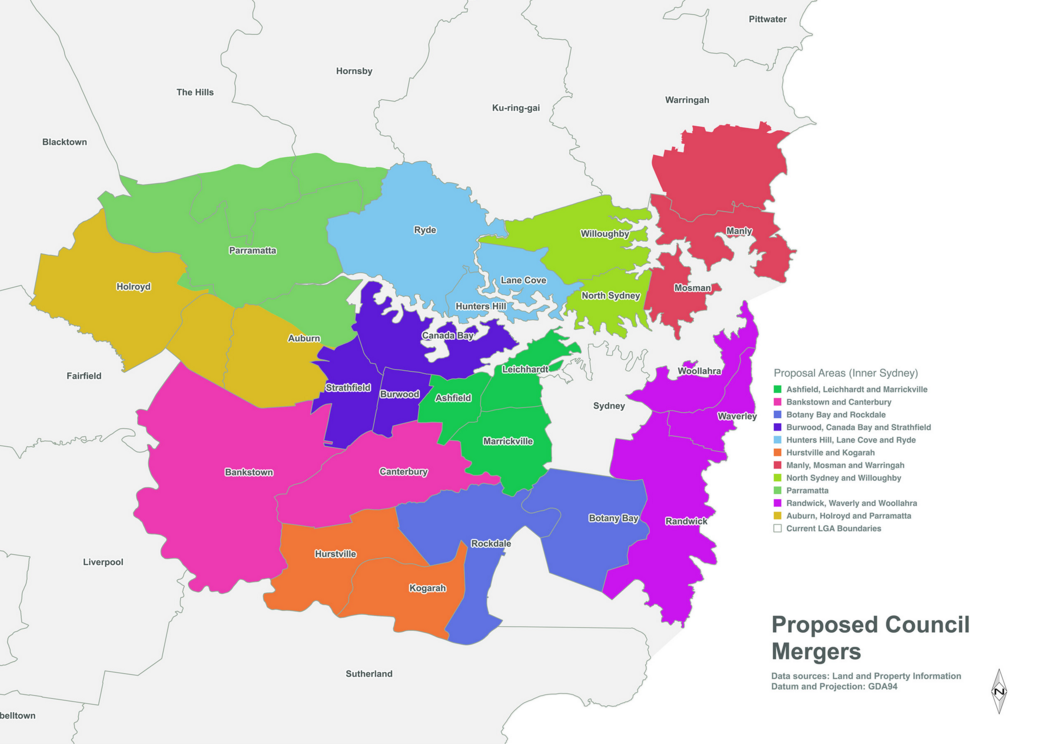
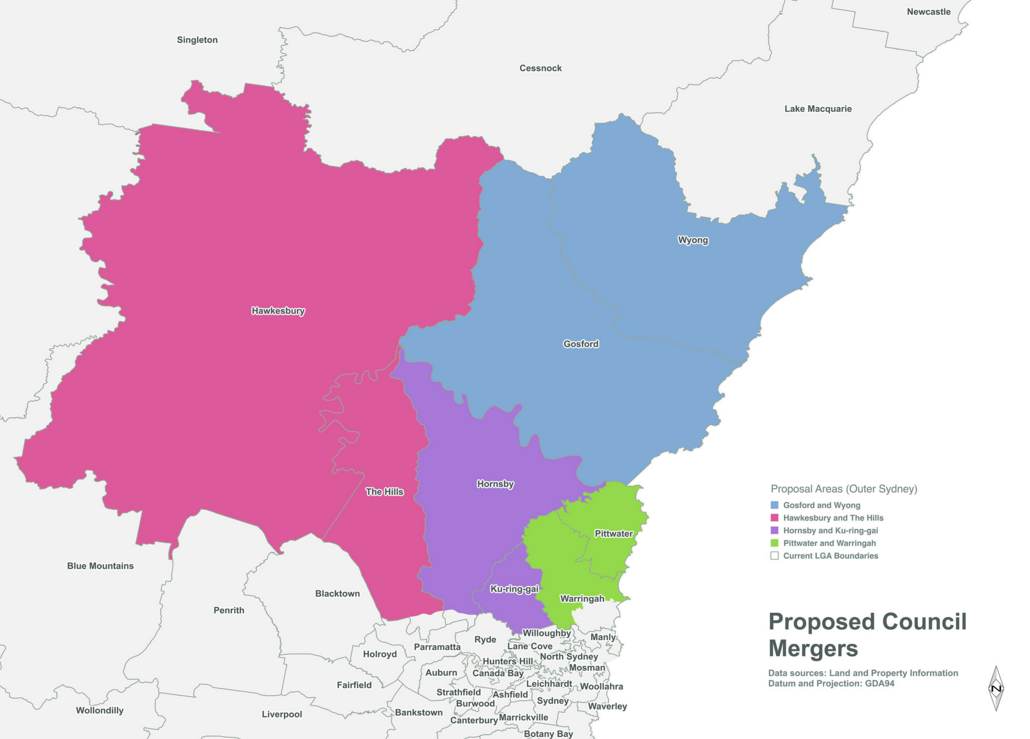
The NSW Baird Government has announced dozens of NSW councils will merge, creating 35 new councils.
In greater Sydney, the total number of metropolitan councils will drop from 43 to 25. In regional NSW, 109 councils will become 87. No council will have fewer than 150,000 ratepayers.
In a statement, Premier Mike Baird says the amalgamations will reduce red tape for the community and businesses.
The move follows an Independent Pricing and Regulatory Tribunal (IPART) review, which found nearly two-thirds of the state's councils were not "fit for the future".
The IPART report, released in October, found local government mergers could save ratepayers almost $2 billion over the next 20 years, which could be invested in new infrastructure, improved services or keeping rates stable.
Local Government NSW President Keith Rhoades says the news came as a shock to some councils who were initially confident they would not be forcibly merged.
Bankstown Mayor Khal Asfour slammed the NSW Government’s decision to force Bankstown to amalgamate with Canterbury City Council, despite being found fit to stand alone.
“This is a disgraceful decision by the NSW Government and makes an absolute mockery of the process that councils have undertaken over the last 18 months to prove they are fit for the future,” Asfour says.
“Bankstown has done everything it has been asked to do. We’ve undertaken a thorough community consultation process, listened to what our residents want, and proven we are fit to stand alone.
“We were the only inner Sydney metropolitan council that met all the criteria set by the NSW Government but it means nothing now following the decision.”
Asfour says Bankstown will lodge a submission to the Boundaries Commission.
City of Ryde, Hunter’s Hill and Lane Cove Councils voiced their disappointment that their proposed Joint Regional Authority, put forward in lieu of amalgamations, was rejected.
In a statement, the councils say the JRA is : “A sophisticated and contemporary model, which breaks the traditional mould of amalgamations and we are convinced it would meet our communities’ needs and allow them to have a say in their future together in working with the State Government in the strategic planning of Greater Sydney.”
“Ryde, Australia's third oldest settlement, was proven to be financially fit, yet we will be smashed together with others in a forced merger. Costs of merging will far outweigh any benefit and our communities will lose their local identity,” City of Ryde Mayor Jerome Laxale says.
However, IPWEA NSW CEO John Roydhouse says the mergers present an opportunity address the state’s $7 billion infrastructure backlog.
“IPWEA NSW has long acknowledged that change and reform must occur in local government in NSW to provide strong leadership and long-term benefits for the sector,” Roydhouse says.
“The critical issues of scale and capacity in local government, addressing the funding gaps for public infrastructure and delivering real solutions to the communities in NSW through the provision of public works and services, must remain at the forefront of economic development and public safety for this state.
“This reform process provides a significant opportunity to assist our communities through local government reform to ensure that scale, depth and capacity in the delivery of public works engineering are enhanced.”
IPWEA NSW argues the following are essential to ensuring local government is fit for purpose in the long-term:
1. Ensuring adequate infrastructure funding
2. Project management capacity
3. Retention and development of knowledge in engineering
4. Recognition and regulation for engineers, including support for Cadet programs
5. Future funding arrangements for local government, including the future funding of public infrastructure in New South Wales, whether it be new infrastructure or renewal of existing assets, continues to be at the top of the list for further exploration.
Roydhouse also flagged the need for NSW to adopt a registration scheme for engineers.
“There exists a significant opportunity for NSW to ensure our engineers are also subject to a registration scheme through any reform to the Local Government Act,” he says.
“This emphasises the need to recognise engineers’ essential role in managing public health and safety. In Queensland, a registration scheme is legislated for professional Engineers. Victoria and WA are also moving down that path, so it’s time for NSW to make the move.”
Once finalised, detailed merger proposals will be referred to the Chief Executive of the Office of Local Government for examination, and report under the existing process set out in the Local Government Act.
The Chief Executive will appoint qualified delegates, who will commence a public consultation process for all 35 proposals this month, including public hearings.
Final proposals will be referred to the Boundaries Commission for comment.