The engineering and public works industry is on the cusp of seeing smart technologies change the way public assets are managed, according to IPWEA Qld 2015 Engineer of the Year Andrew Ryan.
The engineer of 25 years and Director for Infrastructure Services at Sunshine Coast Regional Council received the accolade during the State Division Conference, recently held in Mackay.
In their comments, judges said Ryan had been an outstanding contributor to IPWEA Queensland, through his roles as Branch President and Board member. Ryan currently serves as an RPEQ Assessor and is the SEQ Branch Alternate on the RPEQ.
“Andrew is the epitome of many IPWEA Queensland members: he just gets on with things, quietly and efficiently,” the judges’ comments read.
Ryan spoke with intouch about the changes and challenges within the industry, delivering the best outcomes for his community and the new technologies set to change the industry. 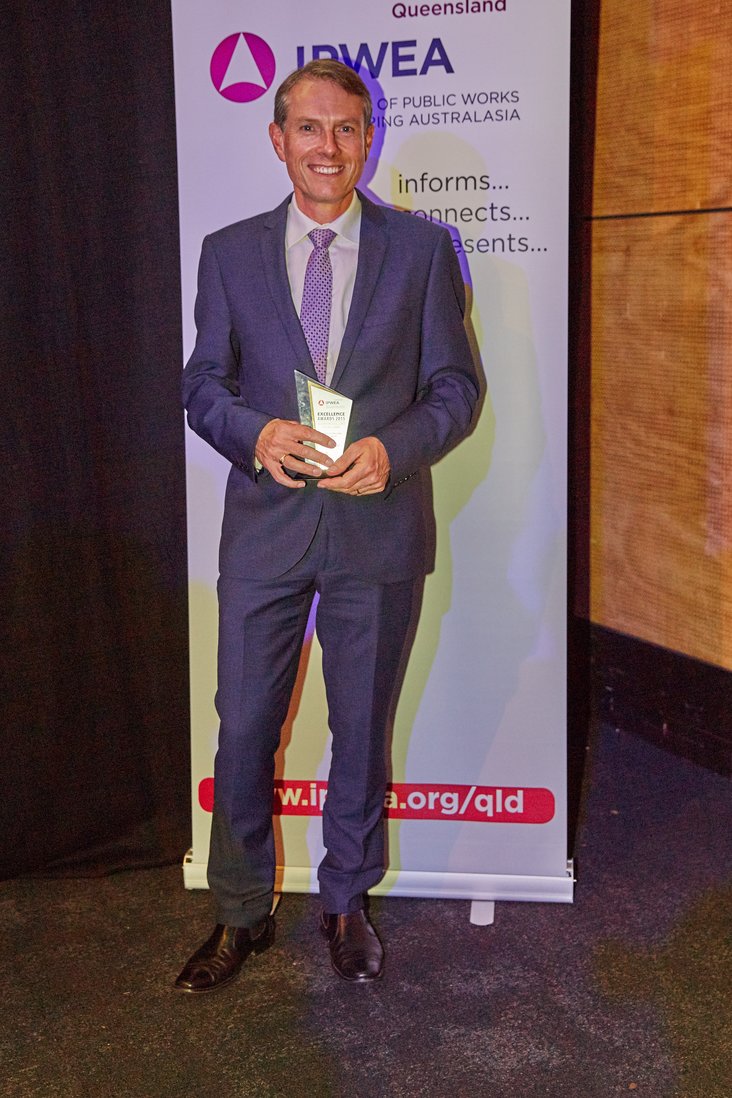
intouch: What are some of the biggest changes you have seen take place in the industry?
Ryan: The changes from the major economic reforms of the 90s made a major contribution to the changed workplace we live in today. The emphasis on value for money and con-testability caused a lot of pain for some, but it also helped shake off a sense of complacency that we in councils may have been guilty of, by simply thinking that because we do good work, then we shouldn’t have to compete or be accountable for our expenditures or end products and services.
Following on from those times, these days we have far more community and media focus on the works we do, and through social media and online reporting, any project can become a big deal, even when we thought it might be a simple fix. We have had to be more focussed on the total impact of a project and ensure far more effort is made on engaging with the community and also delivering quality place making outcomes.
A road is not just a road – it’s a place where people walk, congregate, shop, talk, sit, ride and also drive through, and we put a lot more effort these days into trying to deliver a total package that meets a range of needs.
intouch: What are some of the projects you've worked on that have been particularly memorable?
Ryan: One major project that stands out was the construction of a new biological nutrient removal sewerage treatment plant in Hobart. I was given the job of project engineer and we embraced what was then a new technology, designed by a Danish company, and worked in close partnership with the designers, contractors and council staff to ensure the finished product met all of the tight environmental regulations and worked efficiently.
I’ve also been able to work on a number of smaller scale projects that have far more community impact and perceived benefit. In the Coolum Boardwalk project, we were able to work with the state government and employ over thirty long term unemployed people, while working with local community and environmental groups, to deliver a quality structure in tricky location that made a real difference to the people who both worked on the project and also benefited from what is now an outstanding experience in walking along the cliff lines down to Coolum bay.
intouch: Are there any sort of projects you would like to work on in the future, or are planning to work on?
Ryan: I’m really interest in utilising technology in our workplace and in particular information technology systems and devices. I have helped drive a focus in my council on utilising technology in a range of ways. From connecting our field staff to each other and head office via iPads and iPhones, to seeking to partner with our local university in implementing real time pavement monitoring systems across our coast road network.
I have no doubt that we are on the cusp of some major changes in the way we service assets and deliver services through smart technology that gives us forms of information in ways we could only dream of a decade or so ago. With all of this we can’t lose sight that people are still the heart of any technology, so we need to train ourselves and our people to adapt to utilising new technologies in areas that were once disconnected and delivered in a piecemeal manner.
intouch: Have there been any particularly challenging projects or situations you have faced in your career? How did you overcome them?
Ryan: The biggest challenges that most of us will face within our careers is that of changing political and managerial environments in which we work. While it’s that same in the private sector, council engineers also have the added challenge of an often critical media, elections every three to four years, changing agendas and sometimes communities who don’t like what we need to deliver.
This can take a toll on people personally and sometime you can lose perspective. I have learnt to not to place my faith in my employer no matter where I work, and to try and keep a sense of balance about what’s going on around me. People can be fickle and the winds of change can blow, so it's important to be self-reliant, and invest in your own career and personal development, and not expect that others will necessarily see your value. You need to recognise it in yourself.
 intouch: What are some important lessons you have learnt during your career?
Ryan: It important to stay focussed on where you choose to be in your career as much as in life. I often hear people complain about their employer or employment situation, but I am a big believer that we all have choices as to where we work and where we take our career. Not everything may work out, but have faith and be adaptable and accountable for your own career development.
intouch: What has your involvement with IPWEA Queensland been? What are the benefits?
Ryan: I joined what was then the Local Government Engineers association when I was working in Hobart. Back then it was seen as a bit more of an exclusive club and tended to be dominated by more senior engineers.
Things have changed thankfully and the IPWEA is now a far broader group with all ages and far better gender balance these days! I got involved with IPWEAQ around 13 years ago when a few of us stepped up to form a committee and help resurrect the South East Queensland Branch. From there I served as the SEQ branch president for a couple of terms and was also privileged to also serve on the IPWEAQ board for a number of years as well.
I have found the IPWEA of great benefit to me personally, to my career development and to the councils I have served. The network and contacts you make across the range of councils and private companies who form the IPWEA is strong and solid and I have made many friends from my involvement. These are people I can call upon, seek advice from or hopefully plagiarise some initiative that they have done that we could benefit from!
The IPWEA is also somewhat unique in that it develops a range of highly valuable tools and products that our councils and communities benefit from, such as standard drawings, ADAC, Aus-Spec just to name a few, all put together from an organisation that relies on members to pay and volunteer their time. It just demonstrates the spirit of commitment that exists within public works professionals.