As the popularity and notoriety of robotic technologies such as drones continue to soar, engineering and public works applications for robotics are being explored – and the result could soon be right beneath your feet.
Researchers are investigating the use of robotics in tasks like bridge cleaning and maintenance of underwater pylons, University of Sydney lecturer and Australian Robotics and Automation Association president Professor Stefen Williams says
“A lot of people talk about dirty, dull and dangerous as the things that drive robotics,” Williams says.
“There’s a lot of work in the oil and gas sector (and) we do a lot of work in the areas of mining and logistics and things like that.
“Another area we've seen significant growth is the area of precision agriculture – a lot of agricultural systems are semi automated.”
A Queensland-based water corporation has recently enlisted the help of two pieces of robotic technology.
Simon Taylor, Unitywater executive manager infrastructure planning and capital delivery, says the Submersible Remote Operated Vehicle (ROV) robot and the SmartBall leak detection robot have helped make life easier for workers while improving operations.
The SmartBall is an aluminium-alloy ball about the size of a tennis ball, encased in a foam outer shell, which is disinfected and placed into a sewer or water main to 'free swim' with the water flow for up to 12 hours at a time.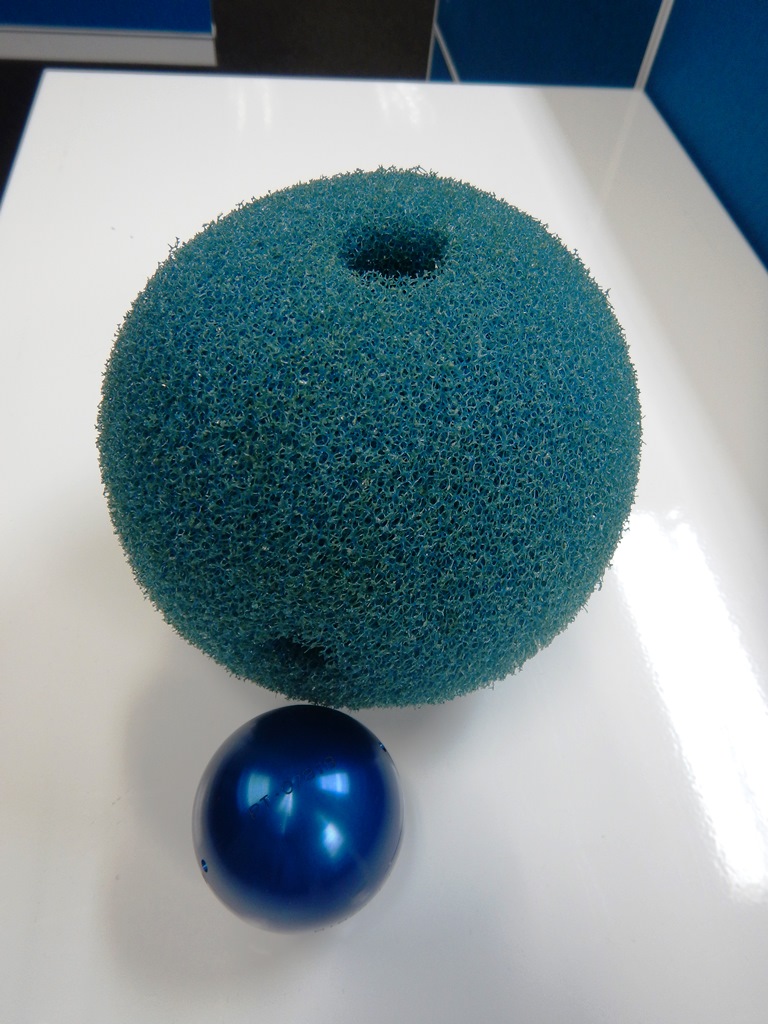
The core ball contains instruments including an acoustic sensor and GPS tracker, as well as gas pockets which can reduce the capacity and efficiency of the main.
In its very first trial through 8.9km of pipeline, the SmartBall detected a number of leaks which Unitywater estimate would have seen $31,000 worth of water wasted on an annual basis had they remained undetected
“The SmartBall was a big surprise,” Taylor says.
“Low and behold, it found something we didn't know was there.”
The SmartBall’s ability to pinpoint leaks to within a two metre radius means workers don’t need to dig up pipeline unnecessarily, which Taylor says represents a huge increase in efficiency.
“When we send a crew out we can tell them X marks the spot and look at the drawings for that area,” he says.
“It means they go out prepared for what they might find.”
Although the SmartBall was originally intended as a trial, Taylor says he has been so impressed by the robot it will now be staying on full time.
“In some ways I'm hoping it doesn't find any more leaks,” he laughs.
Dubbed “Rove” by staff, ROV is a 25 centimetre-wide remote controlled device fitted with a CCTV camera.
While underwater, it performs a condition assessment of reservoir interiors, checking for any structural or safety problems.
It means there is no need to divert water supplies while reservoirs are taken offline for human divers to perform a confined-space entry, providing both efficiency and safety benefits. .jpg)
“Without the ROV, we’d have to actually put someone in the water - you've got a human in a confined space, in drinking water,” Taylor says.
“It doesn't take as long to get ROV mobilised, it’s more efficient, it’s quicker.”
The ability to retain the images ROV captures is also beneficial, Taylor says.
For Taylor, robotics represent a smart investment.
“We don’t have to put people in harm's way, (and) for the SmartBall, there are no alternatives like it at moment,” he says.
“They are able to tell us some things we’ve never been able to know before.
“These are two good examples of using technology to work smarter, streamline the business and save valuable dollars.”
While Taylor encouraged other companies to support similar technologies, he warned against using “technology for technology's sake”, and suggested people first think about the problems they needed technology to solve.
“We get a lot of people who come with various gizmos, but we have to think about what the questions we actually need answered are,” he says.
“It’s very easy to get carried away with the bright shiny things.
"Talk to people in your own industry, someone who might have tried it."