~ by Grant Andrews and Ross Moody
The development and implementation of Asset Management Plans for infrastructure is a central focus for most councils in Australia in the quest for sustainability.
Roads, water, sewer, drainage, paths, parks, etc., form the major component of most councils' infrastructure assets.
In order to successfully deliver a complete Asset Management Plan for these assets, the implications of the plan needs to consider the services that will be required and impacted in delivery of the plan. Part of constructing, maintaining and disposing of these infrastructure assets will involve plant and fleet. Where councils retain their own plant & fleet to deliver services, the Asset Management Plan needs to take into account the impact on plant and fleet.
Some of the questions that need to be addressed include:
- What will be the impact on utilisation?
- Will there be sufficient fleet resources to deliver the work required by the infrastructure plan?
- What will be the impact on the plant replacement program (and the budget)? E.g. If utilisation increases, replacement will need to occur earlier.
- Do we have the correct plant for the expected work?
- Is there a need for new plant?
- Are contractors available?
At this stage, there is a need to undertake a fleet position statement and report on the organisation’s existing capability and future requirements. The output should include a Fleet Asset Management Plan.
Where the provision of construction and maintenance is completely outsourced, there will be less impact provided there are contractors available to deliver the service. In these circumstances, Service Level Agreements with external service providers is important.
In rural and remote areas in particular there is no choice and retention of an in-house capability is essential.
When developing asset plans for infrastructure, the impact on fleet needs to be considered after preparation of the life cycle asset plan.
Flow Chart 1 – “Asset Management Plan Process”

The impact on fleet will not affect the asset plan for the infrastructure asset but it will impact on the financial projections.
Fleet AM Plan Methodology (Framework)
The Asset Management Plan for fleet can be prepared in line with the guidelines provided in the
International Infrastructure Management Manual and the IPWEA
Plant & Vehicle Management Manual, both of which are recognised as best-practice manuals in Australia.
Most councils have a range Fleet with a significant replacement value including Yellow Plant, heavy vehicles, light vehicles and small plant.
This investment must be maintained over the useful life of the asset(s), and future maintenance, renewal and upgrades must be planned for and funded. Plant hire rates need to reflect full cost recovery with a surplus going to a reserve to fund plant replacement.
Failure to adequately follow optimum replacement principles and best practice maintenance of fleet assets results in lost productivity in the other asset operational areas of council and higher fleet maintenance and replacement cost. There are also higher risks for work place health and safety as the fleet gets older and less reliable.
The lifecycle plan for fleet assets is about:
Purchase of the asset subject to a business case assessment which sets out capital requirements, whole of life costs, predicted utilisation and internal hire rates.
Operating the asset in the manner it was designed to be used for.
Maintaining the asset in line with manufacturer’s requirements with flat rates for workshop maintenance and keeping detailed records of reasons for failures.
Measuring utilisation and recording plant, vehicle and equipment downtime.
Replacement in accordance with optimum replacement timing principles based on whole of life costs.
Disposal where the item fails to meet minimum utilisation benchmarks or is no longer required.
Funding in line with a 10 year asset replacement program based on optimum replacement, financed through an asset replacement reserve built up from depreciation charged through internal hire rates.
The benefits of having a fleet asset management plan include improved:
- Stewardship and accountability of fleet assets;
- Communication and relationships with service providers;
- Risk management;
- Financial accountability; and
- The plan will enable council to make better informed and sustainable decisions on plant & fleet.
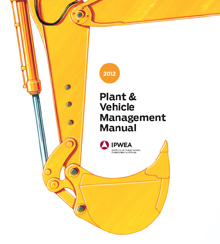
A template for preparing an Asset Management Plan for fleet is included in the IPWEA best-practice Plant & Vehicle Management Manual, 2012 edition. Visit ipwea.org/FleetManualv3
Grant Andrews is Managing Director at Uniqco. Ross Moody is IPWEA Executive Officer.